



Story by Theophilus Chuma
ZIMBABWE has taken a huge step towards achieving Sustainable Development Goals (SDGs) after unveiling an Open Data Portal, an accounting tool used to check on the progress achieved towards implementing the set targets.
Speaking at the launch event in Harare this Wednesday, United Nations Resident Coordinator, Mr Edward Kallon, underscored the urgency of accelerating implementation of the 2030 Agenda.
“Globally, we are at a critical juncture. The 2030 Agenda is halfway through its implementation, yet according to the 2024 SDG Progress Report, only 17 % of the 135 assessed targets are on track to be achieved by 2030,” Mr Kallon said.
A good reason to strengthen monitoring and tracking progress on targets such as ending poverty, enhancing accessibility to clean water and combating climate change, the race is now on for countries to ensure this focus is on track five years before the expiry of the timeframe for the Sustainable Development Goals.
According to the United Nations, now more than ever there is a need to ensure robust mechanisms to enhance accountability and transparency, hence the launch of the Open Data Portal unveiled in Harare this Wednesday.
“The launch of Zimbabwe’s Open SDG Data Portal is more than just a technical achievement. It is a strategic milestone, signalling Zimbabwe’s deep commitment to the 2030 Agenda for Sustainable Development and to an evidence-based development path that is inclusive and transparent,” Mr Kallon said.
Zimbabwe is now among a group of countries to implement this initiative, with the government stating this data revolution is a critical pedestal to upscale focus on SDGs.
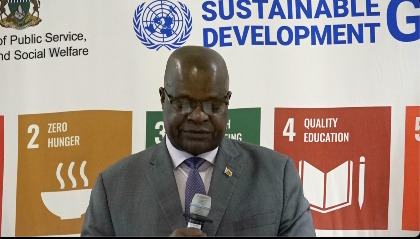
On behalf of the Chief Secretary to the President and Cabinet, Dr Martin Rushwaya, Public Service Labour and Social Welfare Permanent Secretary Mr Simon Masanga stated this development is critical to enhancing accountability.
“We are really committed to ensuring that the goals set under the SDG’s 2030 vision are achieved,” he said.
According to the government, the Open Data Platform serves as a central tool highlighting areas of success in achieving the objectives of the SDGs as well as areas requiring urgent intervention and attention.

