



Story by Tamuka Charakupa
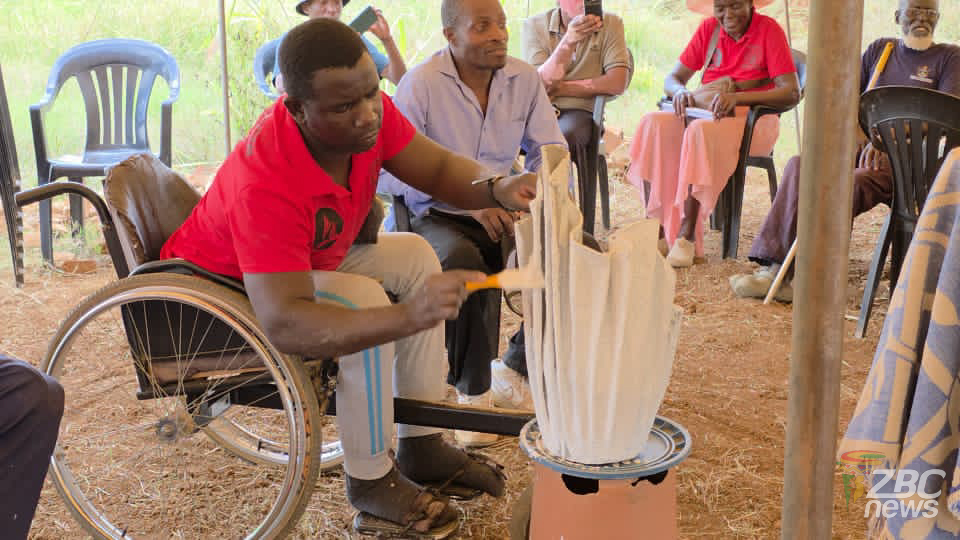
PERSONS with disabilities in Chegutu are undergoing structured vocational training aimed at promoting self-reliance and sustainable livelihoods, as part of a broader push for inclusive economic participation.
The programme offers instruction in sewing, beadwork, carpentry and detergent manufacturing, alongside financial literacy and entrepreneurship training. Organisers say the combination of practical skills and business knowledge is designed to enable participants to establish viable income-generating projects.
Beyond technical competencies, beneficiaries are receiving seed capital to facilitate immediate entry into production, allowing them to integrate into local value chains and expand micro-enterprises over time.
Training is conducted in small, community-based groups to accommodate participants facing mobility and transport constraints, a model organisers say strengthens accessibility and inclusivity.
One beneficiary, Mr Peter Paradza, said the initiative has altered perceptions of economic participation.
“For a long time, we depended on relatives for basic needs because opportunities were limited. This training has changed our mindset. I can now produce items that are marketable within Chegutu and beyond. We are learning how to cost our products properly and how to reinvest profits so that our projects grow,” he said.
Mr Ishmael Patasva said the localised approach has been particularly important.
“Training us within our communities has made a big difference because some of us cannot easily travel long distances. The facilitators understand our different disabilities. We now feel recognised and valued as contributors to the economy,” he said.
Trainer and Seventh-day Adventist pastor Desire Nyanhanda said the initiative challenges long-standing perceptions around disability and dependency.
“Instead of being viewed as dependents, participants are becoming employers and innovators. The support for training and start-up capital will help ensure sustainability,” he said.
National Chairperson of People with Disabilities for ED, Mr Jimayi Muduvuri, said the organisation has prioritised practical empowerment over symbolic gestures.
“We have moved beyond rhetoric to practical empowerment. By providing seed capital after training, beneficiaries can immediately transition into production. Our objective is to create fully functional micro-enterprises that participate meaningfully in local value chains,” he said.
Mr Muduvuri added that recent disability legislation has strengthened the mainstreaming of disability issues across sectors.
“The enactment of disability legislation is a milestone because it guarantees inclusion in all sectors of the economy and compels institutions to ensure accessibility and equal opportunities. This programme aligns with that framework,” he said.
The Chegutu initiative reflects broader efforts to promote inclusive development by supporting structured self-sufficiency and economic participation among persons with disabilities.

