



Story by Abigirl Tembo
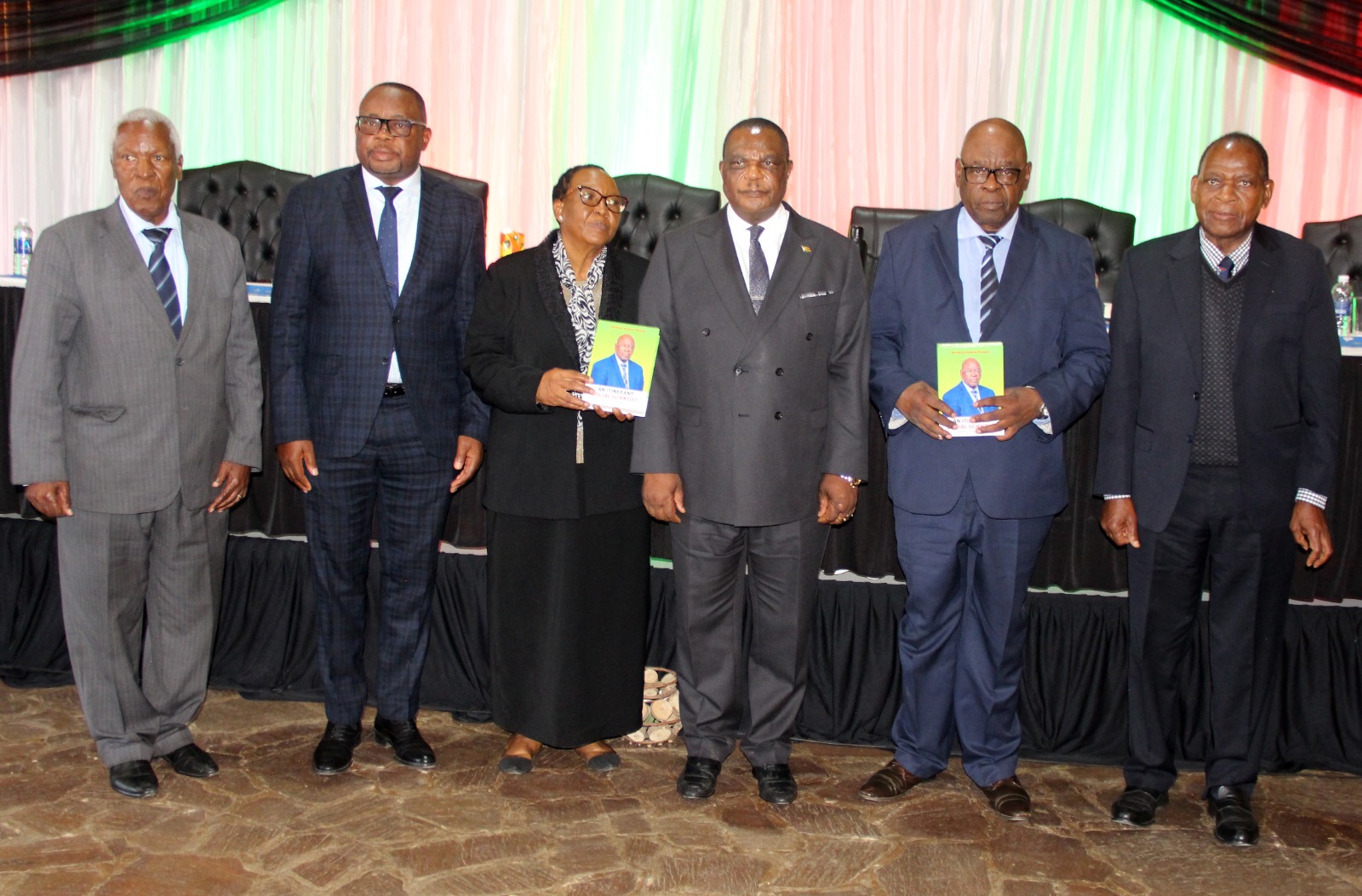
HARARE – A new memoir chronicling over four decades of Zimbabwe’s governance and ideological evolution has been launched in Harare.
“An Itinerant Social Scientist: Memoirs of a Public Servant” by Dr Matenda Andries Rukobo offers a national perspective on the country’s post-independence journey, blending personal experience with reflections on policy, Pan-Africanism, and public service.
The author is a renowned bureaucrat and scholar, whose life and service span Zimbabwe’s post-independence public administration and ideological evolution.
The book launch drew government officials, academia, the diplomatic corps and development partners, who all gathered to reflect on the enduring influence of Dr Rukobo, a man whose personal journey from colonial-era Zimuto to the corridors of global scholarship and domestic governance has now been immortalised in 475 pages of deep reflection and unapologetic ideological analysis.
“I felt it was important that we tell our own stories. This book is a contribution to preserving our history, one that young Zimbabweans can learn from. It speaks to resilience, curiosity, service to country, and the need to see oneself not just as an individual but as a contributor to the broader society,” Dr Rukobo said.
Drawing from his time in key state institutions, including the Ministry of Information and the Public Service Commission, Dr Rukobo, examines the complexities of building a functional public administration system in post-liberation Zimbabwe.
The book also confronts ideological threats to African governance, warning of new forms of neocolonialism masked in modern political language.
“The younger generation of intellectuals must carry forward the foundation we laid. The future of Zimbabwe hinges on ethical governance, service excellence, and ideological clarity,” Former Chief Secretary to the President and Cabinet, Dr Misheck Sibanda said.
“This is not just an autobiography, it is a detailed record of Zimbabwe’s public administration since 1980. It should be adopted in our universities, civil service training institutions, and by policymakers. It is a guide for ethical public service,” the Minister of Skills Audit and Development, Professor Paul Mavima added.
The launch also sparked dialogue around patriotism and ideological clarity, with the Herbert Chitepo School of Ideology praising the memoir’s strong socialist framing and alignment with the national devolution agenda.
“This book embodies patriotism and socialist values. It reflects the national consciousness being championed by President Emmerson Mnangagwa, especially through initiatives such as POLAD and the acceleration of devolution,” Hebert Chitepo School of Ideology’s principal, Cde Ishmael Mada said.
Delivering remarks on behalf of the Permanent Secretary for Information, Publicity and Broadcasting Services, Mr Nick Mangwana, the Ministry’s Director of Strategic Planning, Monitoring and Evaluation, Dr Nanette Silukhuni, described the book as an essential intellectual response to anti-nationalist narratives and a valuable addition to the national archive.
“Dr Rukobo exposes the historical bedrock of the relationship between regime change forces and private media. At the core of this existential threat for anti-colonial governments, there should also be a genuine commitment to promote and protect the national image. Herein lies the interest protection of the state by the ministry in the matrix of our split patriotic consciousness as a consequence of anti-nationalist media voices.”
The Guest of Honour at the book launch, Vice President General (Retired) Dr Constantino Chiwenga described the memoir as “a gift to the nation,” calling on young Zimbabweans to read it not only with their eyes, but with their conscience.
“This is more than a memoir, it is an ideological and philosophical text, a historical account, and a policy analysis. It is a gift to the nation. Let this book inspire young Zimbabweans to serve with integrity, unity, and purpose. Let us preserve it, teach it, and use it to shape a prosperous future.”
With insights from academic and political leaders across generations, “An Itinerant Social Scientist” transcends personal reflection to serve as a vital national intellectual resource, offering ideological clarity and noting the importance of preserving Zimbabwe’s history through authentic, lived experiences.
As the nation forges ahead, the memoir underscores a timely truth: Zimbabwe’s story is best told by those who helped shape it.

