



Story by Providence Maraneli
THE adoption of Information Communication Technology (ICT) by most rural schools in Matabeleland South has not only enhanced the quality of education, but has set the province on a transformative agenda.
In Sitezi area of Gwanda North, the local secondary school has become a model to all as it has smart classrooms, digital screens, computer laboratories and a modern library.
Sitezi is not the only school that has adopted digital technology, another primary school beyond Thuli River, Vela Primary School, has gone paperless, with learners now using tablets instead of books.
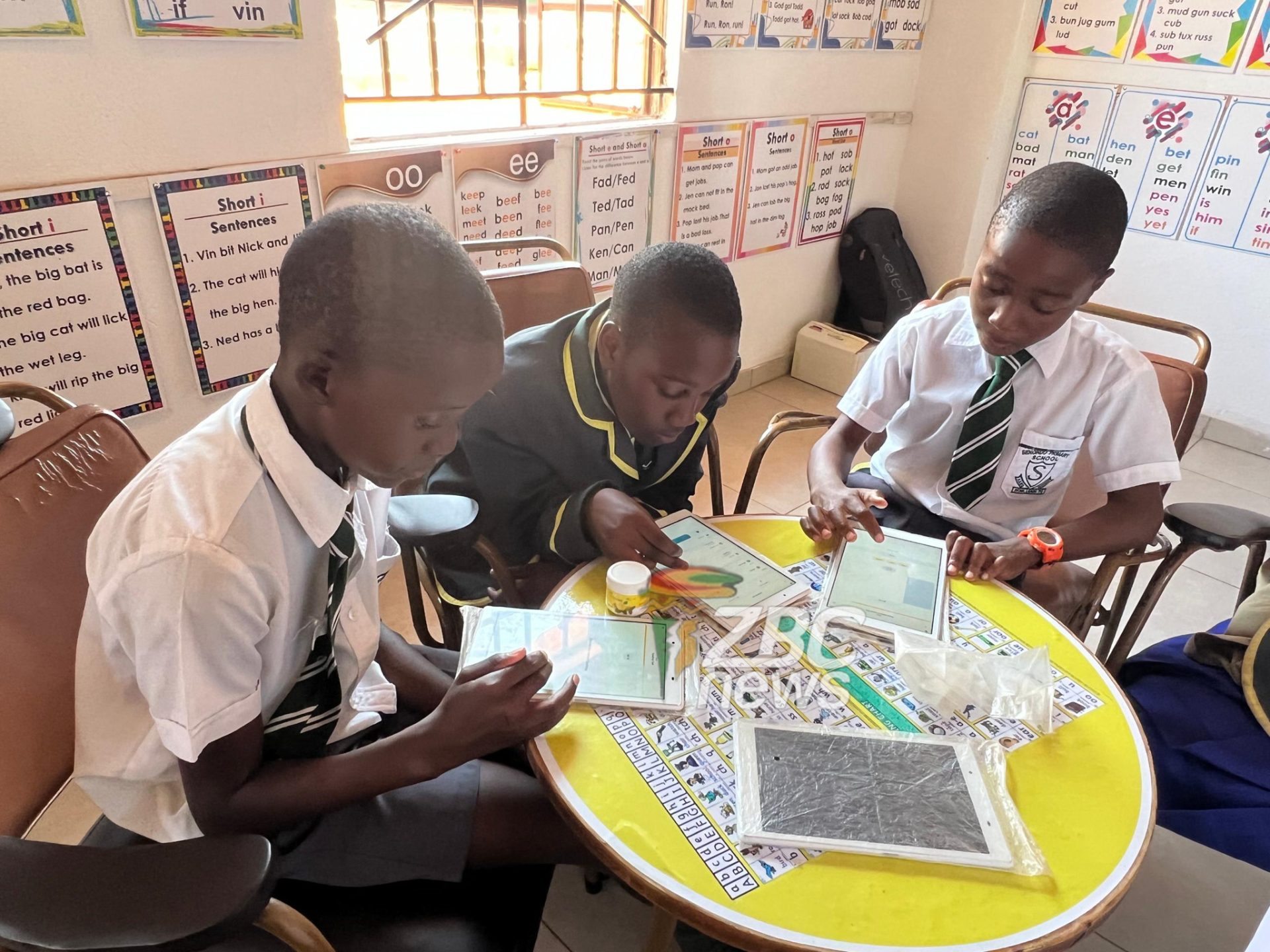
But what is of interest is another school in Gwanda town, Senondo Primary school, which has established a reading clinic where learners are now using digital technology to deal with non-readership.
“These applications that we use are meant to improve our reading. In this class, we had pupils who could not even read, but when this technology came, we have improved,” Wandile Chitengo of Senondo Primary School said.
“We have spelling games, matching games, that will produce sounds, and this has made it easy for us to deal with the issue of non-readership. We are so happy that we have incorporated ICT in our primary education which has made an enormous contribution,” teacher, Miss Shiela Shumba added.
The initiative, which embodies the needs of contemporary society and the implementation of the Education 5.0 model, has set Senondo Primary School as an example to many schools.
“What I have seen here is impressive, the clinic is a solution to what the ministry has been battling for so many years, non-reading. You find someone going to form one and yet he cannot read, but with this, we are sure that no one is going to be left behind. ICT has become a critical component in our education and this is an example to many,” Permanent Secretary in the Ministry of Primary and Secondary Education, Mr Moses Mhike
With the government on a drive to promote ICT in schools, the adoption of digital technology in rural schools like Senondo may be key in the attainment of an upper-middle-income society by 2030.

