



Story by Kenias Chivuzhe
THE uptake and implementation of the Heritage-Based Education Curriculum is on course, with issues of inclusivity and infrastructural development at the centre of the strategy to deliver quality education under the Second Republic.
To assess progress recorded so far in the construction of schools and classroom blocks, the Ministry of Primary and Secondary Education has embarked on schools joint monitoring visits countrywide.
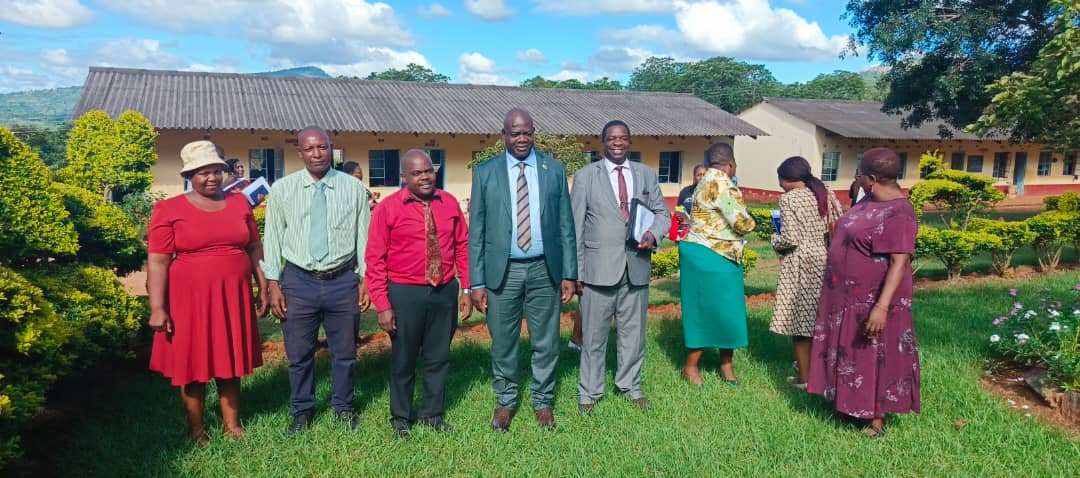
Primary and Secondary Education Minister Honourable Torerai Moyo who led a team in Manicaland province, expressed satisfaction with progress in the implementation of the heritage-based curriculum, revealing plans to construct 125 schools and 350 classroom blocks this year.
“The issue of inclusive education is being respected in all our schools and we noticed that ramps have been established in all learning facilities as well as ablution facilities. We are also looking at libraries, science and computer laboratories to ascertain whether we are in line with the expectations of the National Development Strategy. As you are aware, we have rolled out the heritage-based curriculum.
“We are targeting to build more than 350 classroom blocks. We also want to refurbish the classrooms so that the environment prevailing is conducive to effective learning. We are targeting not less than 125 schools in 2025. These are the key legacy projects that the Second Republic is doing in trying to provide quality, relevant and equitable education,” he said.
Manicaland education authorities and development partners concurred on the need to improve the quality and access to education in the country.
“We are implementing the heritage-based curriculum that is focusing on the production of goods and services and which is premised on the philosophy of ‘Unhu’ which encourages the impartation of the identity for our students must be able to identify themselves as Zimbabweans. In that respect, we are mounting workshops to ensure that all our stakeholders in education receive some training concerning the tenancy of the heritage-based curriculum so that we advertise the curriculum for acceptance by stakeholders and learners.
“We have trained our heads and teachers in implementation of the requirements and now we are into syllabus interpretation so that our teachers effectively deliver the heritage-based curriculum,” Manicaland Education Director Mr Richard Gabaza said.
“We are supporting the government in areas of access to education and infrastructural development. There are three different school improvement grants to ensure that our learning environment is conducive. We also compliment the school feeding and school health policy. We have partners to build up on the gains achieved so far,” Education Coalition of Zimbabwe’s representative, Wadzanai Chitiga said.
Meanwhile, government has expressed appreciation to development partners’ support in promoting infrastructure development and the uptake of the heritage-based curriculum.

