



Story by Memory Chamisa
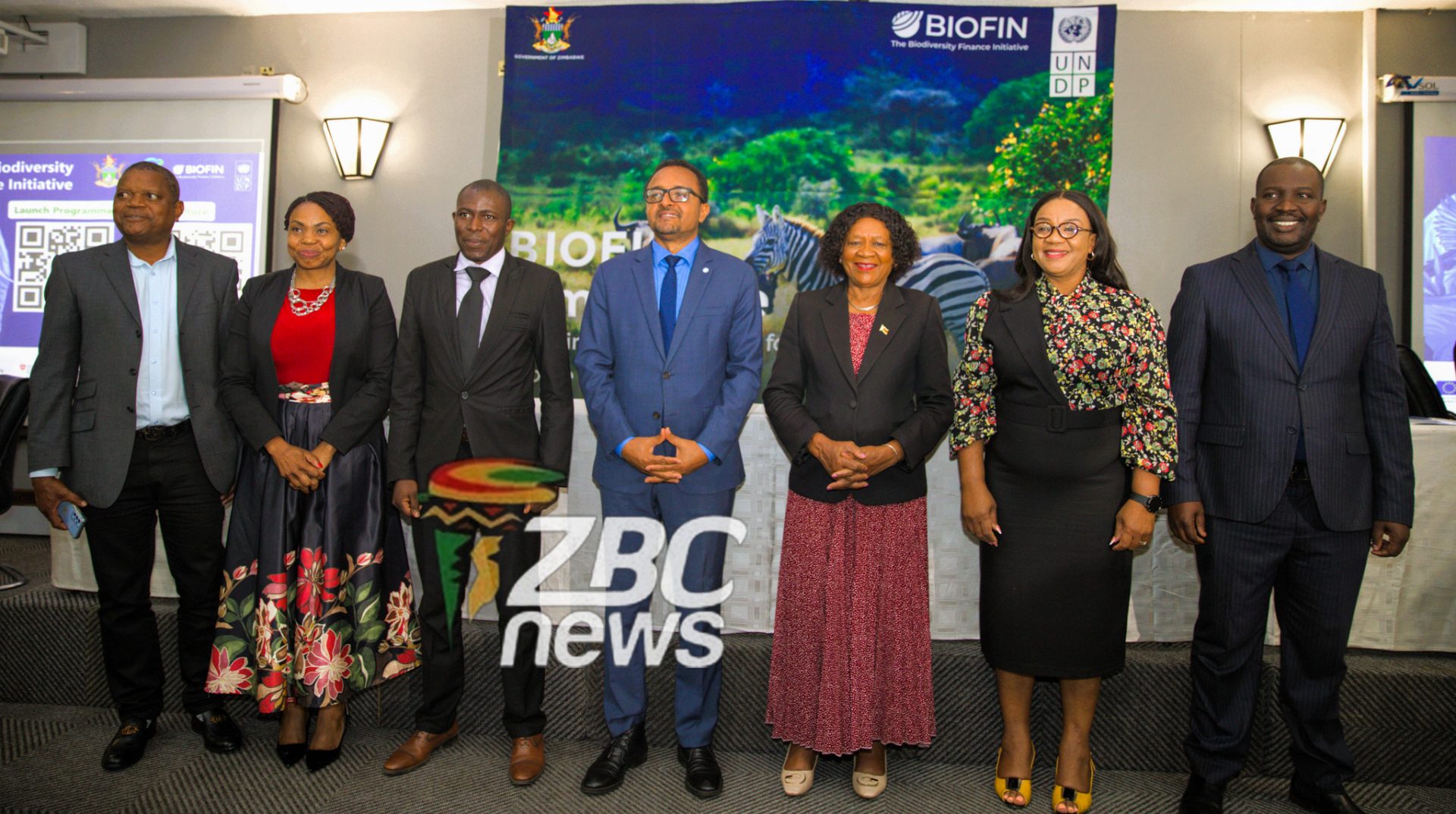
THE government, in collaboration with the United Nations Development Programme (UNDP), has launched Zimbabwe’s Biodiversity Finance Initiative (BIOFIN) to mobilise domestic and international financial resources for the maintenance of a sustainable biodiversity economy.
The initiative, spearheaded by the Ministry of Environment, Climate and Wildlife and the Ministry of Finance, Economic Development and Investment Promotion, signals high-level commitment to mobilise sustainable finance for nature and align with the Kunming-Montreal Global Biodiversity Framework through a National Biodiversity Finance Plan.
The Kunming-Montreal Global Biodiversity Framework is a landmark international agreement adopted in 2022 by over 195 countries to guide global efforts to protect and restore nature by 2030.
UNDP’s Deputy Resident Representative, Mr Challa Getachew, reaffirmed the organisation’s commitment to supporting national ownership and long-term financing for nature.
“This initiative also aligns with UNDP’s global Nature Pledge and our commitment to mobilise at least US$1 billion in new finance for nature annually. For Zimbabwe, BIOFIN will contribute to climate resilience, job creation in green value chains, and greater integration of nature in national budgeting and investment promotion. As we celebrate today’s launch, let us reaffirm a simple truth, investing in nature is investing in our shared future. The choices we make now will determine whether Zimbabwe’s rivers continue to flow, its forests continue to breathe, and its children inherit a country richer, not poorer in natural capital,” he said.
The initiative is not merely a technical exercise, but a people-centred endeavour meant to ensure communities benefit from conserving nature.
“Zimbabwe has placed the development of a biodiversity economy at the centre of its national policy framework. This approach seeks to strengthen key biodiversity sub-sectors from wildlife, forestry, fisheries, bio-trade, and payment for ecosystem services, thus ensuring that biodiversity conservation contributes directly to economic growth, job creation, and community empowerment,” Chief Economist in the Ministry of Finance, Economic Development and Investment Promotion, Mr Tinashe Mashavave noted.
“BIOFIN provides us with a robust framework to identify financing needs, assess biodiversity expenditures, and mobilise both domestic and international resources. This inclusive governance model transforms biodiversity from a burden into a profitable land use option, giving communities a tangible stake in protecting nature and addressing human-wildlife conflict. This initiative is fully aligned with the National Development Strategy 2 (2026-2030), which prioritises climate resilience, environmental sustainability, and the mainstreaming of biodiversity across all sectors,” Minister of Environment, Climate and Wildlife, Dr Evelyn Ndhlovu said.
Through the initiative, Zimbabwe has joined a global community of more than 90 countries in implementing this methodology, signalling its determination to make biodiversity finance a cornerstone of green, inclusive and climate-resilient development.
The Kunming-Montreal Global Biodiversity Framework features 23 targets to be met by 2030 and four global goals to preserve biodiversity for current and future generations.
One key finance target calls for mobilising at least US$200 billion per year by 2030 from all sources, including public, private, domestic and international and at least US$30 billion per year by 2030 in international finance to developing countries.
The biodiversity finance gap is estimated to be around US$700 billion per year and to close this gap, countries and organisations have introduced several new biodiversity funds over the past few years, hence Zimbabwe’s launch this Friday.

