



Story by Mhlomuli Ncube
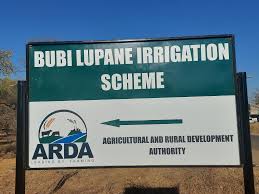
The Bubi-Lupane Irrigation Scheme which has become a national template of productivity is inching closer to Vision 2030 targets.
The scheme’s success story is playing out like a textbook template.
Led by the Agricultural and Rural Development Advisory Services (ARDAS), the Bubi-Lupane Irrigation Scheme boasts 90 households which have nothing but praise for the government-supported project.
This winter, the farmers are cultivating 180 hectares of wheat on the forecast of a yield of between 5 and 6 tonnes per hectare as the country targets 600,000 metric tonnes in 2024.
“We are looking forward to not only a good harvest but also receiving a good dividend,” said Bubi-Lupane Irrigation Scheme Chairperson, Mr Gerald Khumalo.
The scheme’s success dovetails with the government’s Vision 2030, which seeks to create an upper-middle-income society while improving rural lives.
‘We are seeing the success story of Irrigation Schemes and Bubi-Lupane is one of them where we have a successful wheat story. What it means is that farmers will now be getting income, linking this to the attainment of Vision 2030. We find that farmers here at Bubi-Lupane will achieve that much earlier because they will have improved their income, they will be able to sell and even export to other areas but more importantly the farmers are now able to send their children to schools, they are also able to buy cars, nice houses, so livelihoods improve due to irrigation so as the government we want to make sure that all irrigation schemes improve their productivity like the Bubi-Lupane,” explained ARDAS Acting Chief Director, Mr Leonard Munamati.
“Our President has been clear about leaving no one and no place behind. We are seeing results of that policy at Bubi-Lupane as beneficiaries improve lives and are able to tell a story of how they are managing food security and earning incomes,” noted Mat North Minister of State for Provincial Affairs and Devolution, Hon Richard Moyo.
As the project anticipates another successful winter wheat harvest, the farmers are already planning for the summer cropping season.
The game changer has also been the adoption of scientific farming methods which have turned Kalahari sands into fertile farming grounds.

