



Story by ZBC Reporter
THE Communist Party of China (CPC) has mapped out its national development agenda through 2030, following a pivotal four-day plenary session of the 20th CPC Central Committee, held from 20 to 23 October in Beijing.
At the meeting, the Central Committee adopted recommendations for China’s 15th Five-Year Plan, the policy framework that will steer the country’s economic and social development from 2026 to 2030.
The blueprint, which reaffirms “high-quality development” as its central theme, outlines a transition from rapid economic expansion to more sustainable, innovation-driven growth.
A shift toward sustainable progress
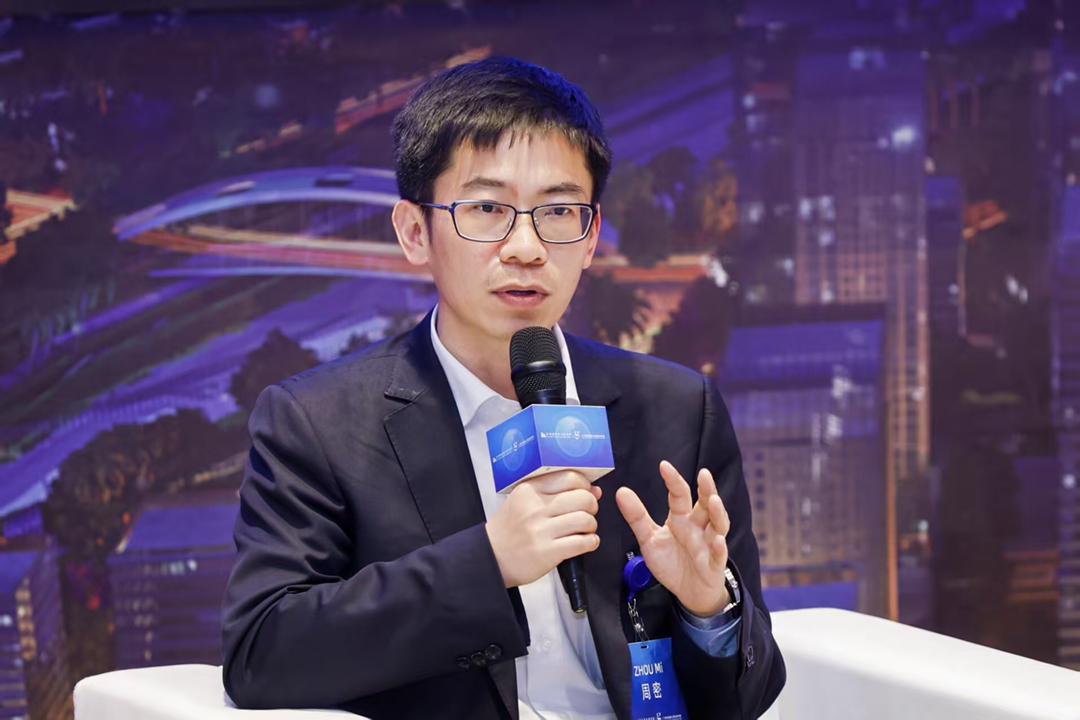
According to Zhou Mi, a senior research fellow at the Chinese Academy of International Trade and Economic Cooperation, the plan sets out a systematic roadmap for the country’s next phase of growth.
“This meeting is very important. It shows what China is going to do in the next five years,” said Zhou. “The focus will be on finding systematic solutions, from agriculture and manufacturing to services, while deepening regional integration and openness.”
The recommendations stress the need to use resources more efficiently, promote innovation, and create better employment opportunities, reflecting Beijing’s ambition to transition from high-speed growth to high-quality growth.
Zhou added that maintaining openness remains a key principle despite rising global protectionism.
“China will continue to welcome investors and international partners. Opening our market is crucial to attract enterprises that want to innovate and collaborate,” he said.
2035: The long-term horizon
Analysts say the newly approved framework is a stepping stone toward China’s long-term goal of achieving socialist modernisation by 2035.
Charles Onunaiju, Director of the Centre for China Studies in Nigeria, said the plan reflects policy continuity and long-term strategic thinking.
“Every plenum has its unique character,” Onunaiju explained. “The 2025–2030 plan will be pivotal to achieving considerable modernisation by 2035. It strengthens China’s governance model based on stability, predictability, and strategic consensus.”
He added that the CPC’s political integrity has been key to ensuring that each five-year plan serves as a consistent vehicle for sustainable development.
Implications for Africa
The latest five-year plan also carries important implications for China–Africa relations, especially as Beijing seeks to deepen cooperation through trade and industrial collaboration.
Onunaiju noted that one of the plenum’s significant outcomes was the emphasis on a unified national market, a move designed to enhance efficiency, stimulate domestic demand, and expand market access.
“With China opening up more, Africa can access a stable and vast market,” he said. “This provides an opportunity for African economies to strengthen exports and achieve meaningful returns.”
He also referenced China’s recent announcement to remove tariffs on imports from African nations with diplomatic ties, calling it a major step toward more balanced trade relations.
Innovation at the core
Technological innovation remains a cornerstone of China’s development strategy. Zhou said the government is prioritising both public research and private sector innovation.
“Innovation is the first word in China’s new development concept,” he said. “We are building stronger national laboratories and encouraging private enterprises to compete globally. But we are also inviting foreign partners to join research and development efforts.”
A dual approach to openness and self-reliance
While the plan highlights domestic resilience, it also underscores continued openness. Onunaiju believes this “dual approach” offers lessons for developing regions.
“China and Africa share similar histories of self-reliance,” he said. “As China opens its market wider, African nations must design policies that make the most of these opportunities, especially now that tariff barriers are being removed.”
He added that China’s tradition of five-year planning provides a useful model for countries seeking predictable and stable development frameworks.
As the 15th Five-Year Plan takes shape, it is expected to define China’s trajectory not only in its domestic transformation but also in its global partnerships, including its growing cooperation with Africa under frameworks such as the Forum on China–Africa Cooperation (FOCAC).

