



Story by Memory Chamisa
AS Government accelerates rural industrialisation and inclusive economic growth in line with national development objectives, Binga District is recording significant transformation through projects that are enhancing livelihoods and creating employment opportunities.
Guided by President Emmerson Mnangagwa’s development philosophy of leaving no one and no place behind, notable progress has been made in the implementation of the Binga Development Initiative, positioning the district as a key contributor to sustainable rural development.
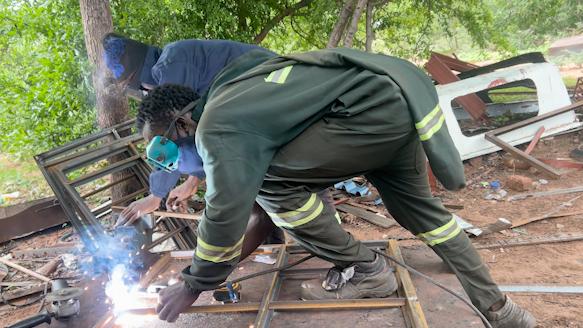
Through Government’s Climate Adaptation, Water and Energy Programme, the Business Development and Financial Inclusion Component has witnessed 208 people benefiting after being trained in vocational skills, including welding, brick and block laying, cosmetology, dressmaking and motor mechanics, among others.
“I received training in dressmaking, and that greatly changed my life and that of my family. I am one of the competitive designers in my community, and I am earning a living through the sewing machine,” a tailor, Mudimba Early, said.
“I received training in plumbing, and whenever there is a construction job I am hired for my services, and I am happy cause I never imagined myself being employed or owning a business,” Steven Muleya said.
Through the implementation partner, United Nations Development Programme, a total of 39 village savings and lending groups have since been established and trained, with cumulative savings of over US$13 000.
“This tuck shop business I started it with money from the revolving fund, and I managed to buy groceries, and other wares to sell. I am even managing to service my loan with the profit made from the tuck shop. I am grateful for the entrepreneurial skills I received from the training programme,” tuck shop owner, Joyce Mwembe said.
“This is one of our proud moments. This business of welding, we started it with money from the revolving fund that Government and UNDP released to those who were willing to work. The training from the vocational school has fine-tuned us into making products that are competitive on the market. And we look forward to growing the business so that we are able to employ more youths and stop them from going to the cities and neighbouring countries for work,” Wielder, Khumbulani Muleya said.
The Business Development and Financial Inclusion Component supports access to informal capital, especially for women, who constitute most of the groups.
All Climate Adaptation, Water and Energy Programme(CAWEP) project components foster transformative business models for climate adaptation, shifting rural communities from subsistence to sustainable economic enterprises through commercial production and partnerships for high value crops.

