



Story by Sandile Ncube
RHINO conservation efforts in Matobo National Park are delivering encouraging results, with the park recording steady growth in its rhino population and emerging as a model for wildlife protection in Africa.
The success has been driven by strong collaboration between the Government, the Zimbabwe Parks and Wildlife Management Authority and private sector partners, who have invested in advanced anti-poaching systems and ranger support.
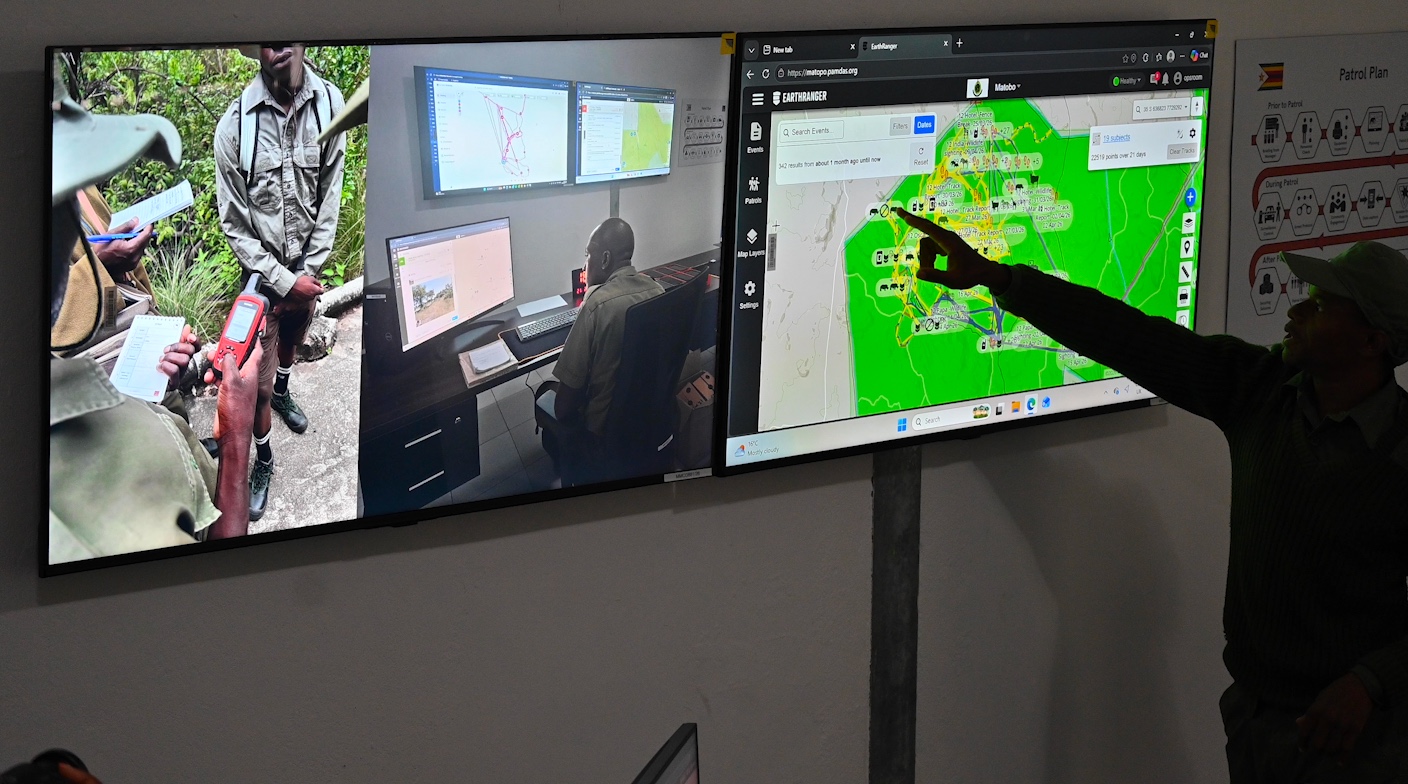
A key milestone is the establishment of a state-of-the-art operations room at Whitewaters, equipped with the latest surveillance and tracking technology to enhance real-time monitoring of the park’s endangered rhino population.
The facility is improving ranger coordination, strengthening anti-poaching operations and enabling more effective protection of one of Zimbabwe’s most iconic species.
Chengeta Safaris Chief Executive Officer Mr Greg Murphy said the operations room represents a significant leap in conservation capability.
“We have assisted ZIMPARKS in establishing the operations room to coordinate activities on the ground. It also enables us to digitally capture and monitor our rhino population in real time,” he said.
At Tshabalala Sanctuary, newly commissioned lodges are set to enhance the area’s appeal as a premium eco-tourism destination.
Additional donations of operational equipment to ZIMPARKS are expected to further strengthen conservation and tourism management.
Matobo Hills World Heritage Chair Mr Cavin Stephens said support for ranger welfare and infrastructure remains a priority.
“We are continuing to improve ranger welfare and have also been involved in fencing sections of the national park to minimise future human-wildlife conflict and secure park boundaries,” he said.
Meanwhile, Timestream Mining donated a 30-seater bus to support community and ranger mobility.
Speaking during a tour of the facilities, Environment, Climate and Wildlife Minister Dr Evelyn Ndlovu praised the initiative as a model for the future of conservation in Zimbabwe.
“What I have witnessed here is truly inspiring. I have seen the dedication of our ZIMPARKS team and the power of collaboration with private sector partners. This is a blueprint for the future of conservation in our country,” she said.
She added that the initiative aligns with Zimbabwe’s broader Vision 2030 agenda and demonstrates the country’s commitment to becoming a continental leader in wildlife conservation.
Through sustained investment, innovation and partnerships, Zimbabwe is strengthening its position as a global leader in rhino conservation while safeguarding a vital part of its natural heritage.

