



Story by Abigirl Tembo
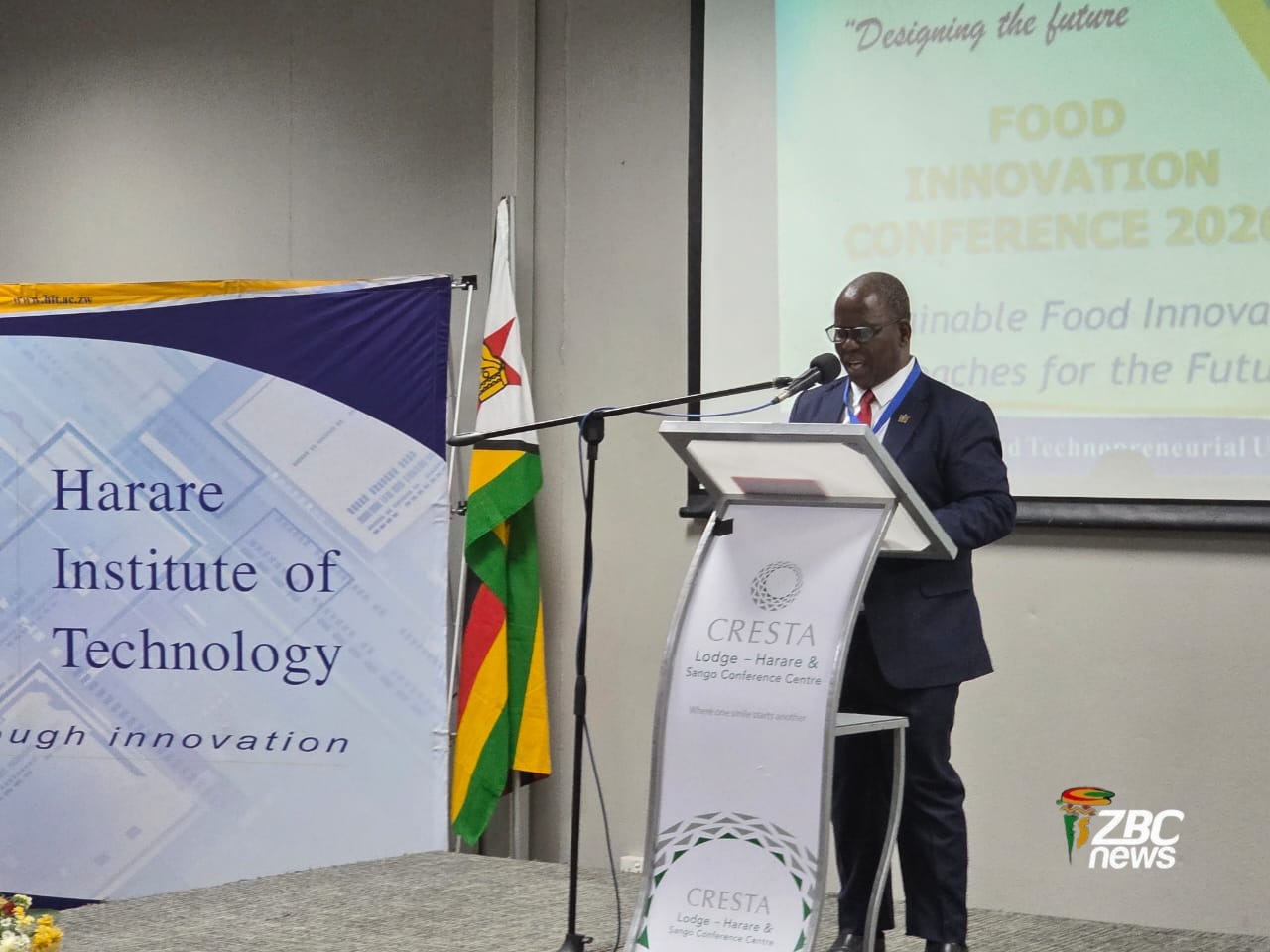
SCIENCE, technology and innovation have been identified as critical drivers for strengthening Zimbabwe’s food security, as stakeholders convene for the inaugural Food Innovation Conference in Harare.
The conference, hosted by the Harare Institute of Technology, has brought together researchers, policymakers and industry leaders to explore solutions aimed at building resilient food systems and accelerating industrialisation.
The gathering comes at a time when Zimbabwe is intensifying efforts to strengthen food security in response to climate change and population growth, with emphasis on harnessing local innovation and value addition.
Vice Chancellor of the Harare Institute of Technology, Professor Quinton Kanhukamwe, said the inaugural conference reflects the institution’s growing role in driving innovation within Zimbabwe’s food systems..
“This conference is an inaugural conference for the Harare Institute of Technology. It is a culmination of the impact of Education 5.0. How much has been done to date in terms of research and innovative outputs that are arising from Education 5.0 impact? For us, as the HIT, we are showcasing our research outputs and the various food products that the university has been conducting and producing to date.
“For us, we have our teams that have been working with the various rural communities and smallholder farmers. The technology transfer licensing and commercialisation centre has been key in packaging those outputs for commercialisation, and I am happy to say that we have since established what we call Insti Foods, which is an entity that is currently packaging and producing not only mineral water beverages but also is going to other various food products like cereals,” he said.
Permanent Secretary in the Ministry of Higher and Tertiary Education, Innovation, Science and Technology Development, Professor Fanuel Tagwira, described the conference as a critical platform for advancing the application of science and technology in national development.
“This conference, which has been organised by the Harare Institute of Technology, is very critical to the mandate of our ministry as a ministry that is supposed to ensure the application of science and technology in the development of our country. If you remember, His Excellency said that we must make sure that we value-add our products using our own knowledge. This is very important for the development of the country, so this conference is important because we are talking about food systems, how we can enhance our food systems to increase productivity, and it also talks about how we can value-add our resources that are in the country. Our ministry is charged with innovation, science and technology, and what we are talking about is how we ensure science can be used to improve our food systems, particularly in food production, but also in processing and value addition.
“As you know, universities, government and industry are working together. We work together in so many areas. We work together in technology development. Our universities are working with a number of industries in the development of technology, but they are also working with industry in rural industrialisation. If you look at what we are doing as a ministry, you will find that already we have a number of projects where we are value-adding to our own food. In Mutoko, we have a project where we are adding value, and we are working with the Government and other Government ministries,” he noted.
Stakeholders expressed optimism that increased collaboration between government, academia and industry will deliver practical solutions to strengthen food systems and support sustainable agricultural growth.
The conference is expected to lay the foundation for a resilient, sustainable and self-sufficient food future for Zimbabwe.

