



Story by Oleen Ndori
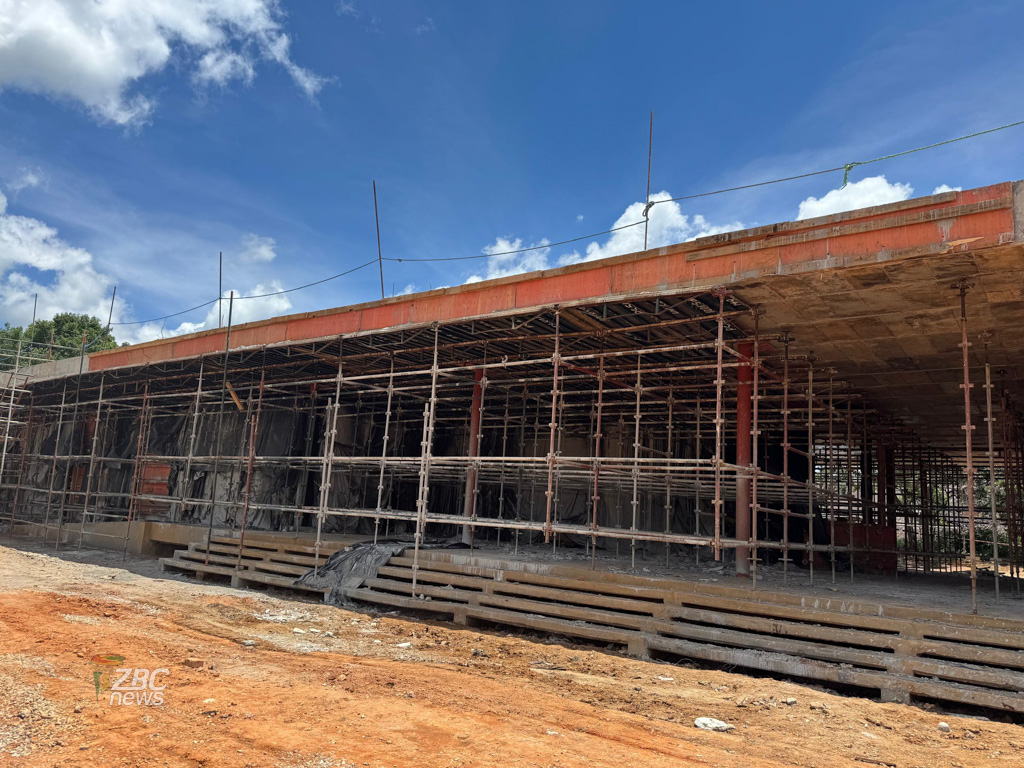
THE construction of the Visitors’ Centre at the Great Zimbabwe Monument is nearing completion, with contractors targeting to finish the project by the end of the first quarter of this year.
The project is expected to improve visitor experience while also preserving the monument’s rich history.
Historians say the Great Enclosure at the World Heritage Site is the second largest pre-colonial structure in Africa after the pyramids of Egypt, using about 18 000 tonnes of stone.
Visitors continue to visit the monument, which has stood the test of time and in June 2022, President Emmerson Mnangagwa commissioned the Great Zimbabwe Development Project, with support from the French Government through the French Development Agency and its partners to the tune of €4 million.
According to the United Nations Office for Project Services (UNOPS), the hope is that by the end of the first quarter, the project will be complete.
“The idea was to look at how best we can support the Great Zimbabwe World Heritage Monument, so that we can better manage this heritage asset that we have. The feasibility study identified quite a good number of areas that needed some support. So, in terms of infrastructure, it was also established that we needed to do quite a number of things, including the construction of a visitor’s reception centre like the one that we are building.
“The other aspect that was completed is the development of an interpretation framework for use by tour guides. There is also production of virtual tour products and documentaries,” UNOPS Acting Country Director, Mr Clement Mhlanga said.
With the monument being a world heritage site, the project is designed in a way that reduces the carbon footprint.
“These rooms are meant to educate visitors and offer virtual tours to help them understand the site before entering it. The centre is also designed to improve accessibility for people who are physically unable to climb the hills and explore parts of the monument.
“To minimise energy use, the building relies on natural ventilation, while the use of rammed earth increases thermal mass, regulating indoor temperatures without air conditioners or fans. In addition, the roof has been designed to support vegetation so that it blends with the natural landscape and remains invisible from the surrounding hills,” UNOPS Site Engineer, Engineer Brian Mutanga noted.
Beyond infrastructure development, the project has also delivered economic benefits to surrounding communities through job creation.
“I am happy to have been given a job here. This area is where our forefathers lived, and we are now preserving their history, which is very important. We are grateful to the Government for this opportunity,” a community member said.
National Museums and Monuments of Zimbabwe Regional Director, Mr Lovemore Mandima, said the initiative presents major opportunities for tourism growth.
“The Great Zimbabwe Development Project, funded by the French Government through the French Development Agency, is a game-changer. Great Zimbabwe was declared a national monument in 1937 and later proclaimed a World Heritage Site in 1986, making it a heritage asset of global importance. This project will enhance visitor numbers and provide a vastly improved visitor experience. It creates a one-stop facility that offers an environment befitting a World Heritage Site”
As part of the preservation strategy, advanced 3D monitoring technology will be introduced to track the stability of the ancient stone walls, enabling early detection of movement and timely conservation interventions.
The rehabilitation and development of the Great Zimbabwe Monument was prioritised under the National Development Strategy One (NDS1), recognising tourism as a key pillar in economic growth and national image-building.

