



Story by Courage Bushe
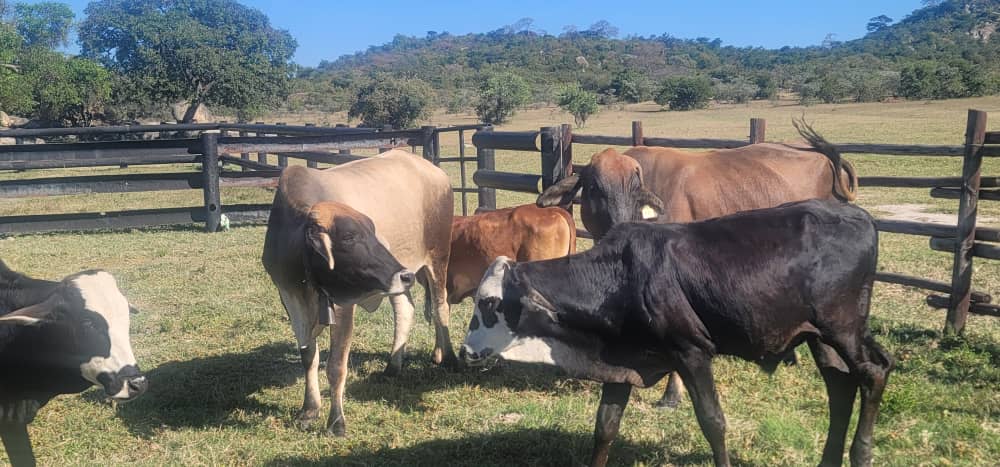
ZVISHAVANE – SMALL-scale livestock farmers in the Mapanzure area of Zvishavane District have commended the Government’s public-private partnership initiatives, particularly the artificial insemination programme, for playing a pivotal role in restocking and improving their herds amidst the growing impacts of climate change.
The programme, implemented in collaboration with Mimosa Mining Company, was launched in 2020 to improve herd genetics, enhance livelihoods, and restoring productivity in the face of climate-induced livestock losses.
The benefits are already evident, as local farmers testify to significant improvements in breed quality and herd sizes.
“Being a beneficiary of the recently completed phase of the Artificial Insemination programme, my herd now exhibits characteristics of the Tuli breed. This is a welcome development that is also empowering women in livestock farming,” one local farmer remarked.
The initiative is part of broader government efforts to modernise agriculture and promote resilience in the face of climatic shifts.
The introduction of advanced breeding techniques has been particularly well received in regions where traditional methods were proving increasingly unsustainable.
Traditional leader, Chief Mapanzure, welcomed the programme, describing it as transformative for the local economy.
“This programme has delivered tangible results. Artificial insemination reduces breeding errors that occur when cows are on heat and no bull is available. It has brought predictability and efficiency to livestock management. Farmers are embracing it fully, especially considering that livestock production remains a key economic pillar in this region. This aligns perfectly with the government’s mantra of leaving no one and no place behind.”
The initiative underscores the importance of inclusive agricultural development, especially in communal areas where livestock serves not only as a source of income but also as a form of wealth and social status.
Agriculture continues to be a cornerstone of Zimbabwe’s economy, employing over 60 percent of the population and contributing significantly to national food security and rural development.
As the effects of climate change continue to challenge traditional farming methods, the artificial insemination programme in Zvishavane stands as a model of adaptive innovation, ensuring sustainable livestock production for generations to come.

