



Story by Abigirl Tembo, Health Editor
ZIMBABWE has stepped up the fight against preventable childhood diseases following the official launch of the 2025 National Measles-Rubella Vaccination and Vitamin A Supplementation Campaign.
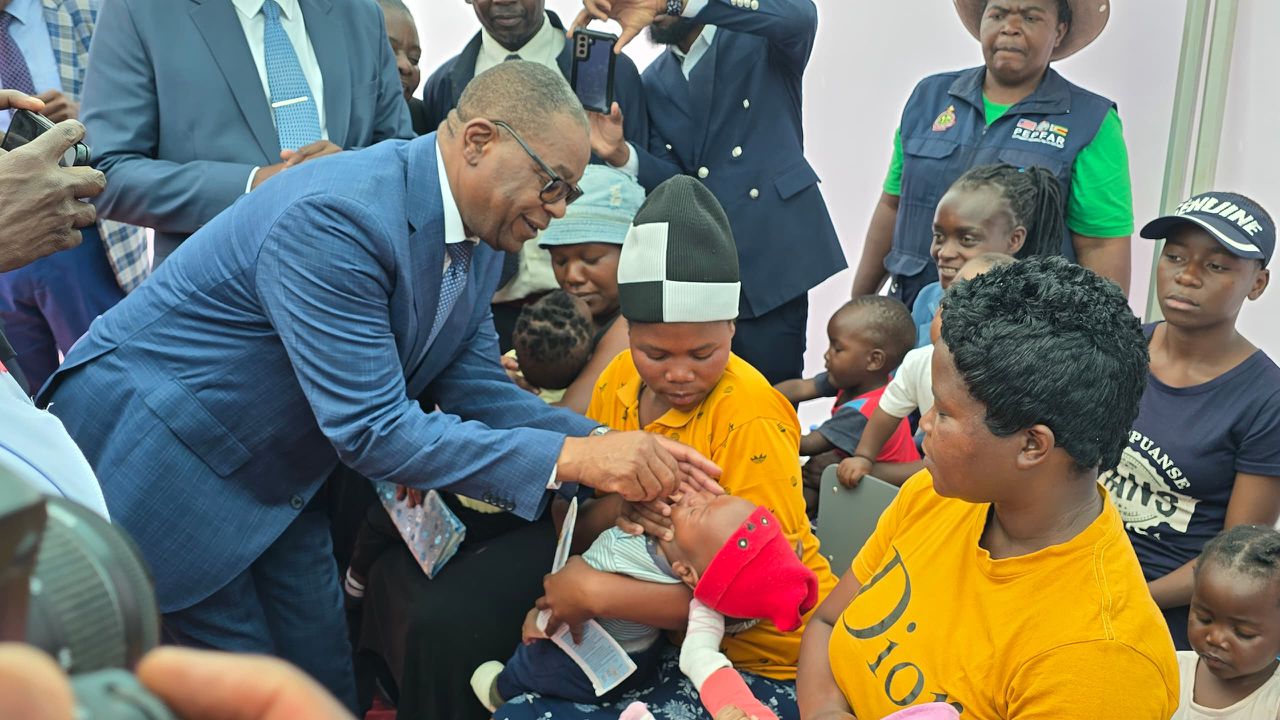
The massive health drive launched by the Minister of Health and Child Care, Dr Douglas Mombeshora, at Stoneridge Clinic in Harare this Monday, aims to reach more than 2.5 million children across the country.
Running from October 6 to October 10, the campaign targets children aged between six and 59 months, offering free measles-rubella vaccines and Vitamin A supplements.
The services are being provided at every health facility and through outreach teams deployed across the country.
Parents who attended the launch expressed appreciation for the government’s efforts to eradicate preventable childhood diseases.
“I heard about the launch and decided to bring my child for vaccination so that he remains protected,” said one parent.
Another added, “I understand the importance of these vaccinations, that’s why I always make sure my children are vaccinated.”
“We appreciate the government’s efforts in eradicating measles, and that’s why we came with our children to ensure they get vaccinated,” said another parent.
Speaking on the sidelines of the launch, Dr Mombeshora said the vaccination drive represents a renewed national effort to protect children from measles and rubella, which can cause serious complications and even death if left unchecked.
“This mass vaccination campaign taking place throughout the country is very important. We are trying to protect our children from the effects of measles, also known as gwirikwiti in Shona. The disease mainly affects children and can range from mild to severe, especially in those who are malnourished or have weakened immune systems,” he said.
He added that rubella, another preventable disease, can have devastating effects on pregnant women and their unborn babies if left uncontrolled.
“Rubella usually affects pregnant women, who can then transmit it to their unborn children. It is therefore crucial to protect girls and women before pregnancy to prevent complications later,” Dr Mombeshora said.
Zimbabwe has made significant progress in expanding access to routine immunisation since the introduction of the second dose of the measles-containing vaccine in 2015. However, vaccination coverage has remained below the 95 percent herd immunity target, leaving gaps that have contributed to the resurgence of the disease.
The 2022–2023 measles outbreak, which affected thousands of children across the country, exposed these vulnerabilities and prompted renewed action from the government and partners to restore full immunity coverage.
The national vaccination and supplementation campaign is expected to strengthen Zimbabwe’s long-standing commitment to child health and ensure that no child is left unprotected.

