



Story by Wellington Makonese
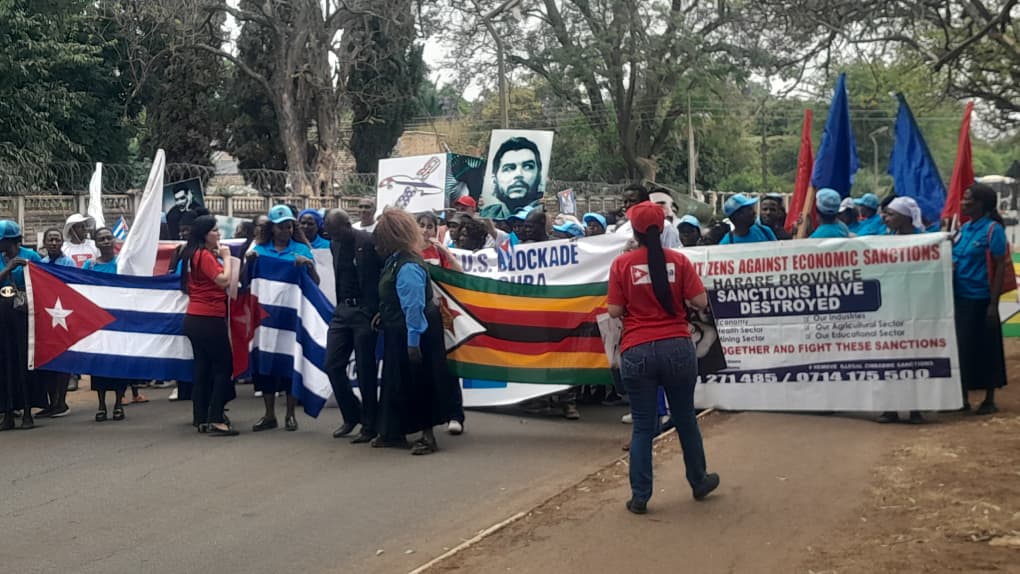
ZIMBABWEANS joined hands with the Cuban community in denouncing the illegal economic embargo imposed on Cuba by the United States, ahead of this Wednesday’s United Nations vote on the embargo.
Along the symbolic Cuba Street in Harare, citizens, diplomats, and solidarity movements gathered.
Their message loud and clear; End the blockade on Cuba.
For over six decades, the socialist Caribbean nation has endured one of the longest-running embargoes in modern history, a measure repeatedly condemned by the United Nations General Assembly.
This Wednesday, UN member states will once again vote on a resolution calling for an end to the blockade, a resolution that has, year after year, enjoyed overwhelming global support.
“We share this battle. We suffer its consequences. These unilateral coercive measures remain the main obstacle to development and a violation of international law. We thank Zimbabwe for standing with us, as does nearly the entire international community, in calling for an end to this aggressive policy from the U.S. And we shall overcome,” said Cuban Ambassador to Zimbabwe, Ms Susellys Pérez Mesa.
For many Zimbabweans, the solidarity is more to do with a shared experience.
“Cuba has been under sanctions since 1962, yet they have endured and prospered. From our own independence struggle, Cuba stood with us, training our teachers, our nurses, our doctors. They helped shape the Zimbabwe we are proud of today. So as they fight for the lifting of the blockade, we stand with them,” noted Executive Citizens Against Economic Sanctions Director, Mr Martin Zharare.
Just like Zimbabwe, which has endured Western sanctions after embarking on the Land Reform Programme at the turn of the millennium, Cuba’s isolation began in 1960 after it nationalised American companies, triggering a U.S. embargo that has since defined much of its modern history.
Despite the illegal sanctions, the two nations have maintained strong bilateral ties, cooperating in education and health, among other sectors, with bonds forged in the trenches of liberation and strengthened through shared resilience against economic coercion.