



Story by Tichaona Kurewa
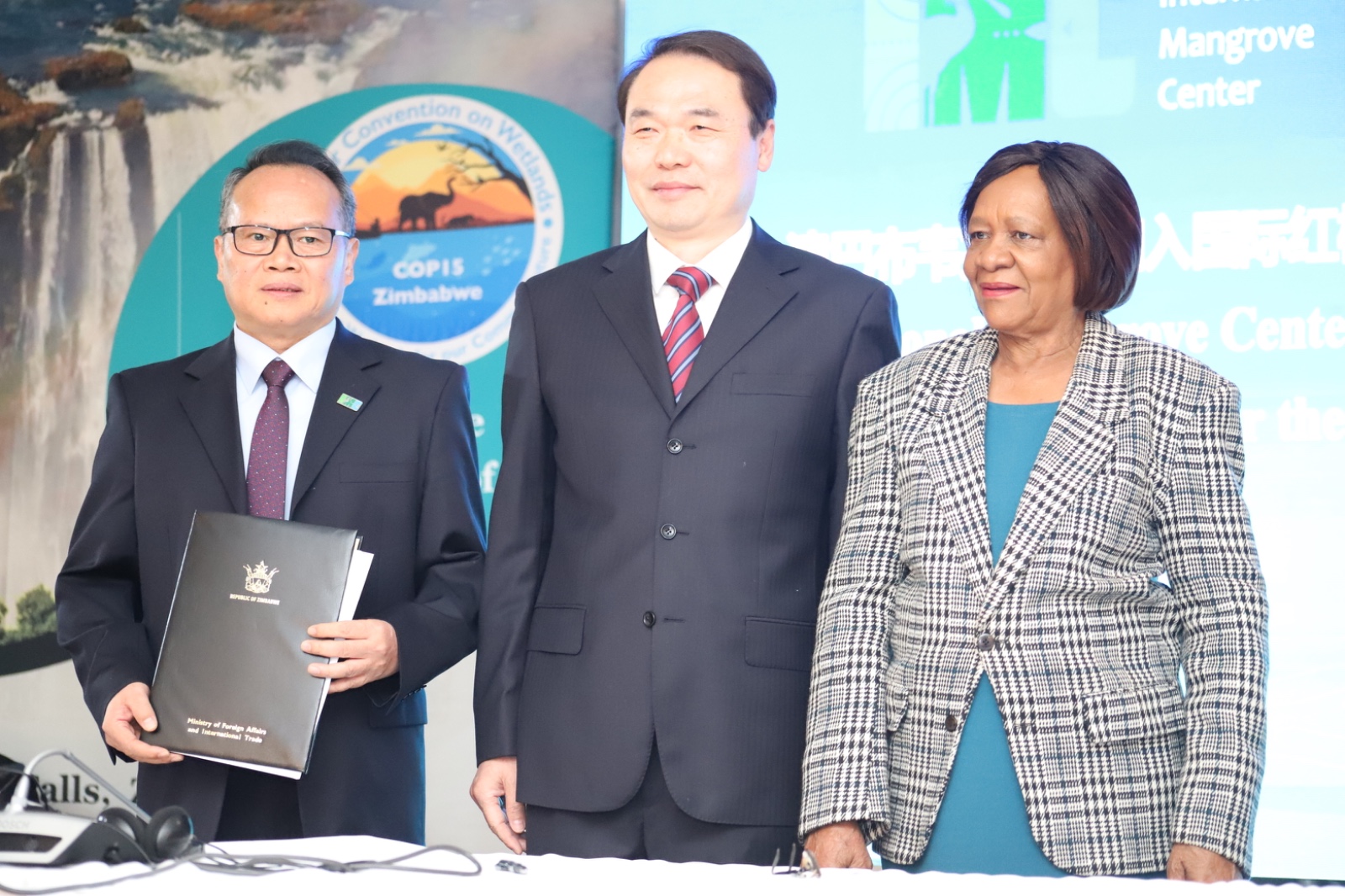
ZIMBABWE and China have signed a Memorandum of Understanding (MoU) to collaborate in the areas of wetland, forestry and grassland management, a significant step forward in global environmental co-operation.
The agreement was signed this Friday on the sidelines of the 15th Conference of the Parties to the Ramsar Convention on Wetlands (COP15), currently underway in Victoria Falls.
The MoU centres around collaboration with China’s International Mangrove Centre (IMC), which has played a pivotal role in supporting global biodiversity, mitigating climate change, and promoting sustainable livelihoods.
To date, 18 countries, including seven African nations, have partnered with China under the IMC initiative.
This latest MoU is expected to yield multiple benefits for Zimbabwe. These include strengthened wetland conservation efforts, technical and academic exchange programmes, joint research opportunities, access to advanced research equipment, and enhanced capacity development. It also aims to deepen the understanding of mangrove ecosystems.
“As we embark on this collaborative endeavour, we acknowledge the pivotal role that mangrove ecosystems play in supporting global biodiversity, mitigating the impacts of climate change, and fostering sustainable livelihoods.
“Although Zimbabwe is a landlocked nation, we recognise the far-reaching benefits of mangrove conservation and are eager to leverage the expertise and resources of the IMC to enhance our conservation efforts,” China’s Department of International Cooperation, National Forestry and Grassland Administration, National Park Administration, Director General, Dr Xia Jun said.
Mangrove ecosystems are unique coastal environments found in tropical and subtropical regions. They consist of salt-tolerant trees and shrubs that thrive along shorelines, estuaries, and river deltas.
Mangroves are vital in the purification of seawater, mitigating storm surges, preserving biodiversity, among others, thus playing a critical role in climate resilience.
China has outlined a series of further benefits under the MoU.
“Zimbabwe, as a member of the IMC, will benefit from the knowledge and technologies shared through the Centre. This platform will facilitate demonstration projects across the globe, especially in countries like Zimbabwe, where ecological degradation is a concern. By implementing these initiatives, Zimbabwe will gain access to new monitoring technologies for wetland conservation,” Dr Jun added.
Established in 2024, the International Mangrove Centre is an accredited Ramsar facility.
It serves as a global platform for enhanced exchange and cooperation among Ramsar member states, promoting international action for mangrove protection and sustainable use, and working to improve the health as well as stability of mangrove ecosystems worldwide.

