



Story by Mthokozisi Dube
THE Zimbabwe Football Association (ZIFA) has initiated a nationwide process to realign football academies as part of broader efforts to strengthen youth development structures.
ZIFA Vice president Kennedy Ndebele revealed the development on the sidelines of a club licensing workshop for the Southern Region, highlighting the need to address inconsistencies within junior football systems.
The restructuring drive comes at a time when academies such as the Bulawayo-based Young Flying Stars continue to nurture emerging talent, providing pathways for young players to pursue professional careers.
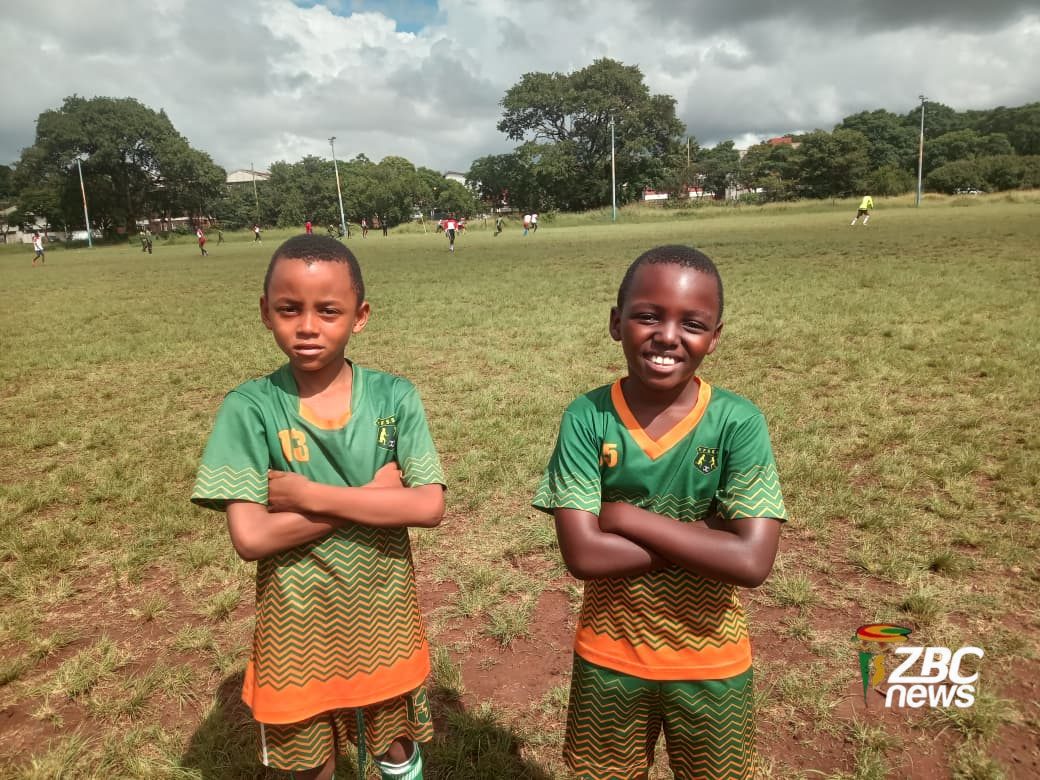
Among those benefiting from structured development programmes are budding footballers Joel Mollentz and Khanyile Dingani, who are aiming to break into the professional ranks.
“It feels good to be here. I really want to be a professional footballer one day, and it is really nice to be coached here,” Dingani said.
“I want to achieve being better than now, and become the best professional footballer to ever exist,” Mollentz added.
The academy has already produced several players who have progressed to international opportunities, including Arnold Chimombe, now playing in the Namibian Premier League, Menelisi Bhebhe, currently in Spain on scholarship, and Tyler Mukudu, who secured a scholarship in the United States.
Academy Director Colleen Nyambiya said the institution remains committed to nurturing talent from an early age.
“We are happy to be assisting boys and girls to realise their dreams of playing football. You will realise that football has become a way of living, and most kids have realised that it can be an opportunity to train these kids when they are very young because we enrol them from the age of five.”
Veteran junior football coach Ali Baba Dube noted shifts within grassroots football, stressing the need for structured development and discipline.
“We are trying to develop the boys and remove them from the streets, but the talent is slowly diminishing. You have to push the boys hard.”
ZIFA indicated that the ongoing reforms will distinguish between academies and social youth teams, with a clear framework to guide operations, competition structures and registration requirements.
““Well, we are currently reorganising our youth football right across the country. At the moment, there have been fractured development pathways, so we want all the clubs to realign. We have a few provinces that are playing competitions under the football association. Most of the provinces are just more like social, so we are calling upon all the clubs to register and play under the Zimbabwe Football Association.
“There has been an issue with academies and youth clubs. We need to distinguish between what a football academy is and what it has to be composed of, and the structure of how they run their competitions. The majority are youth teams. So for academies, there is a specific fee which is more inclined to an advanced sort of set-up, and then we have youth clubs required to pay an annual fee of US$200 to join provincial leagues,” Ndebele added.
The association has also intensified capacity-building efforts, recently hosting CAF D coaching courses aimed at improving technical standards within junior football development.
Zimbabwe is set to host the CAF African Schools Championship from April 2 to 10 in Harare, further underlining the country’s commitment to grassroots football development.

