



Story by Abigirl Tembo
RELATIONS between Zimbabwe and India are entering a new chapter following a historic visit to Goa that reaffirmed the centuries-old ties between the two nations.
Vice President General (Retired) Dr Constantino Chiwenga’s visit has paved the way for enhanced government-to-government cooperation, particularly in archival research, as Zimbabwe seeks access to historical records in India to help restore a long-suppressed chapter of its history.
The mission set out to reclaim a long-silenced chapter of Zimbabwe’s global story, with engagements involving historians, church leaders, and archivists revealing compelling evidence that Zimbabweans were already active on the world stage as missionaries, scholars, and traders centuries before colonial occupation.
“Now it is clear to members of the media and to our people who matter in putting together the Zimbabwean story and history, of who we are and where we have come from. It was like a tale when people are being told that we were more civilised. You can now go back to that British Lord who came to Africa and said these people are more organised.
“They are more, they are rich. If you remember the statement that I made on that British Lord when we raised the statue of Mbuya Nehanda at the intersection of Samora and Julius Nyerere. So now here we are, in our case, the British occupied us in the 19th century, but we had already started spreading civilisation and Christianity all over the world. We were already in India before the British were. We were already in China before them. European powers then came to a people who were already civilised, who already knew God. Yes, we collaborated with the Portuguese, not as a colony of the Portuguese, but as a trading partner. And when you are trading, like what Munomutapa and the Portuguese used, it was a fair trade.
“They brought in their chores, whether in clothing, whether in ornaments, whether in their own alcohol, which was popularly known as vinyu, which they were making, from the grapes. But we traded with them. We bought weapons, rifles, from the Portuguese. They, in turn, gave us, we, in turn, used our gold, and we used our ivory. We are quite a formidable society. This is how we ended up together with the Portuguese coming to places like Goa. You have seen the evidence for yourself,” Vice President Chiwenga said.
Vice President General (Retired) Dr Chiwenga also outlined how the Zimbabwean priest came to be buried in GOA.
“You have heard the brothers, Constantino, Joao, and all these; they did great work. Yes, we have managed to identify, we understand, like Father Constantino, who died on a ship going to a meeting with King Emmanuel in Portugal. So they say he got sick on the ship and died. That is how he departed this earth. But Joao went as far as Macau today, the People’s Republic of China. Spread Christianity there. And from there he sailed. All the way, passing the Indian Ocean, from the Pacific to the Indian Ocean, across the Atlantic Ocean into Brazil, to the Bahima Province.
“That’s where he eventually departed this world and spread Christianity and civilization in Brazil, in South America. And now we have rehabilitated the structure of that chapel as it was in the 16th century, when Father Michael, who was popularly known as Father Minguel in Portuguese, the son of Emperor Kapararidze . As I said, he was not alone. He had his brothers. So you can see how Zimbabwe not only spread Christianity, but also civilization,” he said.
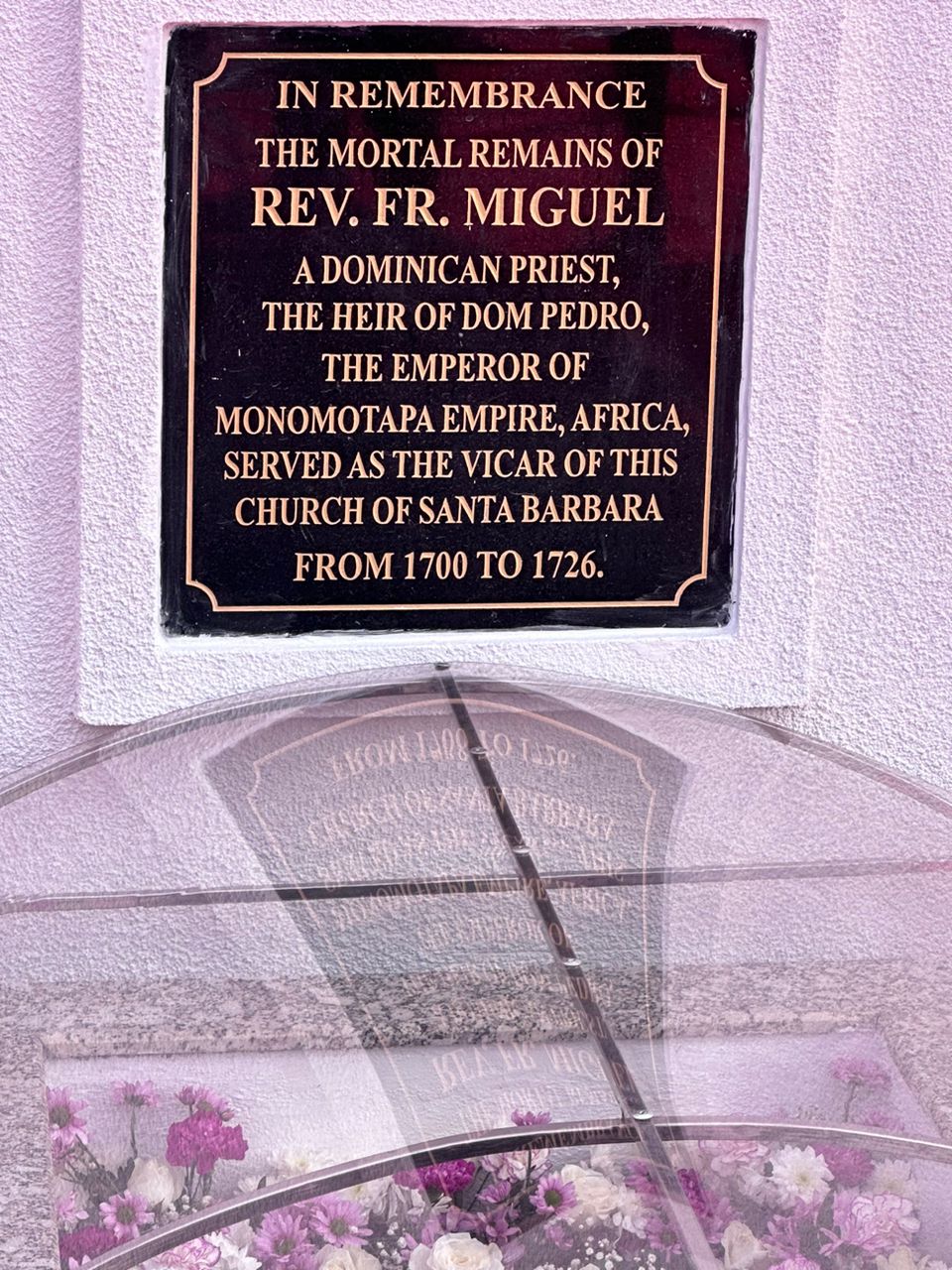
One of the strongest confirmations from this visit is the presence of records in Goa documenting priests of Munhumutapa descent, including Father Miguel, son of Emperor Kapararidze, who served in this region in the 16th century.
“We have confirmed that Father Miguel worked here in Goa and that his grave is here. Our work now is to go deeper into the archives to establish dates, records of the masses he served, and the full extent of their participation,” Vice Chancellor, Catholic University of Zimbabwe, Professor Benny Nyambo said.
Historians say this is not about rewriting history but assembling it accurately using documented evidence scattered across global archives.
“There are extensive archival records here in Goa, in Lisbon, and also in existing scholarly work. Zimbabwe has always had external relations. It was never inward-looking,” History lecturer, Dr Terrance Mashingaidze said.
Zimbabwe is set to formally engage the Government of India to access archives in Goa and New Delhi, while parallel efforts will be extended to Portugal and the Vatican.
Universities in Zimbabwe, the church, and national heritage institutions will be working together in the documentation and preservation of findings.
“This story must be put together properly. Not rewritten, it is already there. Our people must know who they are and where they come from,” Vice President Chiwenga said.
The rich history in GOA serves as a reminder that Great Zimbabwe was not named by accident; it was, and remains, part of a global civilisation.

