



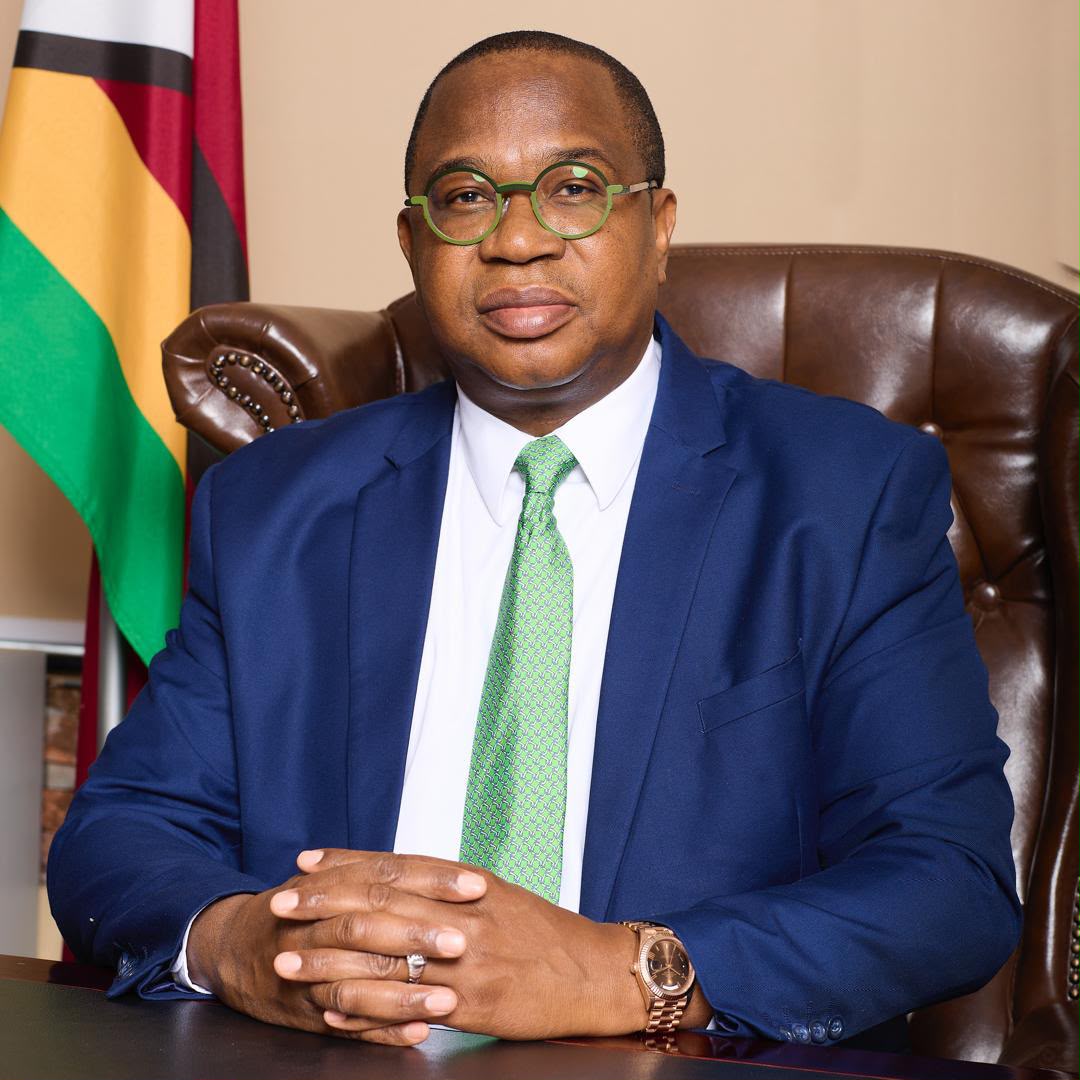
Story by Yolanda Moyo
ZIMBABWE’S Treasury is expected to emphasise policy continuity when the Minister of Finance, Economic Development and Investment Promotion, Professor Mthuli Ncube, presents the 2026 Mid-Term Budget Review this week, signalling that maintaining macroeconomic stability remains government’s central priority.
Attention is turning to this week’s Mid-Term Budget Review, where Treasury is expected to reaffirm its current fiscal and monetary policy framework rather than introduce major policy shifts.
Professor Ncube said the existing policy mix has delivered greater economic stability, with predictability remaining essential for businesses and investors.
“The ship is sailing, it’s steady. The economy seems to be very stable; there’s stability, and we have no reason to disturb or change course. Economic agents should not expect us to change our course during those announcements. For this year, 2026, we’re projecting the economy to grow at 5%, slightly down from the 8.3% experienced last year.
“We expect this 5% rate of growth to be achieved. In the first quarter of this year, the quarter-on-quarter annualised growth rate was 6.8%. If I look at the same quarter last year in 2025, that growth was just above 4%. So, just given that kind of scenario, and the fact that the growth last year was 8.3%, we feel that really with this good start in the first quarter of this year (6.8% rate of growth), surely a 5% rate of growth for the whole year should be achievable,” he said.
Professor Ncube also said growth continues to be supported by strong performances in agriculture, mining, manufacturing, tourism and infrastructure development.
He added that stable electricity supply has boosted industrial production, while favourable international gold prices and the recovery of base metals continue to strengthen the mining sector.
He noted that ongoing public infrastructure investment and the expansion of manufacturing, which now contributes 17 percent to Gross Domestic Product (GDP), are also supporting economic transformation, job creation and value addition.
The review is also expected to underscore Treasury’s commitment to fiscal discipline.
Professor Ncube said exchange rate stability, subdued inflation and foreign currency reserves of approximately US$1.6 billion, equivalent to about one-and-a-half months of import cover, continue to strengthen Zimbabwe’s macroeconomic position.
“The objective of achieving macroeconomic stability has been met, and we want to maintain that macroeconomic stability. It’s a key objective of government. It gives the whole economy a sense of certainty, a sense of predictability. Companies can plan when we have macroeconomic stability, when you know the exchange rate is stable, and inflation is also stable.
“We will carry on with this policy. It has arisen from making sure that we have a prudent fiscal policy, we have equally prudent and tight monetary policy, and that coordination between the two has been critical. The growth of our reserves now at one-and-a-half months of import cover, US$1.6 billion worth of foreign reserves, is bolstering our domestic currency, the ZiG,” he explained.
The minister said prudent fiscal management, including limiting budget deficits and avoiding deficit monetisation, has helped stabilise the ZiG and keep inflation in single digits.
He noted that the exchange rate has remained relatively stable at around ZiG26 to the US dollar, while average inflation between January and June stood below five percent. However, he cautioned that external risks, including geopolitical tensions affecting global fuel prices and the potential impact of El Niño later in the year, remain key challenges.
He added that Government will continue using tax measures to cushion consumers from external price shocks where necessary.
As Treasury prepares to present the 2026 Mid-Term Budget Review, government is expected to reassure investors and businesses that it will maintain its current policy direction while remaining vigilant to global economic developments that could affect Zimbabwe’s economic outlook during the second half of the year.

