



Story by Tapiwa Machemedze
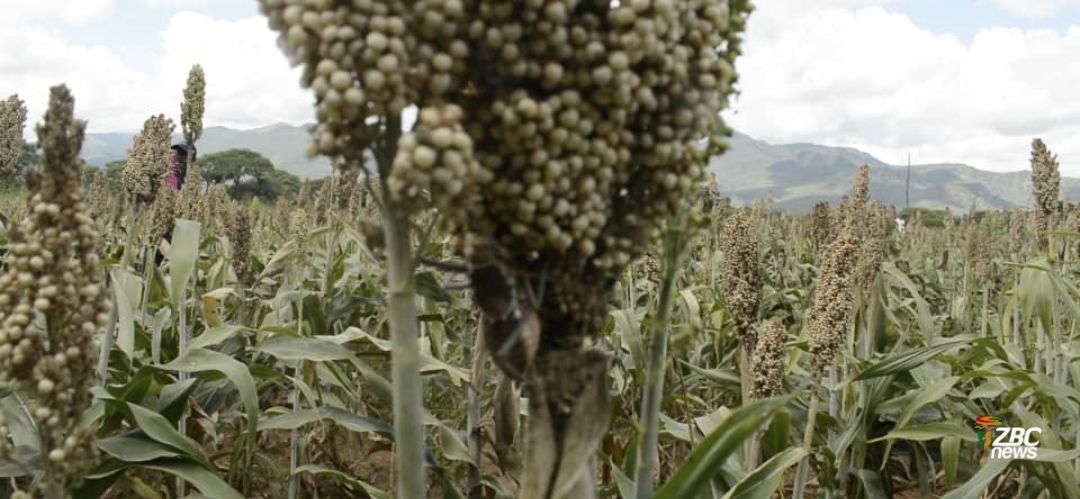
UNIVERSITY of Zimbabwe (UZ) has recorded a major breakthrough in climate change mitigation after producing more than 240 hectares of sorghum seed through its company, Vaka Nyika Seeds, under the Education 5.0 curriculum.
For years, Muzarabani-based farmer Centric Chizeya has faced uncertainty over which crops to grow due to persistent droughts. However, the introduction of climate-resilient sorghum seed is now offering a practical solution, helping farmers adapt to changing weather patterns while improving food security.
Last year,UZ, through its newly formed company, Vaka Nyika Seeds, gave a lifeline to farmers like Centric Chizeya after introducing a high-yielding sorghum variety.
“The UZ offered us a price of 1 dollar per kilogram if we grow this seed well, so this has always been our ambition here in Muzarabani to farm a crop that can pay us well, so we will do our best to produce this seed. The seed is called Gutsanyika. We hope this program will continue here. Other crops we produced were just for subsistence, and we really needed a cash crop. I grew two hectares of this VN seed, and I expect to get two tonnes,” farmer Centric Chizeya said.
Another farmer, Nomore Chizeya of Kazurure Village, is expecting a harvest of 45 tonnes after planting 16 hectares of the sorghum seed.
“They monitored us and gave us guidance. This seed pleased us because we get low rainfall. VN seeds are pleasing us. 45 tonnes expected from 16 hectares,” he said.
University of Zimbabwe Vice Chancellor, Professor Paul Mapfumo, says the rollout of the seed variety to farmers in Region 4 is a direct response to the mandate given to universities by government through the education 5.0 model.
“We are duty-bound to drive industrialisation and modernisation so that people can have disposable incomes. So here in Muzarabani, we formed Vakanyika holdings, it’s a start-up, we formed VN seeds out of that, so it is buttressed by breeding, so we are encouraging traditional grains in line with climate change. So, we bred high-yielding, drought-tolerant traditional grains, so we came here to work with farmers; these people are now showing us that it is achievable if we work together,” he said.
Government, through the Ministry of Agriculture, Mechanisation and Water Resource Development’s extension officers, is working closely with the farmers to boost food security and improve production.
“We are working together with UZ in trying to implement drought-tolerant varieties. We are highly encouraging farmers to do what is called agroecological tailoring, which is producing seeds that fit the ecological regions. In this project, our officers are working with the institutions from production to marketing and sales,” Acting Provincial Deputy Director, Ministry of Agriculture Mechanisation and Water Resource Development, Mr Elias Kudyanyemba said.
University of Zimbabwe has contracted 52 farmers across three villages in Muzarabani, with the initiative also extending to farmers in Hurungwe, Mashonaland West and parts of Mashonaland East provinces.

