



Story by Wellington Makonese
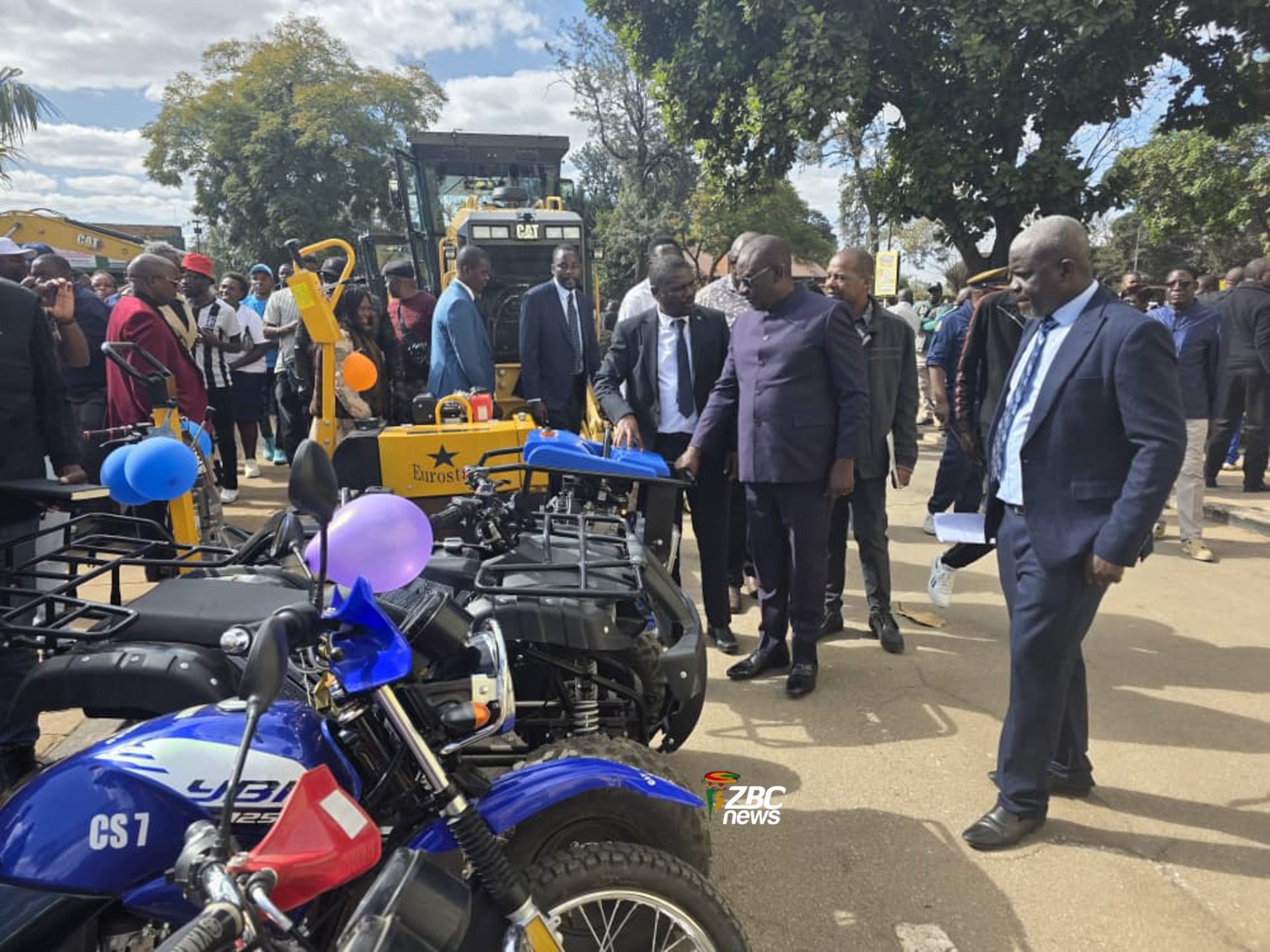
GOVERNMENT’S devolution agenda continues to strengthen service delivery, with Gweru City Council commissioning municipal equipment worth US$1.5 million to improve road rehabilitation, refuse collection and other essential services.
The investment, funded from the council’s own revenue, is expected to enhance operational efficiency and improve the quality of public services across the city.
The newly commissioned fleet includes an excavator, two graders, a water bowser, a road marking machine, a double-drum vibratory roller, a vibratory plate compactor, a jumping jack compactor, two rotary mower slashers, a skip bin, two fire engines, four Gwenhoro low-lift electric motors, two 75-horsepower tractors and a utility vehicle.
Commissioning the equipment, the Minister of State for Midlands Provincial Affairs and Devolution, Honourable Owen Ncube, said the investment reflects Government’s commitment to strengthening local authorities under the devolution programme.
“Today’s event bears testimony to the Second Republic’s bold and strategic policy direction underpinned by the call to action; no compromise to service delivery… I commend Gweru City Council… for prioritising procurement of key plant and equipment using its own revenue to ensure a comprehensive road rehabilitation programme,” he said.
Gweru Mayor, Councillor Martin Chivhoko, said the acquisition would significantly improve service provision.
“This is the commissioning of City of Gweru newly acquired plant and equipment… all valued at USD1.5 million. This is expected to enhance service provision,” he said.
Residents welcomed the development, expressing optimism that the equipment would improve roads and municipal services.
“This development will ensure ease in improving roads and potholes, especially in areas where we stay,” said one resident.
“Improved service provision will enhance the face of the city. We thank government for the development,” said another.
The commissioning comes as Gweru advances several infrastructure projects under the Second Republic, including road upgrades, power generation initiatives, model schools, mini-hospitals and public-private partnerships in waste management, smart metering and market infrastructure to stimulate local economic growth.
Meanwhile, plans are underway to modernise Mtapa Market as part of efforts to improve trading infrastructure and create a cleaner, more organised business environment for informal traders.

