



Story by Mercy Bofu-Matinha
GOVERNMENT and its partners have commissioned the Zaka community seedbank project under the Drylands Sustainable Landscapes Impact Programme meant to strengthen biodiversity conservation, improving food security and enhancing resilience of communities in dryland areas.
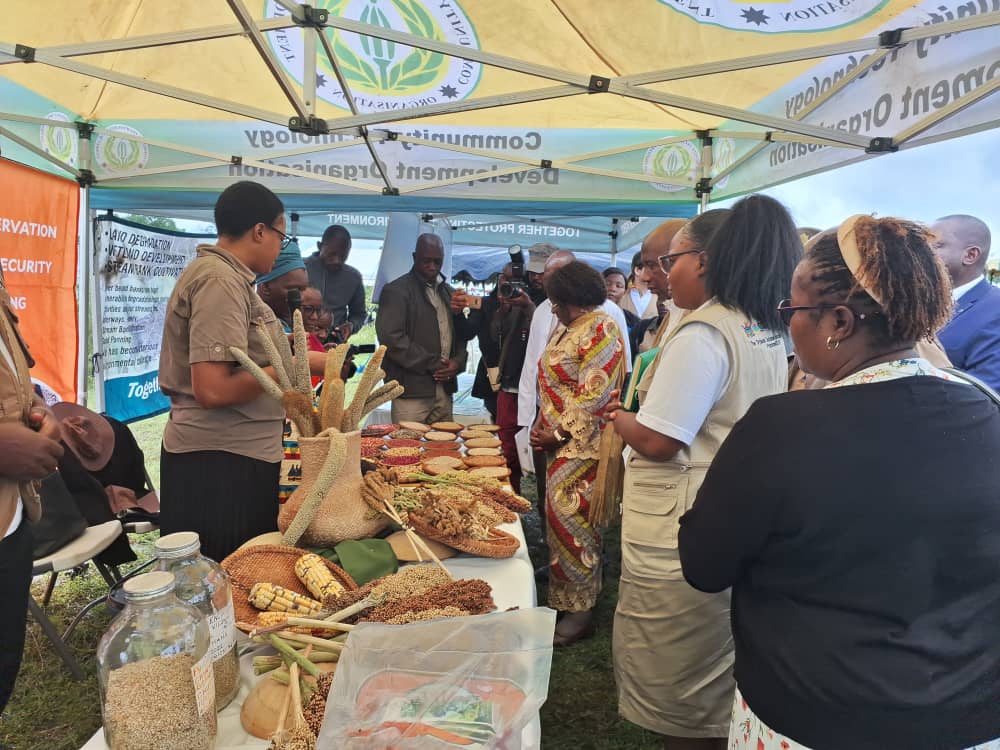
The establishment of a community seedbank in ward 17 of Zaka District has transformed lives of community members in the area as they are receiving training on sustainable agriculture practices, hence enabling them to be food secure.
Through the project, which is benefitting more than 500 farmers, the community is now into various projects, including growing traditional grains and community gardening.
“The coming in of this project has improved lives of many in this community. As you can see, we now have a seedbank where we can access and preserve indigenous and drought-tolerant seeds. We also receive training on the importance of growing traditional grains in the face of climate change,” a farmer said.
“The project came with boreholes, now the community can access clean water, some are now into horticulture projects and for the women, we have since started doing mukando through trainings we receive here,” a beneficiary said.
The project is being implemented by the Environmental Management Agency (EMA) with support from Global Environment Facility in its seventh cycle (GEF 7).
“As we implement this programme, the main focus is to support a transformational shift towards a sustainable and integrated management of multi-use dryland Landscapes. Here in Zimbabwe, the project is being implemented in three provinces,” Drylands Sustainable Landscapes Impact Programme Project Director, Mr Steady Kangata said.
Government representatives said the project dovetails with the national target to address land degradation and improve climate action.
“My Ministry is committed to providing all the necessary policy support to ensure that this project succeeds, in particular ensuring that its results influence both policy and practice within the country, the region, and globally.
“This initiative provides a practical solution by preserving indigenous and drought-tolerant seeds, which are essential for ensuring food security and sustaining our traditional farming systems,” Minister of Environment, Climate and Wildlife, Honorable Sithembiso Nyoni said.
“As a Province, agriculture remains the backbone of our local economy. Projects of this nature contribute towards the growth of our provincial GDP, and subsequently contributing towards the improvement of standards of living in our rural communities,” the Director in the Office of the Minister of State for Provincial Affairs and Devolution, Mr Douglas Chimhande said.
“Without any doubt, this seed bank being commissioned today will serve as a crucial asset for our farmers, particularly in safeguarding indigenous and drought- tolerant seed varieties that are well adapted to the dry conditions of our region.”
Zimbabwe is among 11 countries benefiting under the GEF 7, and the programme responds to a number of global commitments, particularly the United Nations Convention to Combat Desertification, with Zimbabwe being a signatory.

