



Story by Oleen Ndori, Foreign Editor
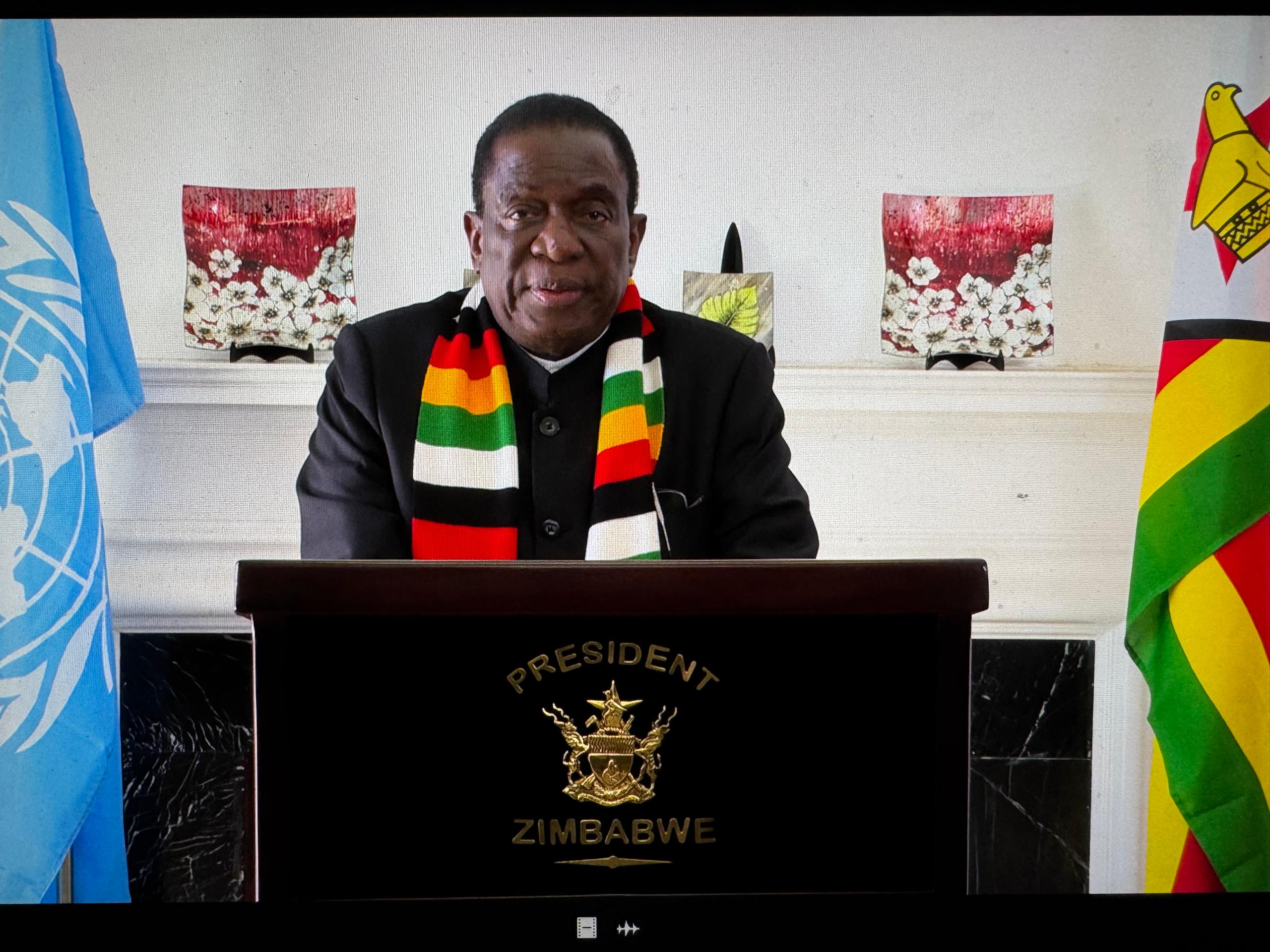
PRESIDENT Emmerson Mnangagwa has called for the reform of the United Nations Security Council in delivering a stronger organisation and a higher quality of life for all people across the globe.
In his message to mark 80 years since the formation of the United Nations on June 26, 1945, President Mnangagwa said the solemn pledge must be kept so as to ensure peace, justice, and development, saying the continued exclusion of Africa from permanent membership must be addressed.
“Zimbabwe joins the international community in commemoration of the 80th anniversary since the signing of the United Nations Charter. Our nations have carried the duty and responsibility to secure peace, justice, and development with unflinching determination. The pledge made on 26 June 1945 stands as our solemn commitment that never again should the world be subjected to such levels of horror witnessed during the Second World War.
“Continued exclusion of Africa as a permanent member of the United Nations Security Council has become an unjustifiable travesty of justice. Zimbabwe firmly joins other jurisdictions in calling for the reform of the Security Council. Collective ownership of global decisions is now an urgent imperative. As we commemorate 80 years of the United Nations, Zimbabwe stands on the side of peace, unity, and shared prosperity for a stronger organisation and a higher quality of life for all the peoples of the world,” he said.
He added that the body must look into issues of neo-colonialism that continue to affect Africa.
“As members of the United Nations, let us protect our founding charter and the principles embedded in multilateralism and the equality of nations. The long-standing character of the United Nations is the pillar for the sustenance of global peace, advancing the global development agenda, and human rights and dignity for all should be defended.
“Today, my country recalls with gratitude the United Nations’ decisive response to the illegal unilateral declaration of independence, UDI, in the then southern Rhodesia. The support for Namibia’s liberation struggle, the United Nations Security Council Resolution 435, and the solidarity that led to the demise of apartheid in South Africa. Regrettably, the decolonisation agenda in Africa is still pending in Western Sahara. Similarly, war, conflict, and neo-colonial tendencies, as well as other unique socio-economic and environmental challenges that face Africa and the global south must be boldly addressed,” President Mnangagwa said.
The head of state further rallied nations to unite in responding to calamities such as climate change, along with silencing the guns globally.
“The emerging global crisis, multidimensional threats, such as climate change, pandemics, trade rivalry, and geopolitical tensions, should be resolved peacefully. The United Nations’ decision-making system and its capacity to urgently respond to pertinent global agendas is to be re-energised towards the realisation of our SDGs,” the President said.
In celebrating 80 years for the global body, UN Secretary General Antonio Guterres launched the ‘UN80 Initiative,’ which seeks to streamline operations, sharpen impact, and reaffirm the UN’s relevance for a rapidly changing world.

