



Story by Chiedza Mutyavaviri
PRESIDENT Emmerson Mnangagwa has emphasised the importance of education in shaping the continent’s future, stressing the need for an education system that not only delivers academic credentials, but also empowers students to drive Africa’s industrialisation and modernisation.
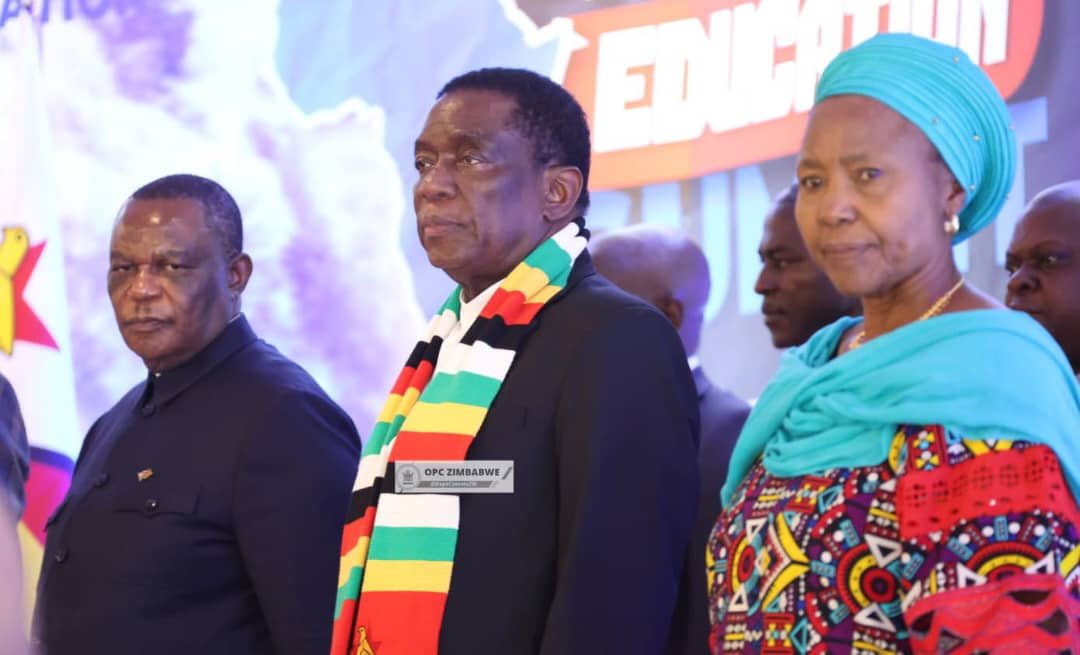
The President said this in his opening remarks at the Third Africa Education Summit, which officially opened this Friday in Victoria Falls,
“It is critically important that we consistently re-examine whether we are appropriately equipping learners with the skills to drive continental modernisation and industrialisation for a higher quality of life for the people of the continent,” President Mnangagwa said.
The President urged policymakers, educators, innovators, and learners alike to adopt bold strategies that move beyond producing graduates with mere certificates. He called for the development of education systems that foster “solution-driven minds” capable of tackling Africa’s unique challenges.
“Bold and decisive strategies have to be adopted so that we foster education systems that inculcate solution-driven minds and not produce merely certificate-holding graduates,” he said.
“To further translate our educational advancement for continental development, it is important to be wholistic in our propositions, taking into account the unique African realities. The quality of education varies widely with many institutions lacking adequate resources and trained educators. These gaps and disparities hinder our ability to harness the full potential of our youth and translate educational advancements into tangible development outcomes,” the President stated.
The President stressed that African states must work together to address educational gaps, particularly in teacher training, which is crucial for improving educational outcomes.
The President noted Zimbabwe’s efforts to build school infrastructure, particularly in newly developed settlements, ensuring that no learner has to walk more than five kilometres to access a school.
“Zimbabwe stands ready to share its experiences in improving access to education and teacher training,” the President said.
To reduce absenteeism due to hunger, Zimbabwe has introduced a comprehensive School Feeding Programme, which covers both rural and urban schools in vulnerable communities.
The government has also undertaken a nationwide initiative to sink boreholes at every rural school and village to ensure reliable access to water, sanitation, and hygiene, complemented by the establishment of nutrition gardens, bolstering the supplementary feeding programme, and incomes for schools.
The President emphasised the need for greater investment in modern infrastructure, including clean energy solutions, to enable rural schools to access electricity and the internet which is critical for e-learning and the broader digital transformation of Africa.
President Mnangagwa also called for African education institutions to become incubators of innovation and entrepreneurship, focusing on producing graduates who are capable of starting businesses and creating jobs.
The summit, which is being held under the theme “Translating Our Educational Advancement to Continental Development: A Strategic Approach” saw delegates and leaders from across the continent gathering to discuss the future of Africa’s education system.

