



Story by Courage Bushe
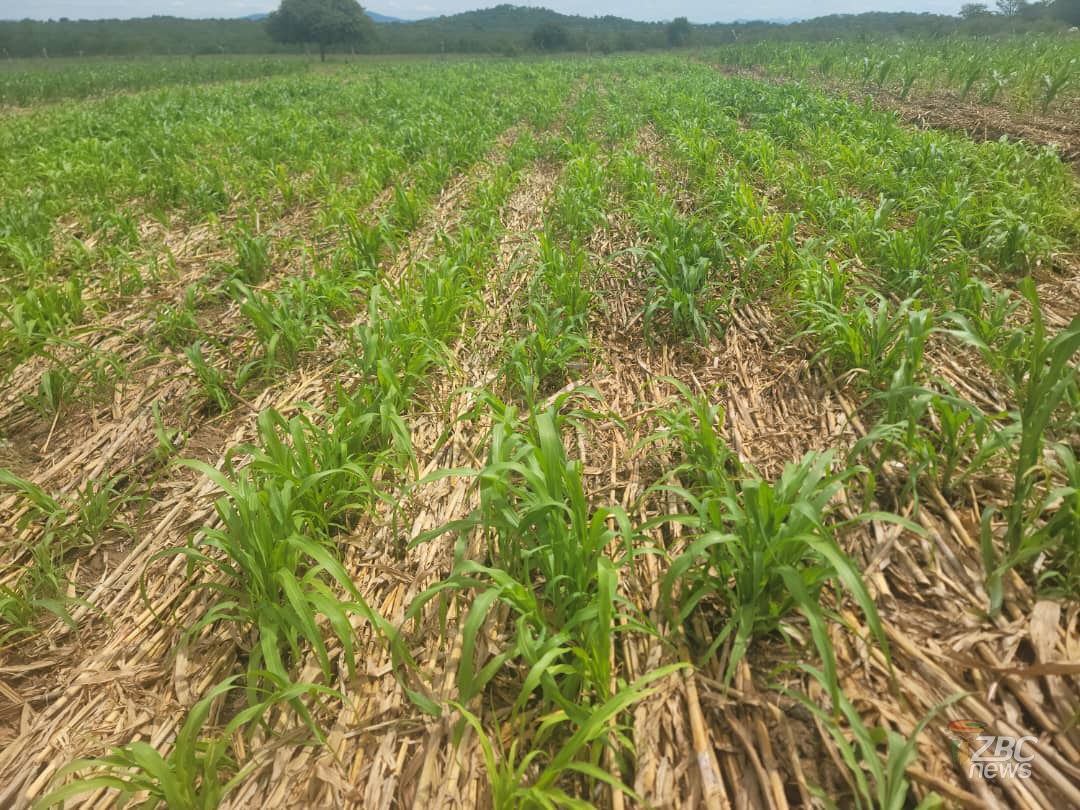
In Chirere Village, Zvishavane District, 59-year-old farmer Sharai Tanhoya has quietly transformed her approach to agriculture, emerging as a case study for the Pfumvudza/Intwasa farming programme.
For years, the Tanhoya family contended with poor yields, often producing barely a tonne of maize, millet, sorghum, and groundnuts combined. Limited access to mechanised tools and recurrent droughts compounded the challenges, leaving small-scale farmers in the area vulnerable to food insecurity.
The introduction of Pfumvudza/Intwasa methods in 2022 offered an alternative. Unlike conventional farming techniques that require tractors or oxen-drawn ploughs, the system relies on manual land preparation, precise planting, and water-conservation techniques tailored to resource-constrained farmers.
“Unlike conventional farming methods that require farmers to till their land using tractors or cattle-drawn ploughs, Intwasa allows farmers who cannot afford equipment to use just their hands to prepare the land. It is in this regard that after again embracing this method of farming, I’m confident of another fruitful season,” Farmer, Mrs Sharai Tanhoya said.
The local community concurs that Mrs Tanhoya has become a practical example of the success story of climate-proofed agriculture.
“We have come here to learn one or two things from her. This concept has proven to be a game changer in the face of climate change, and we are in support of it,” a neighbour said.
“I can say that through the help and knowledge acquired from this field school in preparation for the upcoming season, I am now able to employ all the water conservation techniques, and I am sure I will have a decent harvest,” a community member said.
The interventions by the Second Republic are making a difference in the lives of rural communities.
“Her contributions to small-scale rural agricultural transformation are inspiring future generations of farmers? ers and agriculture. Natural innovation, and as a government, we will continue to roll out interventions that will see rural farmers shine and achieve success in their communities. We support the vision of our president of rural industrialisation, and we are on the right path,” Midlands Provincial Director for Agricultural Rural Development and Advisory Services, Ms Busiso Mavankeni said.
The success of the Pfumvudza/Intwasa programme in Zimbabwe has prompted its replication across Africa, showcasing its potential in improving food security.

