



Story by Lisa Masuku
GOVERNMENT’s Pfumvudza/Intwasa programme is bearing fruit, with communal farmers achieving high yields through leveraging on the climate-proof programme.
With the country targeting to achieve 1.8 million metric tonnes of grain this year, smallholder farmers, including an Umguza-based couple Josiah and Matilda Pisirai who have embraced the Pfumvudza/Intwasa concept are testifying how the concept has guaranteed food security at household level.
“The Pfumvudza/Intwasa concept has empowered me. I had nothing at all, but through adopting this concept, I can now feed my family and even sell some of my produce,” Josiah said.
Having ploughed diverse crops in over 20 plots, the couple is also targeting to penetrate the commercial market.
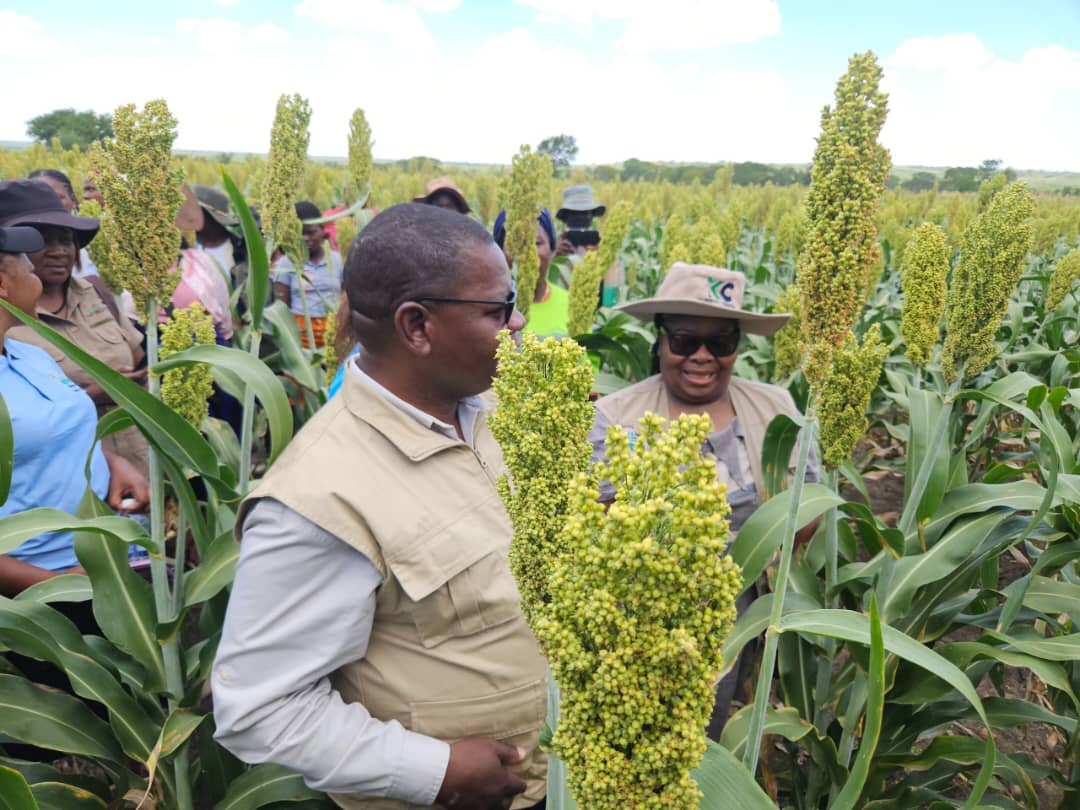
The move by communal farmers to grow traditional grains such as sorghum and cowpeas, feeds into the country’s agricultural climate-proofing strategy.
“We know that in terms of our need as a country, we require 1.8 million metric tonnes of grain that includes maize and traditional grains, but, the more we have more of these cycles of drought, traditional grains will eventually contribute more to this basket,” the Permanent Secretary in the Ministry of Lands, Agriculture, Fisheries, Water and Rural Development, Professor Obert Jiri said.
The planting of drought-resistant traditional grains, especially in ecological regions four and five, is meant to promote adequate staple grain production to achieve national food self-sufficiency.

