



Story by Kenias Chivuzhe
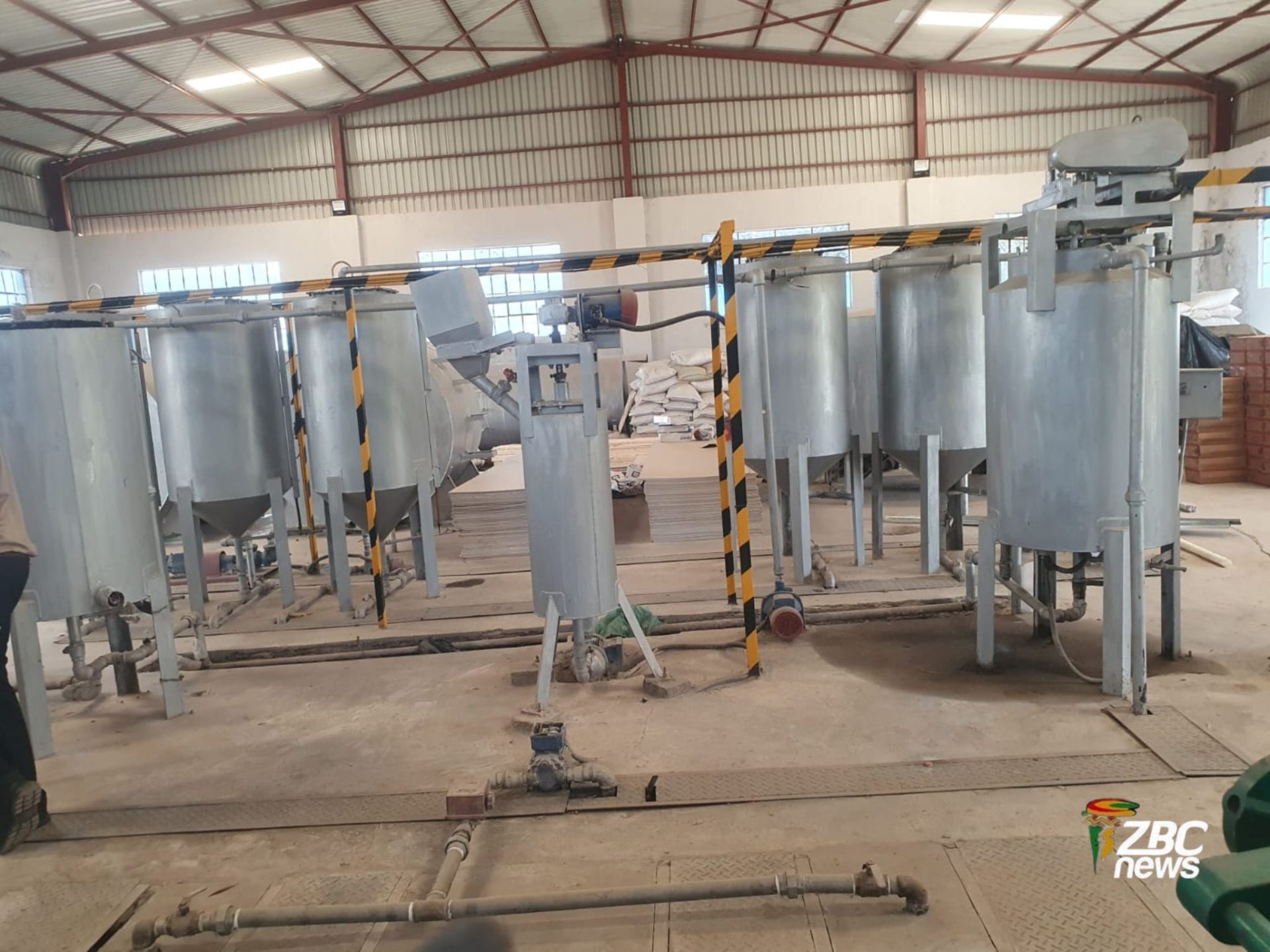
GOVERNMENT is accelerating rural industrialisation through the operationalisation of the Mutoko Bioeconomy Industrial Park, a project designed to expand local production, drive value addition and strengthen Zimbabwe’s manufacturing base.
The facility, located in Mutoko District, is run by Finealt Engineering and has emerged as a flagship initiative under the country’s decentralised industrialisation strategy.
Now operating under the Ministry of Higher and Tertiary Education, Innovation, Science and Technology Development, the entity, rebranded as Finealt Bioeconomy in 2020, has scaled up from its initial biodiesel production focus to a diversified manufacturing hub producing cooking oil, soap and other by-products.

Finealt Engineering Board Chairperson, Colonel (Rtd) Archford Muteranduwa, said the project has recorded significant growth in production capacity.
“We started with a biodiesel plant producing 3 000 litres per day, but capacity has now been increased to 75 000 litres per day. We are mobilising jatropha to ensure the plant operates at full capacity. The soap plant produces 12 000 bars and 48 000 bathing soaps per day, while the cooking oil plant produces 5 000 litres daily. Previously, output was 4 800 litres per day,” he said.
Authorities say the project is positioned to reduce import dependence and improve the country’s balance of trade by substituting imports with locally manufactured goods.
Permanent Secretary in the Ministry of Higher and Tertiary Education, Innovation, Science and Technology Development, Professor Fanuel Tagwira, highlighted the broader economic impact of the initiative.
“We collect jatropha from local communities and process it here to produce biodiesel. A major addition has been the establishment of a sunflower plant to produce cooking oil, alongside a soap plant. President Dr Emmerson Mnangagwa has emphasised rural industrialisation, encouraging the relocation of industries to rural communities. This is crucial to addressing the dual economy, where urban and rural lifestyles differ sharply. Currently, Zimbabwe spends about US$300 million importing cooking oil. Our approach is to form clusters within provinces to produce cooking oil, stock feed, soap, and other products locally,” he said.
A coordinated, multi-sector approach is underpinning the project, with different ministries aligning production, technology and agricultural inputs.
Permanent Secretary in the Ministry of Lands, Agriculture, Fisheries, Water and Rural Development, Professor Obert, said locating industry close to raw materials is central to the strategy.
“Rural development and industrialisation require a whole-of-government approach. While construction and technology development are led by the Ministry of Higher and Tertiary Education, the Ministry of Lands and Agriculture ensures that feedstock for oil and jatropha plants is available. Industries must be established where raw materials are produced, creating identifiable products for each ward to ensure local development,” he said.
Mashonaland East Secretary for Provincial Affairs and Devolution, Mr Tavabarira Kutamahofa, said the industrial park will directly benefit farmers through value addition and expanded markets.
“This Industrial Park is a testament to the government’s commitment to rural development. It is an institution that will grow exponentially in refining and adding value to agricultural products, particularly sunflower and jatropha. Once fully operational, farmers will benefit directly, fulfilling the President’s mandate of leaving no place or person behind.”
The facility has broadened its product range to include biodiesel, industrial and domestic detergents, laundry soap, soap tablets and sunflower cooking oil, with plans underway to introduce stock feed production.\

