



Story by Providence Maraneli
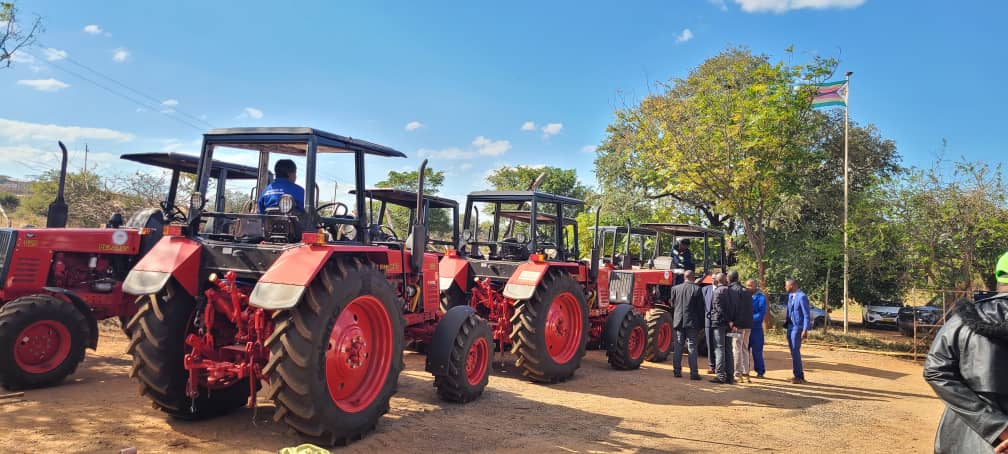
MATABELELAND South’s livestock recovery programme has received a significant boost following the government’s delivery of eight tractors to support a province-wide hay baling initiative aimed at preventing future cattle losses.
The tractors, procured under the national mechanisation programme, form part of government’s broader strategy to build resilience within livestock-producing provinces, particularly in the wake of last year’s El Niño-induced drought that resulted in the loss of nearly 35 000 cattle in the province.
Speaking during the handover, Acting Matabeleland South Deputy Director for Agritex, Mr Bhekilizwe Ncube, expressed optimism about the impact of the equipment on fodder availability.
“We are so happy that we have received these tractors. Beginning next week, we are going full throttle in the hay baling exercise. Our target is 650 000 hay bales, and we believe this will go a long way in supporting the province. We want to maximise while the grass still retains moisture and nutrients. We will also partner with farmers who have hay on their farms,” he said.
The initiative seeks to reduce the province’s over-reliance on natural grazing pastures, which have become increasingly unpredictable due to the effects of climate change.
Minister of State for Provincial Affairs and Devolution in Matabeleland South, Honourable Albert Nguluvhe, hailed the development as a demonstration of the Second Republic’s commitment to inclusive development.
“We are excited as a province to have received these tractors, as this reflects the Government’s commitment to ensuring that no one is left behind, in line with President Mnangagwa’s vision. These tractors will help ensure our people get the best service, and we are confident we will have enough hay for the province especially with the abundance of grass along the highways,” he said.
The hay baling initiative aligns with the Government’s broader climate change mitigation measures, which include the Pfumvudza/Intwasa conservation farming model, expanded irrigation schemes, silage production, the establishment of business units, and drought mitigation centres.
As the province accelerates fodder production, expectations are high that these interventions will lay the groundwork for restocking efforts and the long-term revival of the livestock sector—an essential pillar of Zimbabwe’s agro-based economy.

