



Story by Wellington Makonese
ZIMBABWE is reinforcing its national data systems with the ongoing Zimbabwe Multiple Indicator Cluster Survey (M.I.C.S), a comprehensive household survey designed to provide a baseline for the country’s National Development Strategy 2 (NDS2).
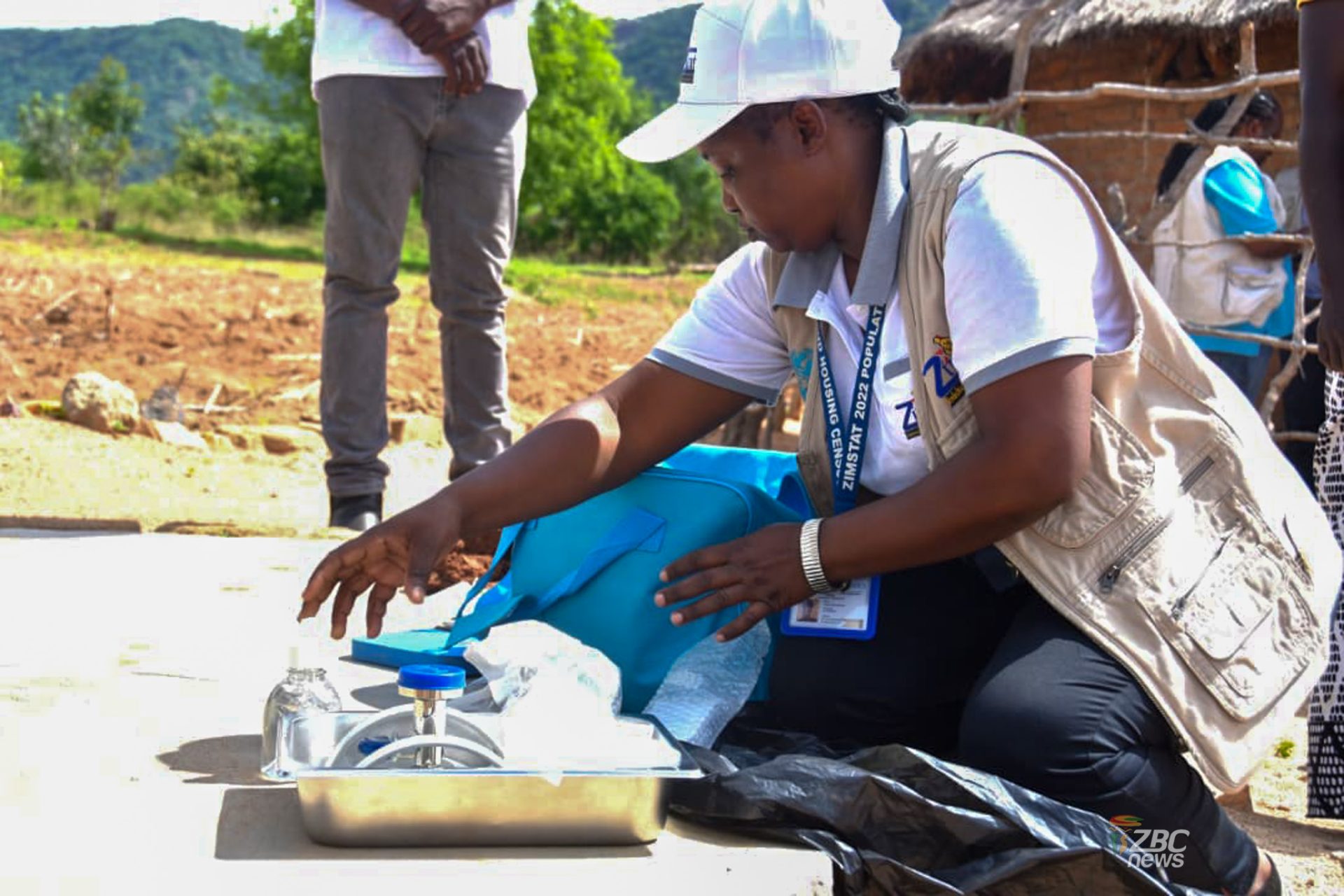
This follows a high-level technical visit currently underway in Manicaland Province, where ZIMSTAT and UNICEF Zimbabwe are assessing progress in the ongoing M.I.C.S. The inspection exercise in Ruwange, Nyanga, offered a closer look at how Zimbabwe’s most comprehensive household survey is being rolled out to capture global-standard data on child and maternal well-being, education, among other national development indicators.
“It is going to provide the baseline for NDS2. It captures indicators critical to the NDS2 framework, and through advanced methodologies, the data will directly inform NDS2, Vision 2030, Agenda 2063 and Zimbabwe’s SDG commitments. Importantly, it delivers reliable and timely data disaggregated right down to ward and district level,” ZIMSTAT Director-Demography & Social Statistics, Mr Aluwiso Mukavhi noted.
UNICEF Deputy Representative, Mr Fiachra McAsey, underscored the value of the partnership in strengthening programming and evidence-based interventions.
“Implementation runs from October to January, and by mid-next year dissemination will begin. This is the fourth MICS, covering areas such as WASH and social protection. It allows us to track progress over the years, especially on women and children, and measure alignment with Agenda 2030. It is a major national investment in data systems, reaching about 10 600 households across all community settings from high-density suburbs to remote rural areas, helping us understand where resources must be directed.”
This is Zimbabwe’s fourth M.I.C.S since 2009, targeting around 11 000 households, implemented under a government-UNICEF partnership, cemented through a Memorandum of Understanding.
Fieldwork began on 21 October this year and runs until the end of January next year, with preliminary results expected in April 2026 and the full report in June 2026.
Through solid financing, strong technical leadership and clear policy direction, Zimbabwe continues to reinforce national evidence systems, ensuring development planning is guided by scientific, credible data and that no community is left behind.

