



Story by Courage Bushe
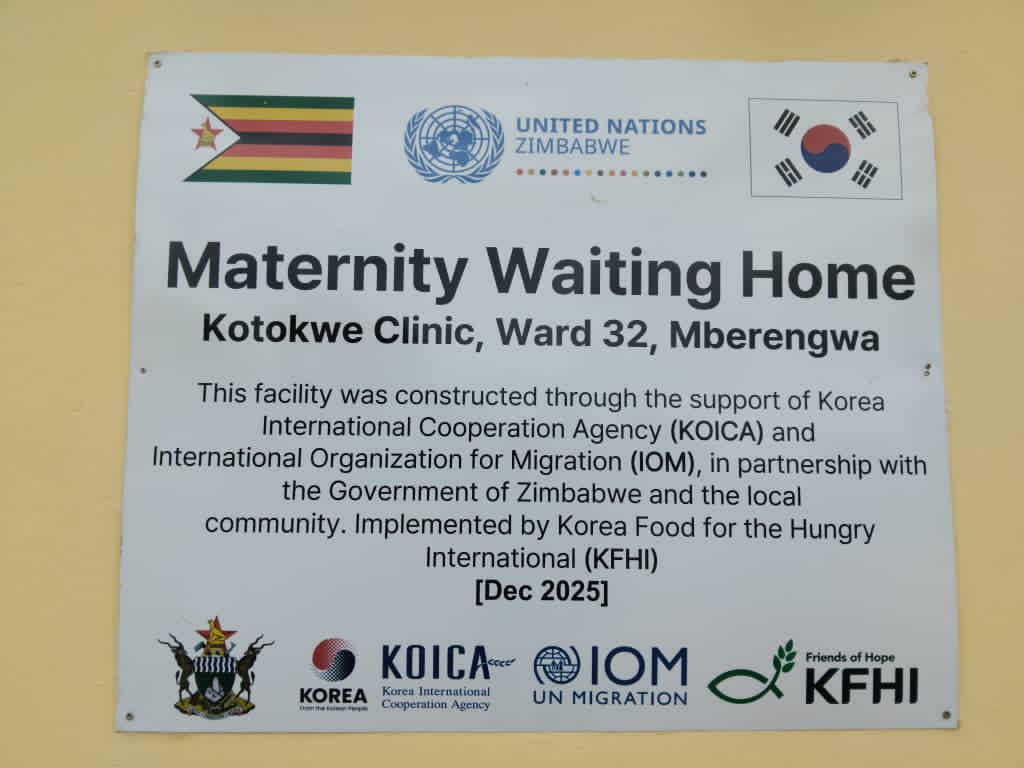
A new maternity waiting shelter has been commissioned at Kotokwe Clinic in Mberengwa District, bringing improved maternal health services to rural communities.
Villagers and farming communities in the Matawo area expressed relief and excitement as the government, working with development partners, officially handed over the facility, which is expected to reduce maternal and perinatal deaths by ensuring expectant mothers stay close to skilled health professionals.
Beneficiaries said the shelter would ease the challenges previously faced by pregnant women who had to travel long distances to reach health services.
“Shelters help rural women access antenatal check-ups, newborn care and early identification of complications during labour. We appreciate this initiative as it will go a long way in helping us,” said one expecting mother.
Another added: “We are grateful for this development. We used to travel long distances before, so we truly appreciate this.”
Kotokwe Clinic Sister-in-Charge, Mrs Vimbai Chipembere, urged women to make full use of the facility, noting that staying close to the clinic during pregnancy allows for better monitoring and improves chances of safe deliveries.
“Women are encouraged to continue utilising the services of waiting homes, as these facilities ensure that in their vulnerable state they remain close to health practitioners and can be easily monitored. This will promote a safe environment for women while also reducing maternal deaths,” said Kotokwe Clinic Sister-in-Charge, Mrs Vimbai Chipembere.
The government praised the collaborative effort behind the project, saying it aligns with national health and development priorities.
“The achievement we are witnessing today is a fulfilment of Zimbabwe’s health priorities as outlined in the Zimbabwe Health Strategy 2021-2025. It aligns with the government’s inclusive development agenda of leaving no one and no place behind,” noted Mberengwa District Development Coordinator, Mr Vafios Hlabati.
Maternity waiting shelters are regarded as a key intervention in rural areas, allowing expecting mothers to access antenatal services, newborn care and early detection of labour complications.

