



Story by Yolanda Moyo
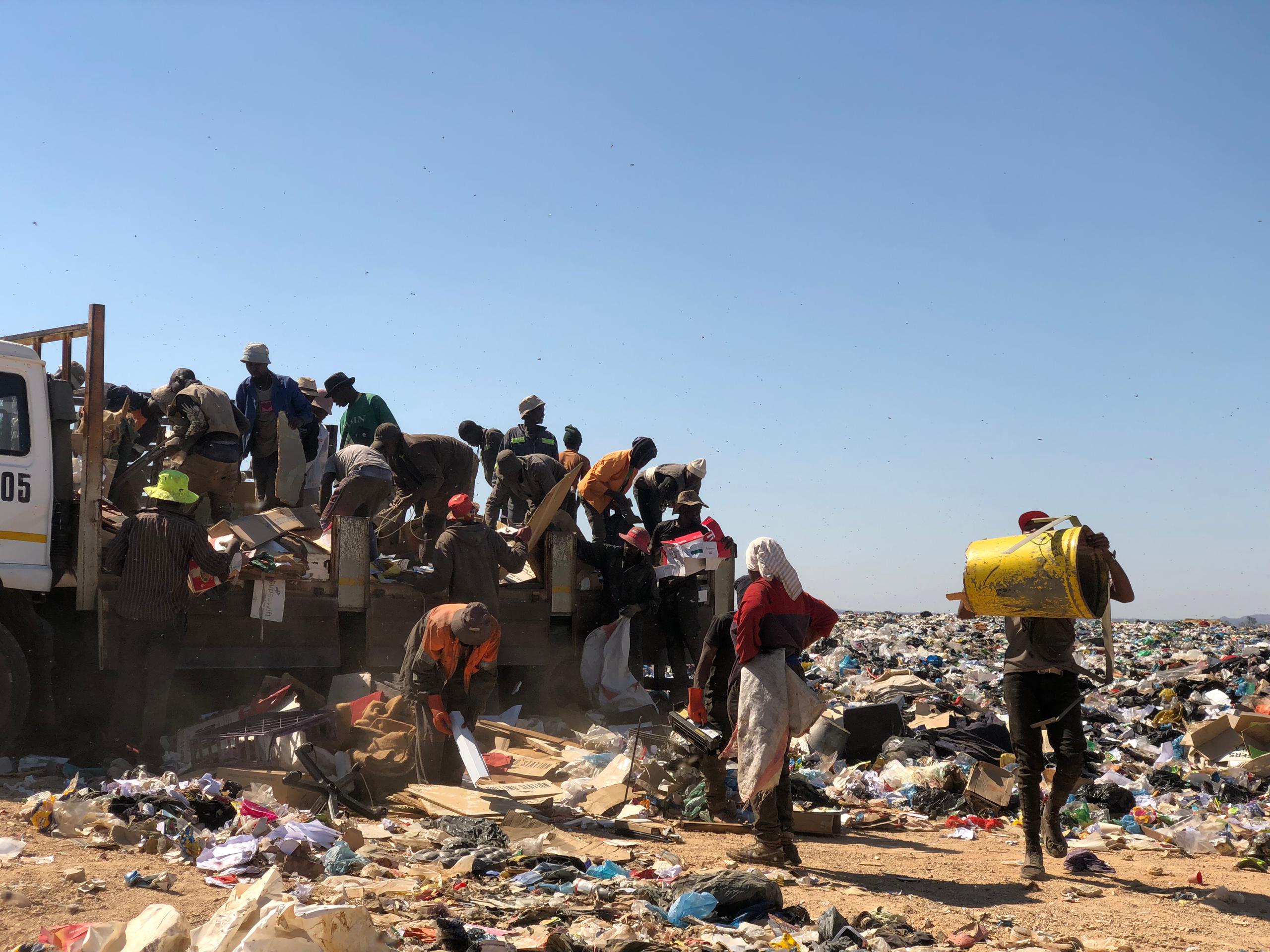
CALLS are intensifying for authorities to urgently address the worsening health and environmental risks posed by the Richmond Landfill Site, commonly referred to as Ngozi Mine.
Established in 1993, the Richmond landfill had an estimated lifespan of 20 to 25 years.
Over the years, the dump site has become a stark symbol of urban neglect, spewing noxious fumes and a squatter camp sprawling around the area, posing a tangible threat to the thousands of residents living in its shadow.
“We wake up to the stench of burning waste almost daily, and some of us have developed persistent respiratory problems. Children are always sick, and the flies in our kitchens are unbearable.
“You see plastic bags flying everywhere, settling in our yards, on our trees. During windy days, the dust from the dump covers everything. It’s not just an inconvenience; it’s a fundamental threat to our health and dignity.
“Our school is near the landfill, and when the fires are burning, it is a struggle for us students at the school and worse for those who have asthma. We wish that something can be done soon. I am only in form two now, and these two years have been difficult,” said residents.
The need for the local authority to shift its priorities and align its waste management practices with national environmental policies was emphasised.
“Ngozi Mine was not meant to carry this much burden for this long. This is a ticking time bomb. We are wondering what is taking so long to act on h this landfill. We are calling for urgent modernisation of waste management practices. We need proper sorting, recycling, and ultimately, a sustainable solution that doesn’t compromise the health of our communities. The current state is simply unacceptable and a ticking time bomb. The city has to look at other alternatives and comply with national standards to help alleviate some challenges being faced by citizens,” said Bulawayo United Residents Association chairperson, Mr Winos Dube.
Political leaders have also stepped in, urging the Bulawayo City Council to act in the best interest of the people.
“We cannot afford to let the health of our people be the collateral damage of administrative neglect. We urge the Bulawayo City Council to act on this. This crisis is a symptom of a broader governance failure in local service delivery. Action is needed,” noted ZANC president, Mr Timothy Ncube.
The City’s Director of Health Services Dr Mzingwane was unequivocal when pressed on the possibility of constructing a modern waste management plant at the dumpsite.
“Unfortunately, constructing a modern waste management facility such as an incineration or recycling plant directly on the existing Ngozi Mine site is not feasible. The area is not designated as an industrial zone, and its proximity to residential communities makes it unsuitable. Should something go wrong, it could endanger residents.
“The facility should instead be established within the city’s industrial zone. This will allow for diversion of waste from the current landfill. Over time, the informal settlement surrounding the site will naturally phase out, enabling us to decommission the landfill without direct confrontation.
“The aim is for this to be the last landfill. In the modern world, what we call waste is a raw material in another form. If we implement waste separation at source, there will be no need for a landfill in the near future,” he said.
For many residents settled around the Richmond site, hope is now pinned on the recently launched Minimum Service Delivery Standards framework by the government to move from paper to practical implementation by the Bulawayo City Council.

