



Story by Tamuka Charakupa
GOVERNMENT says it will continue with its agro-ecological tailoring and farmer field schools to bolster Pfumvudza/Intwasa programme under the Agricultural Food Systems and Rural Transformation Strategy (AFRTS).
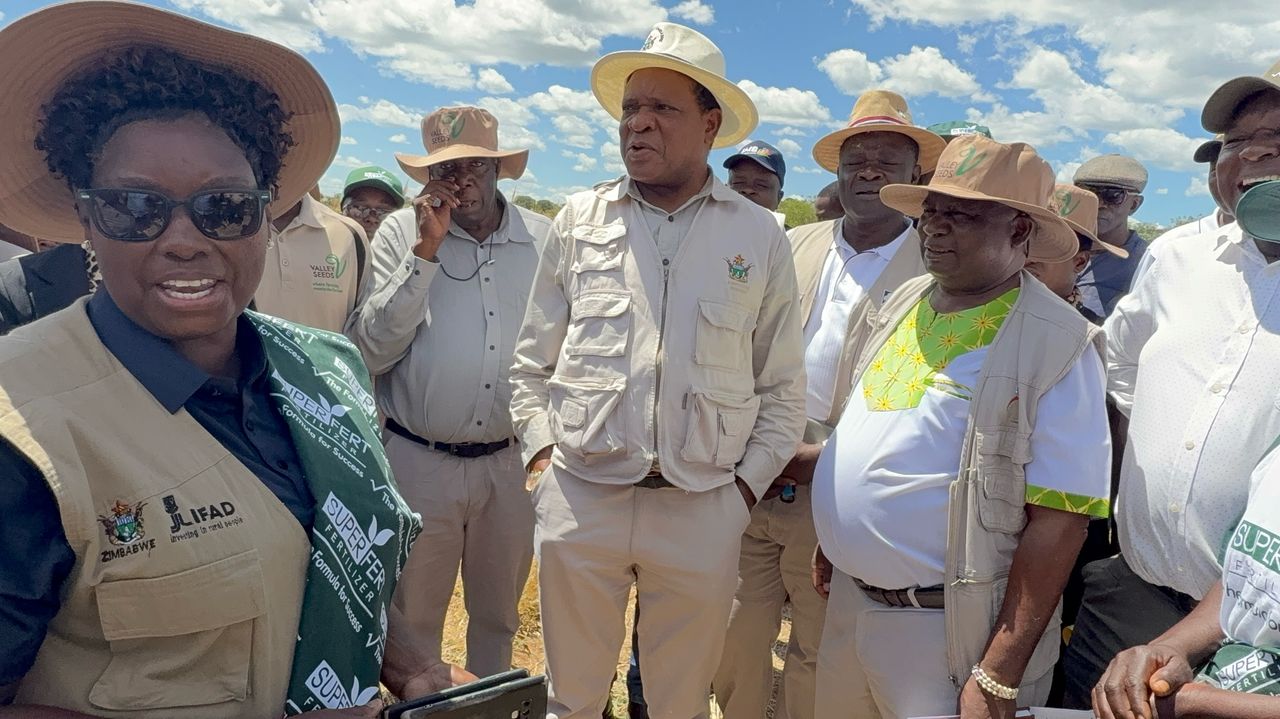
This came out during a field day held this Friday in Rafingora, with one of the leading farmers Mr Peter Mutanda and his wife Getrude testifying of the transformative impact of the Pfumvunza/Intwasa farming method.
Mashonaland West province continues to maintain its status as the highest crop-producing province after surpassing its maize target of 360 000 hectares to 382 000 hectares this summer cropping season.
Pfumvudza/Intwasa targets were also marginally surpassed from 25 000 hectares to 26 500 hectares, a development earmarked to contribute significantly to food security in the province.
“Pfumvudza/Intwasa concept has proved to be a game changer in our farming experience because we are now scoring around 8 tonnes per plot. We are also grateful for the support we are getting from government as far as seed and inputs are concerned,” Mr Mutanda said.
Seed companies and stakeholders also confirmed the double benefits of Pfumvudza/Intwasa concept to both to farmers and their respective businesses.
“As seed companies, we are fully behind government in this Pfumvudza journey. We are recording mutual benefits where our seeds are scoring high returns to the farmers while we also boost our seed sales because of these results,” Valley Seeds Commercial Director Mr Tichawona Maponga said.
Lands, Agriculture, Water, Fisheries and Rural Development Minister, Dr Anxious Masuka said the country is food secure after surpassing national maize targets of 1.8 million hectares.
“We are conducting a tour of the crops to assess the first round of crops, livestock, and fisheries in Mashonaland West, Zvimba district. The initial national assessment showed exceptional performance, with 1.82 million hectares of maize grown, exceeding our target of 1.8 million. The crops that have selected the right variety for the environment are showing excellent growth.
“We anticipate a bountiful harvest, particularly for maize, as Mashonaland West is the primary growing province. They have exceeded their target, planting over 380 000 hectares. The province has also performed exceptionally well in sorghum, planting over 47 000 hectares, surpassing their target of 32 000. However, cotton hecterage is lower due to a delayed start to the rainfall season. We expect the rains to taper off now,” he said.
Meanwhile, the implementation of the AFRTS aimed at transforming the agricultural sector for food and nutritional security.

