



Story by Tamuka Charakupa
GOVERNMENT has intensified efforts to revive cotton production through the introduction of high-yielding hybrid seed varieties and expanded support programmes aimed at boosting productivity and farmer incomes.
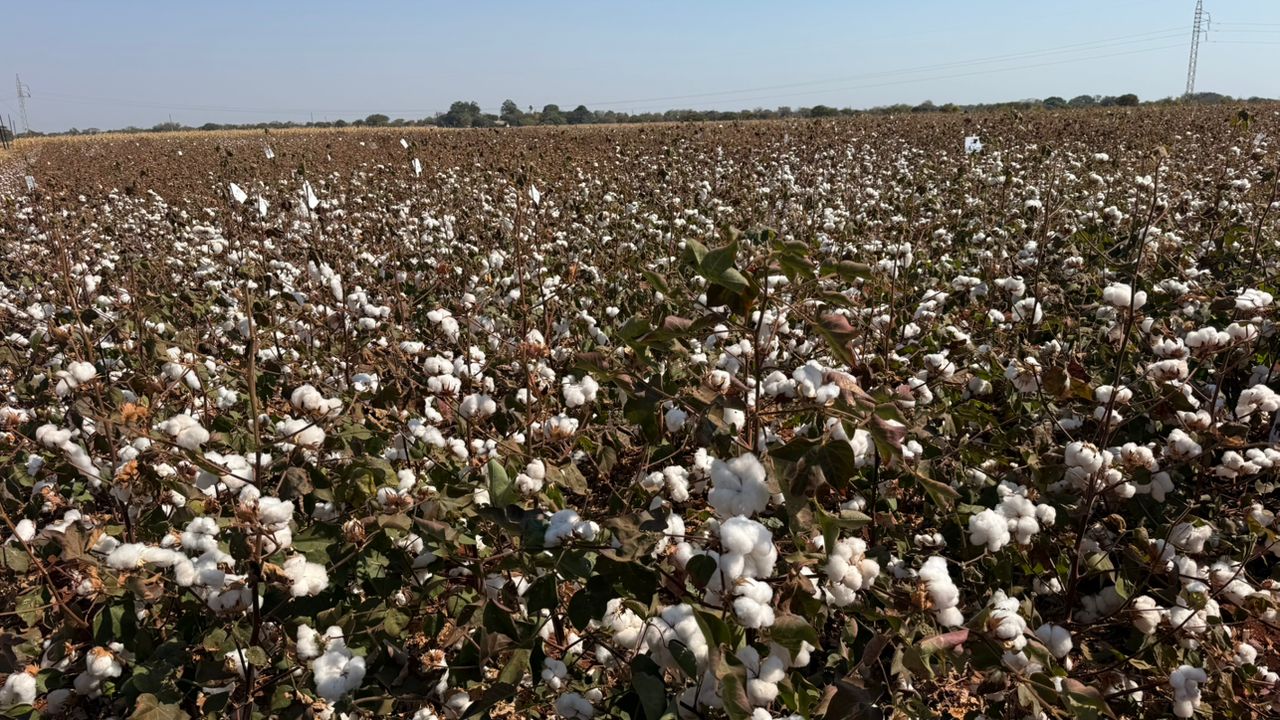
The Cotton Research Institute and local seed company Quton are promoting the adoption of newly developed cotton hybrids as part of broader efforts to strengthen the sector and improve yields.
A cotton field day held in Kadoma on Friday brought together farmers, researchers and industry stakeholders to assess the performance of the new varieties and explore strategies for increasing production.
Farmers say timely input distribution, improved access to fertilisers and favourable producer prices have restored confidence in cotton farming.
“These new hybrid varieties have shown great potential. We received our inputs on time, and the crop establishment has been excellent. If this support continues and prices remain viable, many farmers will return to cotton production because it can significantly improve household incomes,” farmer, Mr Tapiwa Bheri said.
Another farmer, Mr Arnold Gwengo expressed optimism over the performance of the new varieties.
“We are impressed by the growth and performance of these varieties. Even under challenging weather conditions, the crop is looking promising. The support from Government and its partners is encouraging us to expand our hectarage next season.”
Researchers say innovation remains critical in building resilience within the cotton sector.
“Our objective is to provide farmers with varieties that are drought-tolerant, pest-resistant, and capable of delivering higher yields. As weather patterns continue to change, innovation in seed development is critical in ensuring sustainable cotton production,” Agronomist, Mr Kudzai Mandivheyi, said.
Government reaffirmed its commitment to restoring cotton production and strengthening the value chain through research, mechanisation and improved market systems.
“Government remains committed to the revival of the cotton sector through research, farmer support programmes, mechanisation and improved marketing systems. Cotton remains a strategic crop that supports rural livelihoods and contributes to national economic growth. We will continue working with stakeholders to ensure increased production and profitability for farmers,” Chief Director in the Ministry of Agriculture, Mechanisation and Water Resources Development, Mrs Medlina Magwenzi said.
Cotton remains an important cash crop for thousands of smallholder farmers across Zimbabwe. Stakeholders believe the introduction of high-yielding hybrid varieties, coupled with enhanced support programmes, could accelerate the revival of the country’s cotton industry and improve returns for growers.

