



Story by Josephine Mugiyo, Diplomatic Correspondent
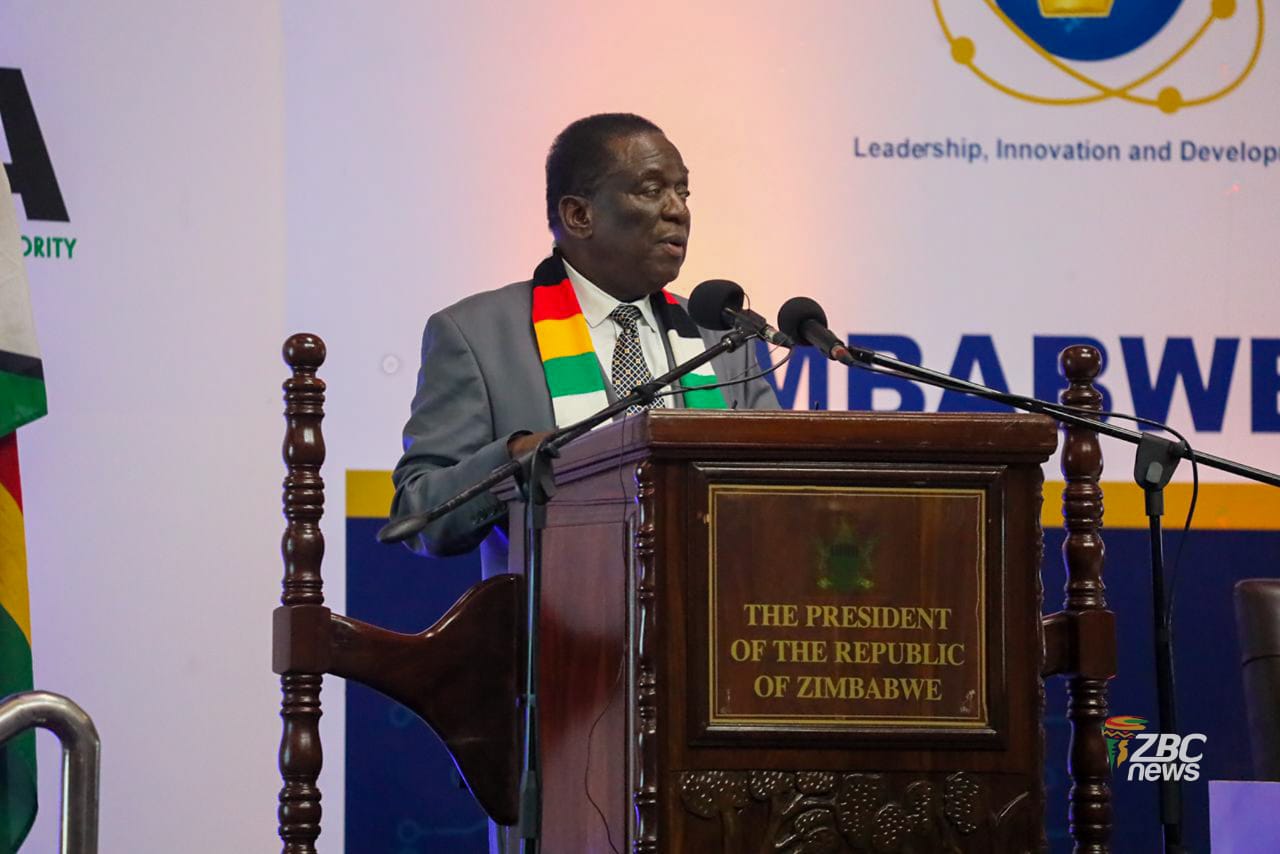
PRESIDENT Dr Emmerson Mnangagwa has challenged Zimbabwe’s research community to move beyond academic inquiry and develop practical solutions that address community needs and drive economic transformation.
Speaking at the 14th Zimbabwe International Research Symposium in Harare on Friday, the President said research remains a critical catalyst for innovation, industrialisation and national development.
The biennial symposium brought together researchers, academics, students and other stakeholders to showcase scientific advancements and explore how research can contribute to economic growth and sustainable development.
Addressing delegates, President Mnangagwa underscored the strategic role of research in shaping policy, solving societal challenges and accelerating modernisation.
“Research is a vital force behind the advancement of knowledge and the progression of any society. It drives inventions, innovation and solutions that propel modernisation and industrialisation, leveraging on a vast range of abundant resources. Research is thus an essential compass for transformation as it provides the necessary evidence, insights and structural frameworks required to reform policies, systems and procedures,” he said.
The President also highlighted the growing importance of artificial intelligence (AI), urging researchers and industry to harness emerging technologies to improve productivity and efficiency across key sectors of the economy.
“Harnessing artificial intelligence should enable our economies to improve efficiency and safety in fields such as mining. As Zimbabwe, we are not going back on scaling up the value addition and beneficiation of our vast minerals and natural resources which must now be transformed into high-value products that create jobs, build industries and strengthen nation sovereignty.”
He added that research in agriculture should support precision farming, boost productivity and promote agro-industrial development.
“With regards to the agriculture sector, research must lead to precision agriculture that increases yields, while protecting the environment and fostering development of agro-processing industries for both domestic and export markets.”
President Mnangagwa stressed that research outcomes must translate into tangible benefits for communities, saying innovation should not remain confined to academic institutions.
“Research must go beyond the classroom and into practical solutions. It is with this recognition that my administration adopted heritage-based education 5.0 policy: this has seen our institutions of higher learning being transformed from centres of theory into engines of industrialisation.”
The Head of State toured various innovations exhibited at the symposium and commended participants for their contributions towards advancing science, technology and innovation.
He called on researchers, innovators and academics to strengthen collaboration and accelerate the commercialisation of research findings in support of the country’s development aspirations.
“I once again challenge you to strengthen collaboration, inspire bold ideas, and accelerate the translation of research into life-transforming solutions that improve the quality of life of our people. Collectively, let us harness artificial intelligence, research and innovation towards the realisation of an empowered and prosperous upper middle-income economy.”
Meanwhile, President Mnangagwa revealed that Cabinet has approved the Research Amendment Bill, which is expected to be tabled before Parliament in the near future.
The symposium comes as Zimbabwe continues to prioritise research, innovation and technology as key pillars in the drive towards achieving Vision 2030 and building an upper-middle-income economy.

