



Story by Peter Chivhima
African countries have agreed to harness South Africa’s presidency of the G20 Anti-Corruption Working Group to champion African interests and bolster global cooperation in recovering hidden assets stashed outside the continent.
Beginning this month, South Africa assumed the Presidency of the G20 Anti-Corruption Working Group, taking over from Brazil.
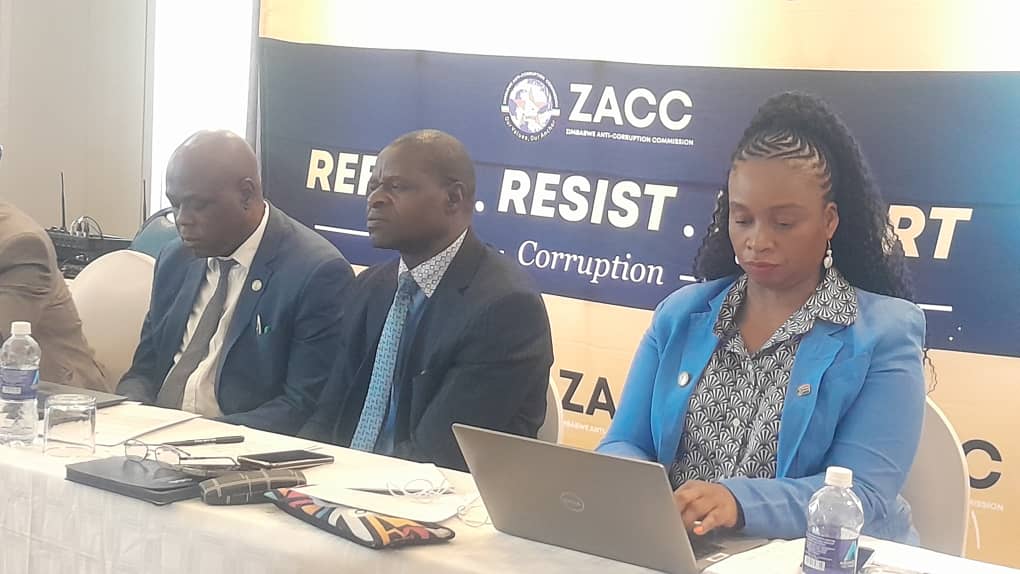
In a show of solidarity, several African countries gathered in Harare, with Zimbabwe hosting on behalf of the African Union (AU) to review the Brazil G20 Anti-Corruption Working Group.
AU focal point for the G20 Anti-Corruption Working Group and Director for Governance and Conflict Prevention at the African Union Commission, Ms Patience Chiradza emphasised the need for cooperation among AU Member States in recovering assets.
“So as you may be aware, the African Union Commission was admitted into the G20 in the last meeting of 2023. So she means the African Union participation started fully in 2024 within the different breaking groups that were under the presidency, about 26 of them. So what I can say about the Brazil presidency, I saw that there was really a need to balance the interests of multilateralism, because in the G20, we have different international, different member states from Europe, the US, Russia.
“So in terms of balance and discussion in view of the geopolitics of today, I think it was something that I saw the president presidency handle very well. It was not easy, but I think we learned a lot of lessons in terms of balancing the agenda, focusing on the agenda, and not being driven to then talk about other issues that are not necessarily within that agenda, given the conflicts that we have in the world at the moment, the Middle East and also in Europe. So I think from my perspective, we saw that the leadership of the Brazilian president was able to balance the needs of all the stakeholders because, in these negotiations, you can’t move if you don’t agree.”
She added, “I think South Africa can draw many lessons also from what the Brazilian presidency will do, and we are grateful that they are actually considering the Brazilian presidency. They are co-chair, because I think this will also help them to carry forward the work that the Brazilian presidents are doing. I think for us, what we look forward to South Africa is to really push the African agenda, particularly on issues of assets we cover, because there is a need for international cooperation for African Union member states to be able to recover stolen assets so that they can be used back home for development purposes. And in asset recovery, we then have to negotiate with the countries concerned what these assets may be.”
South Africa Head of the Special Investigating Unit and Current Chair of G20 Anti-Corruption Working Group, Advocate Andy Mothibi revealed his country’s priorities in the fight against corruption.
“Our focus, our priorities are really four and we believe that they will be shared by all African countries. Number one, just to conclude on the four priorities, number one is strengthening the public service, number two it’s ready to attend to the whistle-blow protection, number three is asset recovery and number four is the inclusion of all stakeholders in the fight against corruption. So we believe that all these priorities are so critical to all of the African countries and we will all benefit,” he noted.
Zimbabwe Anti-Corruption Commission chairperson, Mr Michael Reza is convinced that the involvement of the AU in the working group is critical to enhance Africa’s voice in global governance initiatives.
He said, “It underscores our commitment to addressing corruption, which has far-reaching implications on economic growth, governance, and international financial stability. The participation of various nations and organisations in this working group underlines the importance of international cooperation in addressing corruption. Together, we represent a diverse array of perspectives, experiences, and resources that are crucial for developing effective strategies against corruption. The involvement of representatives from international organisations like the United Nations Office on Drugs and Crime (UNODC) and the Organisation for Economic Cooperation and Development (OECD), the Financial Action Task Force (FATF), the International Criminal Police Organisation (INTERPOL) among others; reinforce the importance of multi-stakeholder approach at global level, in the fight against graft.”
South Africa will be at the helm of G20 Anti-Corruption Working Group Presidency for the next 12 months.

