



Story by Lawrence Trusida, Sports Editor
THE National Development Strategy 1 (NDS1) has laid a firm foundation for Zimbabwe’s sports economy by expanding access to modern sporting infrastructure, narrowing the divide between elite sport and grassroots participation, as the country transitions to NDS2.
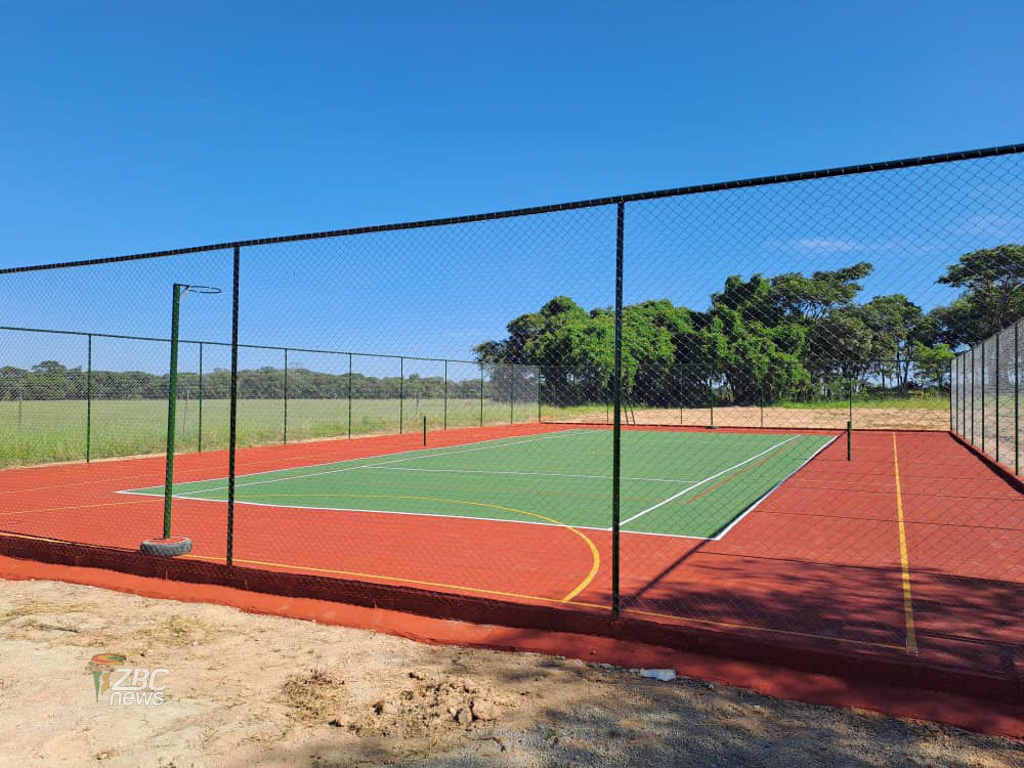
During the first phase of the national blueprint, the Ministry of Sport, Recreation, Arts and Culture rolled out a programme to refurbish and construct standardised multi-purpose sporting facilities in previously underserved communities, broadening access to organised sport across the country.
Under NDS1, new or refurbished courts have been established in areas including Mufakose in Harare, Chambuta in Chiredzi, Rafomoyo in Gutu, Mabhikwa in Lupane, Karigamombe in Zvimba and Juru in Murehwa, among other locations nationwide.
The initiative is aimed at ensuring that every province and district has at least one modern, standardised multi-purpose sports facility capable of hosting several sporting codes.
Permanent Secretary in the Ministry of Sport, Recreation, Arts and Culture, Mr Nicholas Moyo, said the programme was designed to embed sport at community level while extending opportunities traditionally associated with elite disciplines.
“At the community level baseline, the ministry started with the concept of building multi-purpose facilities. Our first target is to ensure there is a standardised, professional multi-purpose court for sport, covering at least four disciplines.
“We are ensuring a footprint in our districts. These courts cater for volleyball, netball, tennis and basketball, and in some areas even handball. What it means is that we are taking so-called elite sports like tennis to remote parts of the country, ensuring no one and no place is left behind,” he said.
With community participation expanding and access to facilities improving, the Government says the next phase under NDS2 will focus on developing a sustainable sports economy.
Mr Moyo said sport was now being positioned as an economic sector capable of contributing meaningfully to national development.
“The vision of this country is to become an upper-middle-income society by 2030. That means our athletes must also be among the beneficiaries. We are identifying the value chain around the sports industry, enhancing it so that resources circulate within the sector. It is no longer just about hosting events, but about building an economy around sport. NDS2 is clear on driving the sports economy,” Mr Moyo said.
Early signs of this transition are already visible on the international stage. Zimbabwe’s senior rugby team, the Sables, have qualified for the 2027 Rugby World Cup, the Under-21 national hockey side recently competed at the World Cup, while the Chevrons are set to feature at the ICC T20 World Cup to be co-hosted by India and Sri Lanka later this year.
As Zimbabwe builds from community courts to global competitions, sport is increasingly being recognised not only as a social good, but as a strategic pillar within the country’s broader development agenda.

