



Story by Abigirl Tembo
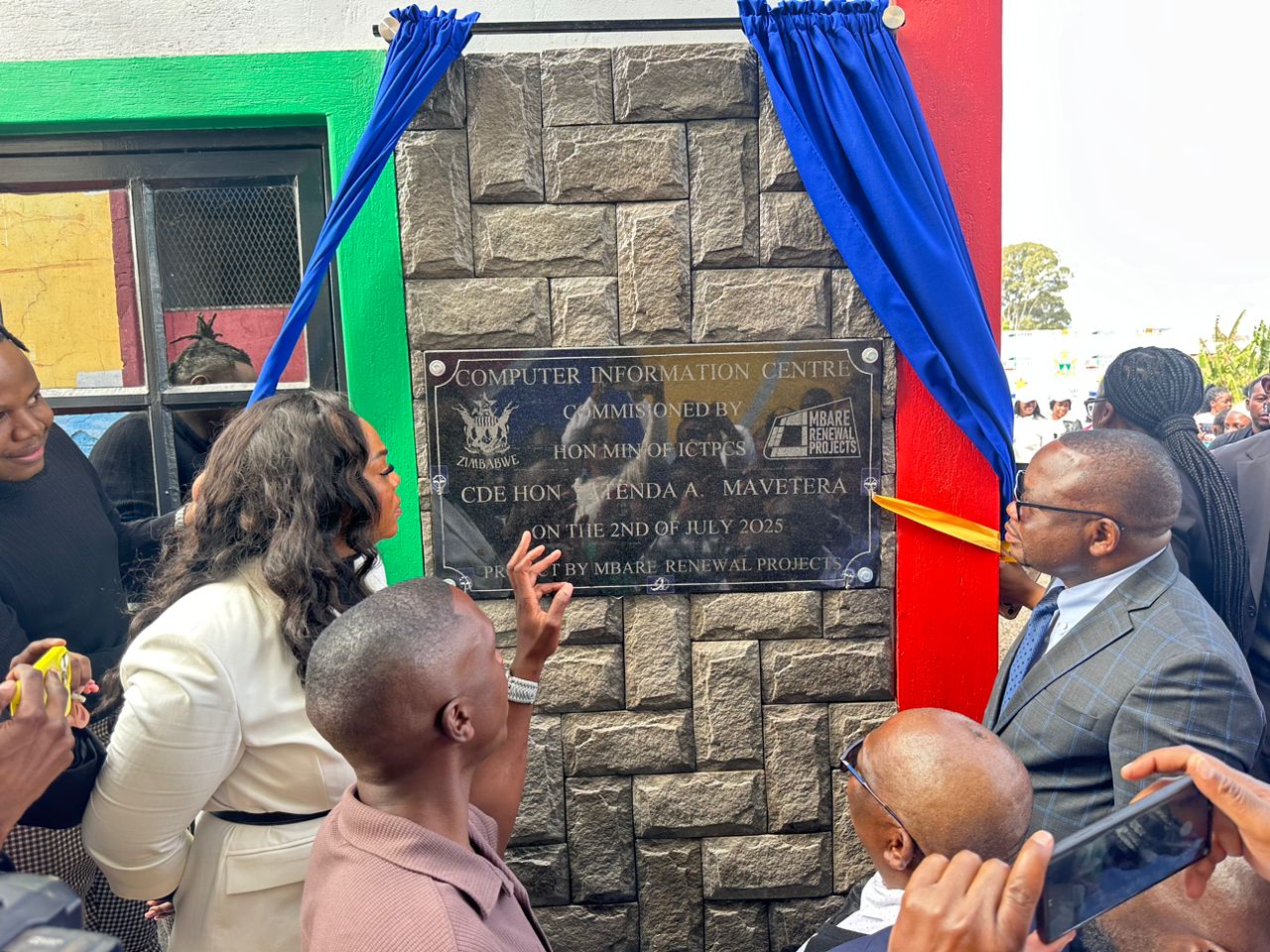
MBARE – A community-built Computer Information Centre has been officially opened in Mbare, marking a major step in youth empowerment and digital skills development.
Driven by locals under the Mbare Renewal initiative, the project is already transforming lives, bringing hope to young people through free ICT training.
In Matapi, Mbare one of Harare’s oldest high-density suburbs this community-led effort is not only restoring infrastructure but also rewriting stories and revitalising lives.
From tackling youth idleness to empowering small businesses with digital skills, the Mbare Renewal Project is proving that homegrown solutions can drive national transformation.
“The first brick was laid on 2 July 2024, and it took us a year to complete because we are self-funded. We had some well-wishers help us here and there, but this whole project was done by people from Mbare. From outside we only hired one artisan, but the building, the carpentry, everything was done by people from Mbare who are supporting the vision from here: Matapi Flats, Majubheki, and Matererini.
“It is not only renewing the buildings or the infrastructure, but also renewing the mindset of our fellow youths. We have been doing awareness programmes, but after awareness, then what? The idle mind is what pushes people to do drugs. This project is there to empower these people — that is why it is going to be a free digital literacy centre,” Mbare Renewal Project director, Mr Christopher Chisese said.
For many young people, the centre has been a lifeline, a chance to learn, grow and dream.
“This project has really capacitated me because I have gained some skills and, most importantly, I can now make my own CV instead of paying someone to do it,” said one beneficiary.
“I have learnt a lot and now know how to market my products online. I am a nail technician, and ever since I got my training through this project, I have been able to market my business online and have been getting a lot of customers,” added another.
“As young people in Mbare, we really appreciate this programme because we now have something to occupy ourselves with. That way we can stay away from drugs and other harmful behaviours,” noted another youth.
The Minister of Skills Audit and Development, Professor Paul Mavima, described the initiative as a seed that will grow into a tree of transformation.
“With this programme, a seed has been planted, and it will grow. I am really happy that it is happening here at Matapi, which considered to be a backward place. But through this, there is going to be modernisation here as well. It is very important because a skilled and competent population is what transforms a nation.
“All development is based on the human capital of a country, and that human capital should be skilled and competent. In that chant, we were saying our youngsters should not fall victim to drug and substance abuse. Instead, they should concern themselves with getting skilled so that they can earn a living, transform their communities, and transform their own families,” he said.
ICT, Postal, and Courier Services Minister Honourable Tatenda Mavetera said the initiative aligns perfectly with President Emmerson Mnangagwa’s vision of building an empowered and skilled society.
She added that the Ministry has already facilitated the training of 68 people at the Mbare Computer Information Centre who graduated with digital foundation skills, with more expected to benefit as the free programme continues to grow.
“As a Ministry, we have realised that it is important to work with people in line with our President’s vision, that each and every community has its own strength, and we need to support whatever the community brings about. As Minister of ICT, we have realised that there are many community labs that have been constructed, and all we need to do is capacitate them. When the community has done its part to build a computer lab, all we can do is support through the Presidential Capacitation Programme for computers.
“We believe that the Presidential Computer Programme will also assist people. We have a lot of talented young people, particularly in digital skills. We need to identify digital ambassadors who will bring others on board for digital skills training and competence. It is important for us as a country to plan as we journey towards Vision 2030, particularly around our digital skills programme. We have a 1.5 million coding programme, which we believe is a game-changer. We want more young people to take it on board and learn these digital skills, because this is where the future is going. With these initiatives, all we can do as a Ministry is support,” she said.
Under the Presidential Computerisation Programme, more community ICT labs are expected to be equipped across the country, but what sets the Mbare model apart is its local ownership and sustainability.

