



Story by Fungai Jachi
THE Chinhoyi University of Technology (CUT) is emerging as a techno-preneurial institution whose developmental trajectory across its spectrum of programmes and projects resonates well with Government’s thrust to solve socio-economic challenges by industrialising the country and making it an upper middle income society by 2030.
CUT was mandated to take the lead role in running the national cattle breeding programme to rebuild the national herd, has upscale the cattle breeding semen processing and artificial insemination unit to include invitro-embryo production, super-ovulation, embryo flushing and embryo transfer technologies.
“Embryo Production and embryo transfer technologies allow farmers easy access to superior and faster genetic progress. Farmers can now buy sexed embryos from CUT genetics across nine breeds. The germ-plasm and embryo transfer unit houses state of the art facilities for handling animal genetic materials. The facility can process 3 000 straws of semen per day with possibility of sex determination,” Director Cattle Breeding Programme Chinhoyi University of Technology, Dr Paul Chatikobo said.
The University is receiving a lot of support from government for it to achieve these milestones.
“With the much appreciated commercialisation ward of US$460 000 from the parent ministry the factory will have a capacity of 2 000 units per day. This will increase the product offering to the local and export market. The products are as a result of research done under the mantra: ‘science meets business’ and dovetails with the vision 2030,” Vice Chancellor – Chinhoyi University of Technology, Professor David Simbi said.
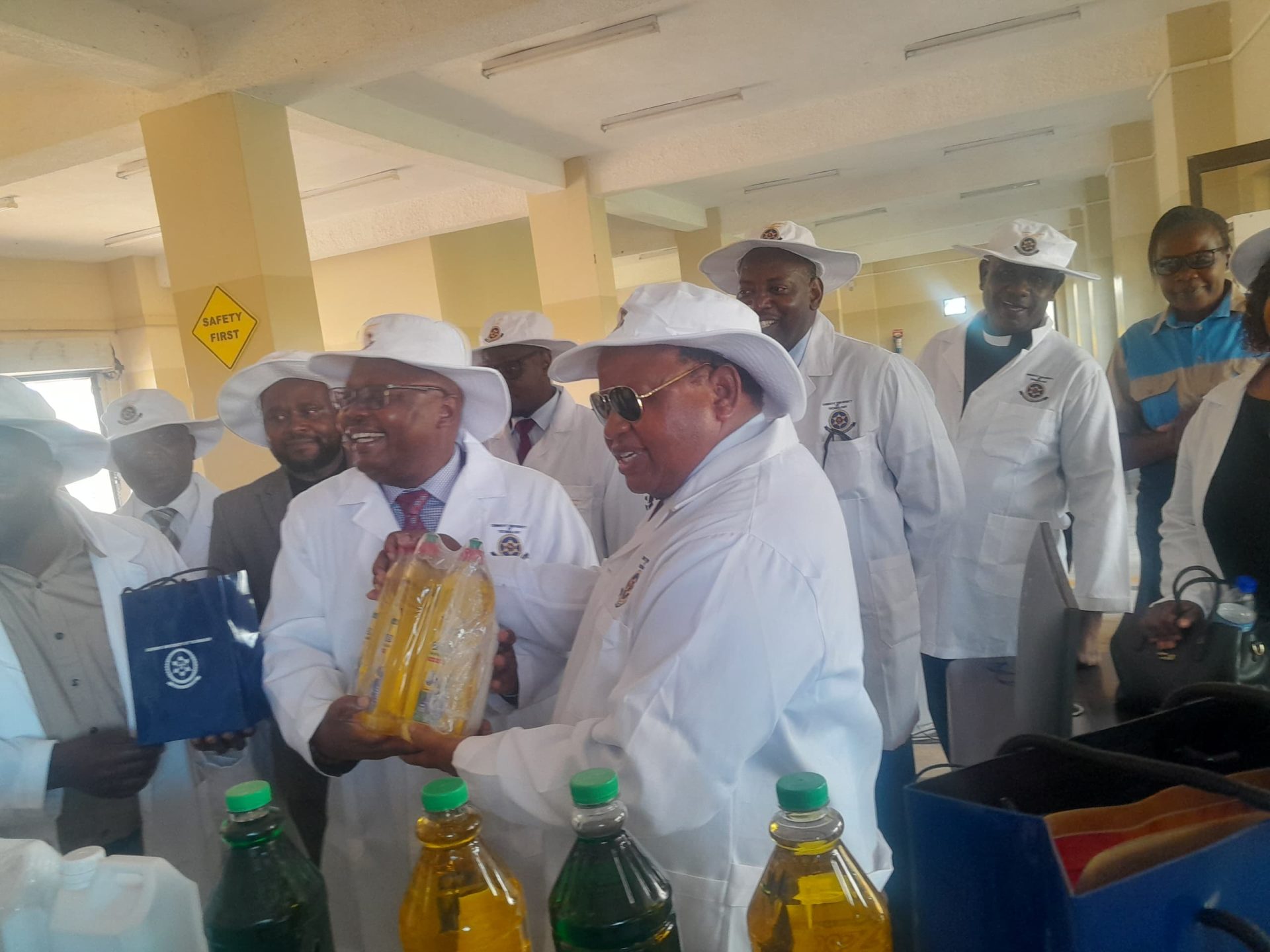
The Minister of Higher and Tertiary Education, Innovation, Science and Technology Development Ambassador Frederick Shava, this Wednesday toured various units under CUT, which include the Àgro industrial park, farm as well as the business incubation and innovation hub, and was impressed by the developments at the institution, calling for commercialisation of the university’s products.
“What i have seen here is encouraging and it shows we are in the right direction with our education system. A lot of innovations are happening at this institutions and they also have industry what we now want is for them to go commercial so that they truly benefit from their work,” Ambassador Shava said.
The inception of the Second Republic has enabled the transformation of the education sector with universities and colleges becoming more than learning institutions and beacons of innovation and industrialisation.

