



Story By Bruce Chahwanda, Political Editor
THE Constitution of Zimbabwe Amendment (No. 3) Bill is not an abandonment of the country’s constitutional order but a continuation of constitutional development aimed at improving governance, enhancing institutional efficiency and supporting long-term national development, Justice, Legal and Parliamentary Affairs Minister Honourable Ziyambi Ziyambi has told Parliament.
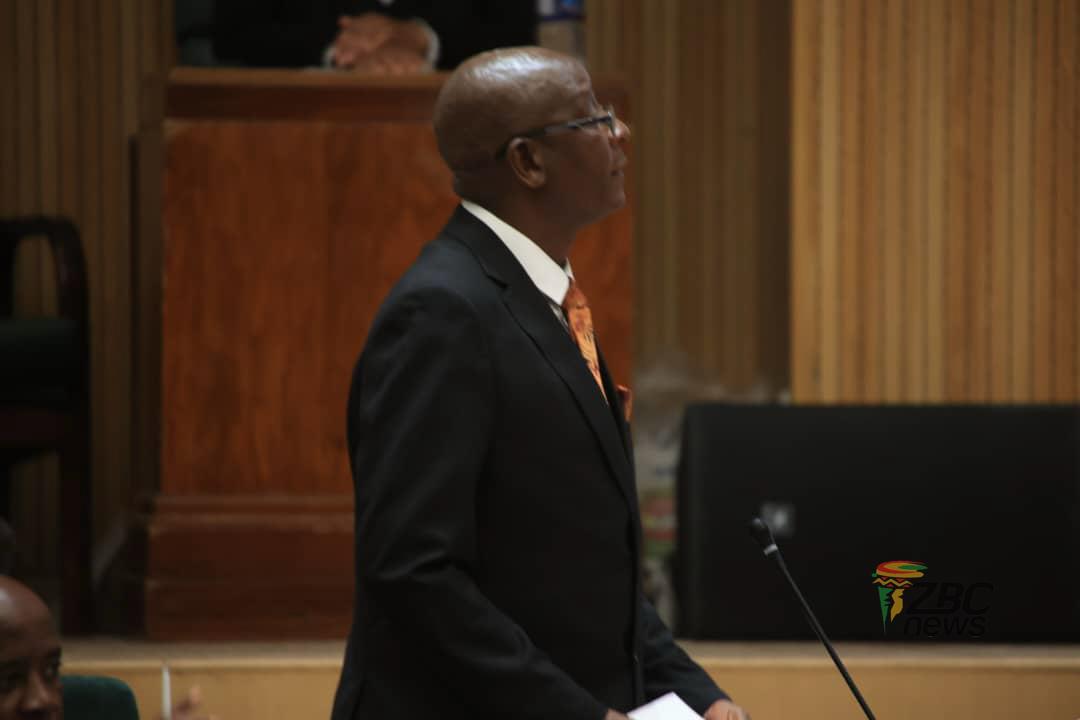
Presenting the Second Reading of the Bill in the National Assembly on Wednesday, Honourable Ziyambi described the proposed amendments as a measured response to lessons learnt during more than a decade of implementing the 2013 Constitution.
“Mr Speaker, this Bill is therefore not an abandonment of our constitutional order in any way, shape or form, but a continuation of it. It is the product of practical experience, of institutional reflection, and of the honest recognition that after more than a decade of implementation, certain provisions of the 2013 Constitution require refinement to enhance their functionality, their coherence, and their service to national progress,” he said.
The Minister said constitutions are living instruments that must evolve in response to changing realities and emerging challenges.
He dismissed claims circulating on social media and other platforms about the Bill, insisting that several allegations made against the proposed law were false.
“Let me state, clearly and without qualification, five things this Bill simply does not do. First, it does not give the President a term extension or a third term. Second, it does not take away the right to vote. Third, it does not concern itself with succession in any political party. Fourth, it does not postpone the nation’s elections to some distant or unknown year. Fifth, it does not concentrate power, or the running of our elections, in the hands of the President,” said Honourable Ziyambi.
The Bill proposes two major constitutional reforms: changing the method of electing the President and extending the terms of both the President and Parliament from five years to seven years.
Under the proposed changes, the President would be elected by Parliament sitting jointly as the National Assembly and Senate, with the election supervised by the Zimbabwe Electoral Commission (ZEC).
Minister Ziyambi said the reform is intended to promote consensus-building, reduce political polarisation and strengthen accountability through continuous parliamentary oversight.
“For too long, our presidential elections have been framed as zero-sum contests in which victory by one side means total exclusion of the other. Such a culture breeds division, mistrust and policy paralysis,” he said.
Honourable Ziyambi argued that a parliamentary model would encourage coalition-building and broader political consensus while ensuring that executive authority continues to derive from the people through their elected representatives.
The Bill also proposes extending the electoral cycle from five to seven years to allow governments sufficient time to implement development programmes without constant electoral disruptions.
“A five-year cycle, properly counted, yields at best two years of genuine uninterrupted governing. The first is consumed by transition and the last by the next campaign. Seven years gives a Government the time to see a major programme through from design to delivery and to be judged not on what it promised but on what it built,” he said.
Honourable Ziyambi identified what he termed five major challenges that have affected Zimbabwe since the introduction of direct presidential elections in 1990.
These include disputed elections, policy paralysis caused by perpetual campaigning, corruption fuelled by political instability, bureaucratic inefficiency and politicisation of the public service, as well as growing societal polarisation.
“A public service that should be neutral, professional and continuous is, in a State held in permanent contest, disrupted by purges and by favouritism. The citizen who simply needs a service from the State is the one who pays,” he said.
The Minister argued that the proposed amendments offer structural solutions to structural challenges that have persisted over decades.
The Bill also seeks to transfer voter registration and maintenance of the voters’ roll from ZEC to the Registrar-General’s Office, which already manages the country’s civil registration database.
Honourable Ziyambi said the proposal would improve efficiency, accuracy and continuous voter registration.
“There is no need for the Zimbabwe Electoral Commission to register voters. It is better to have the separation, and the Registrar-General, as the keeper of the nation’s civil records, is the natural registrar of voters,” he said.
Further amendments provide for the establishment of an independent Zimbabwe Electoral Delimitation Commission to handle constituency boundary reviews, leaving ZEC to focus exclusively on conducting and supervising elections.
The proposed commission would be chaired by a judge of Supreme Court standing and include experts in law, governance, demography and cartography.
Honourable Ziyambi said separating voter registration, delimitation and election administration functions reflects international best practice and strengthens institutional credibility.
The Constitution of Zimbabwe Amendment (No. 3) Bill now proceeds through the parliamentary legislative process, where Members of Parliament will debate its provisions before consideration at Committee Stage and eventual voting.

