



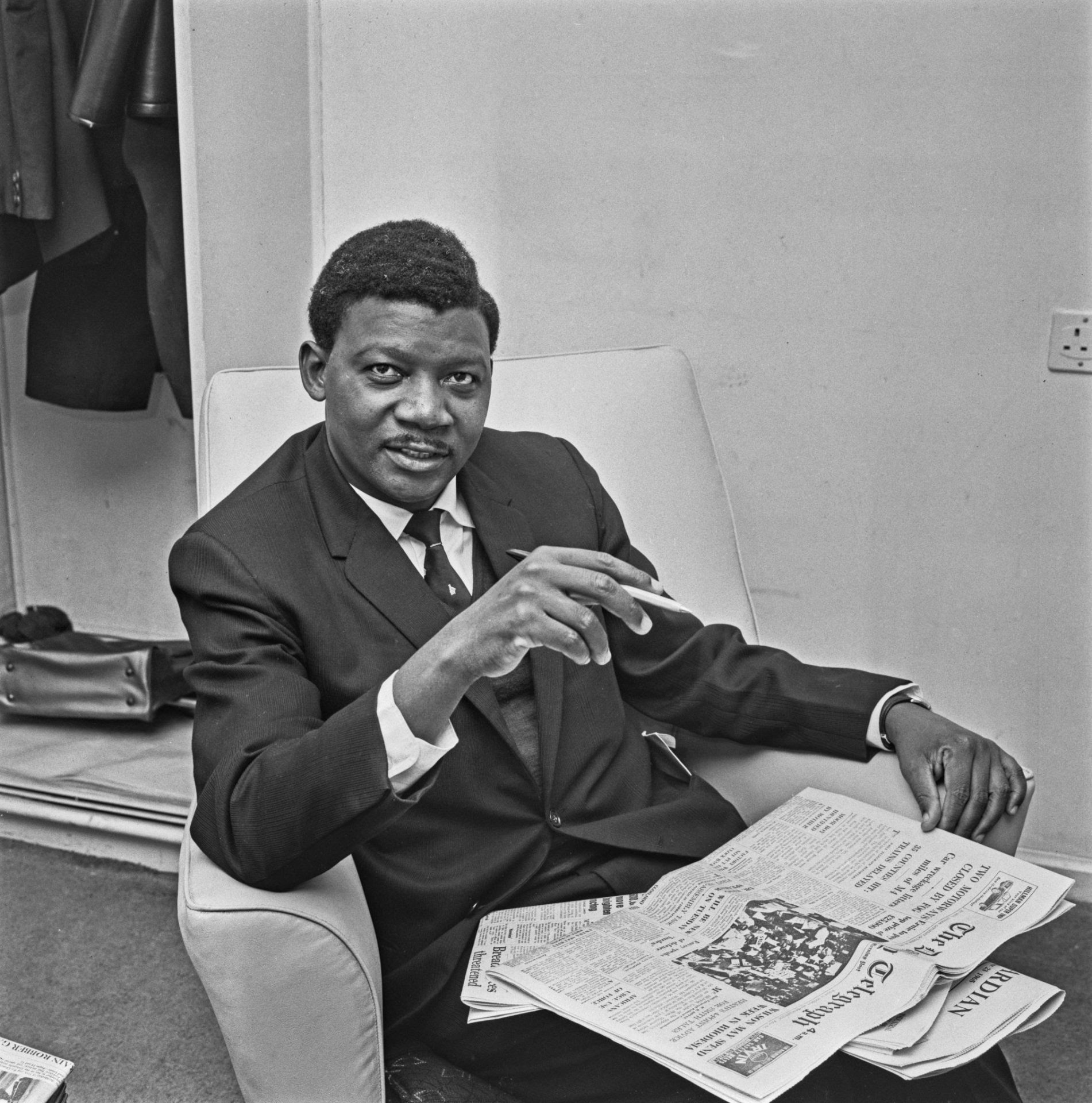
Story by Oleen Ndori
AS the nation prepares to celebrate its 46th Independence Day, today marks 51 years since the death of Zimbabwe’s liberation icon, Cde Herbert Chitepo, in Lusaka, Zambia.
Born on June 5, 1923, the late national chairman of the then ZANU hailed from Nyanga District. After the death of his father when he was three years old, Cde Chitepo was raised at St David’s Mission in Bonda.
He received his early education at the mission and later moved to St Augustine’s, Penhalonga. In 1943, Cde Chitepo went to Adams College, Natal, to train as a primary school teacher.
On his return to the then Rhodesia, he taught for one year at St Augustine’s before deciding to go back to Adams College to matriculate.
Cde Chitepo was the first black Zimbabwean advocate and he successfully defended African nationalists. He was to return to the then Rhodesia in 1954, where he was associated with nationalist political parties.
In 1965, he moved to Lusaka and, in the following year, commenced the organisation of military incursions into Rhodesia.
In September 1966, Cde Chitepo urged the Commonwealth Prime Ministers to enforce total economic sanctions against Rhodesia.
He went on to plan underground subversion inside Rhodesia in 1969 and played an important part in building African opposition to the Smith/Home constitutional proposals of November 1971.
In 1973, he was elected Chairman of the Zimbabwe Revolutionary Council, which was the external wing of ZANU, later named DARE.
Cde Chitepo was, however, assassinated on March 18, 1975, when his VW car blew up in the driveway of his house in Lusaka.
His remains were reburied in Zimbabwe on August 11, 1981. His home in Lusaka stands as a reminder of the brutality of the settler regime, and in August 2025, Vice President Colonel Rtd Dr Kembo Mohadi had an opportunity to revisit the home.
It was during his visit that it was revealed that Government is in the process of acquiring the property as part of efforts to preserve the story of the country’s struggle for emancipation.

