



Story by Abigirl Tembo
ZIMBABWE is making significant strides towards food self-sufficiency, improved healthcare, and economic development, as detailed in the 20th Post-Cabinet Media Briefing presented this Tuesday.
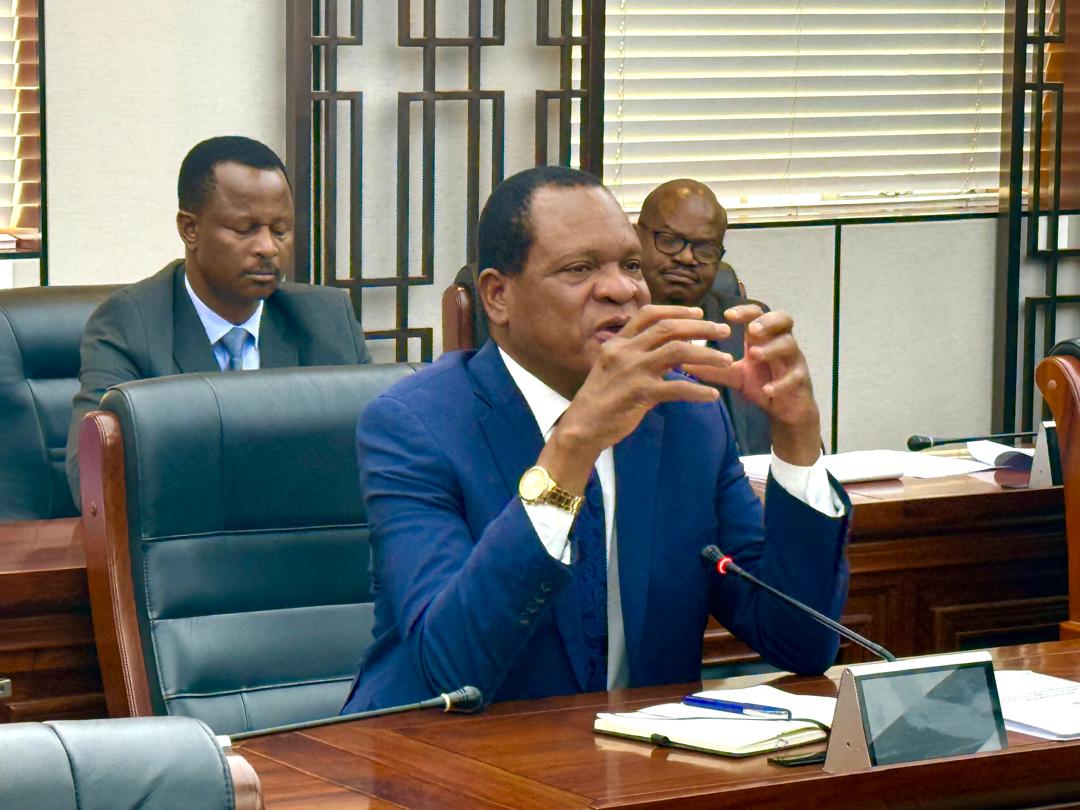
Speaking during the briefing, the Minister of Information, Publicity, and Broadcasting Services, Dr Jenfan Muswere said Cabinet received an update on the 2024–2025 Summer Crops Marketing and the 2025 Winter Wheat Production Plan, with tobacco sales having surpassed 333 million kilogrammes, up from 223 million in 2024.
“Grain marketing continues to be conducted through multiple channels, including the Grain Marketing Board, the Zimbabwe Mercantile Exchange (ZMX), and direct sales to various agro-processors. The Warehouse Receipt System remains active, having recorded an intake of 4 700 metric tonnes of cereals, oilseeds, and pulses to date. The Grain Marketing Board opened 1 804 mobile grain collection centres across all wards to facilitate grain deliveries. Local Strategic Grain Reserves are being created using grain delivered through these mobile centres,” he said.
“Additionally, the mobile centres enable farmers who have delivered maize through the Zimbabwe Mercantile Exchange (ZMX) platform to purchase inputs using ZMX Warehouse receipts. As of 3 July 2025, approximately 17.3 million kilogrammes of cotton, valued at US$5.5 million, had been marketed to six contractors. Tobacco sales reached 333.3 million kilogrammes as of 2 July 2025, compared to the 223 million kilogrammes sold during a similar period in 2024. The average price remained subdued at $3.35 per kilogramme, but the total value of sales surged to over US$1.12 billion, up from the US$766 million recorded in 2024. The government continues to monitor winter cereal productivity enablers to guarantee the achievement of an anticipated 875 thousand metric tonnes of wheat, barley, and potatoes from the 2025 season,” he added.
The Agricultural and Rural Development Authority (ARDA) has been restructured to serve as Zimbabwe’s national food security agency, with a mandate to produce 850 thousand metric tonnes of cereals annually.
Turning to health, the government is ramping up investment in oxygen production infrastructure through direct public funding and partnerships with local firms.
Cabinet also noted the release of the 2023 Economic Census and updated gross domestic product (GDP) statistics by the Zimbabwe National Statistics Agency (ZIMSTAT).
“ZIMSTAT conducted the Economic Census for the year 2023 during the period 2024 and the first quarter of 2025. According to the results, the current Gross Domestic Product (GDP) has been revised to ZWL168.5 trillion, equivalent to US$44.4 billion from the initial estimate of ZWL133.7 trillion equivalent to US$35.2 billion,” noted Dr Muswere.
Finance, Economic Development and Investment Promotion Minister, Professor Mthuli Ncube says the revised Gross Domestic Product (GDP) figures reflect a more accurate picture of an economy that has been expanding steadily, albeit under-recorded.
Infrastructure development was another key highlight.
Under the Second 100-day Cycle of 2025, several priority infrastructure projects are on track, with the construction of Chivi Industrial Training Centre in Masvingo now halfway through and housing flats in Marondera almost complete.
Other key issues discussed in this Tuesday’s cabinet meeting include the successful completion of the Nyabane Clinic in Bulilima, the near-completion of a waiting mothers’ shelter in Mwenezi District, as well as an update on preparations for the 2025 Zimbabwe Agricultural Show scheduled to run from 25 to 30 August.

