



Story by Oleen Ndori, Foreign Desk Editor
THE Government says the successful completion of the African Peer Review Mechanism (APRM) Targeted Review Mission in November last year on Economic Governance and Management is testament to the commitment by President Emmerson Mnangagwa to the principles of good governance, accountability and transparency.
Ensuring accountability and transparency is a key deliverable by the Second Republic and over the years government has introduced various ways of ensuring accountability such as the introduction of performance contracts for ministries, departments and agents as well as the ascension into the African Peer Review Mechanism in 2020.
In November last year, the country underwent its inaugural targeted review in economic governance and management.
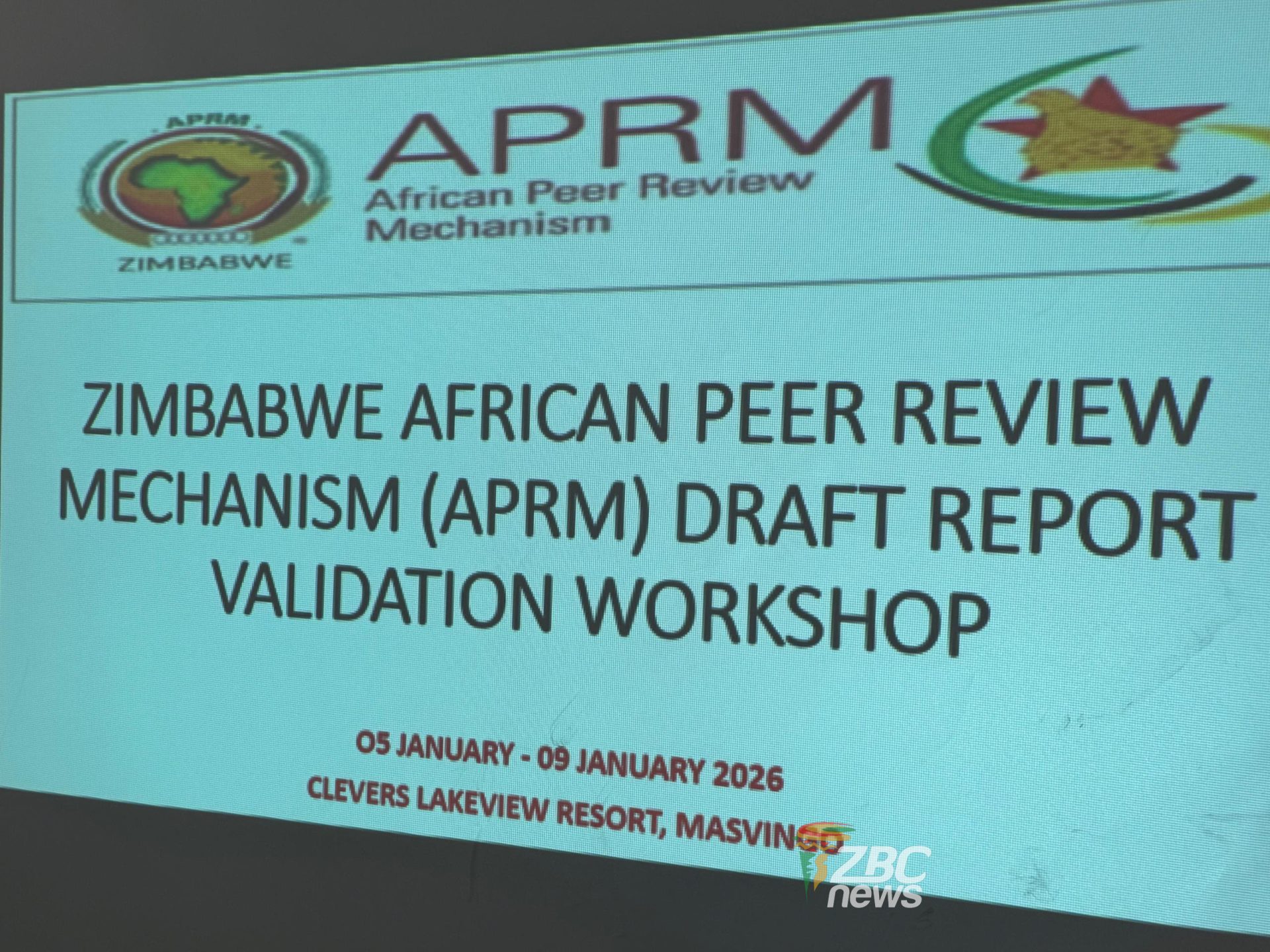
The Zimbabwe APRM is currently validating the draft report submitted in relation to the progress the country has registered in various sectors towards the aspiration of an upper middle-income society by 2030.
“I wish to underscore the importance of further strengthening the institutional linkage between the APRM and NEPAD within our national architecture, a best practice noted by the APRM Zimbabwe delegation that undertook a bench-marking exercise to the Republic of Kenya in July 2025. Going forward, there is a compelling need to merge and harmonise the APRM processes, with NEPAD initiatives, so that the mechanism can operate as NEPAD/APRM Zimbabwe.
“Such alignment will enhance policy coherence and improve coordination. It will also ensure that governance issues are directly linked to sustainable development, planning, implementation, and monitoring frameworks at national level. The APRM is firmly aligned with our national development aspirations as articulated in Vision 2030, which aims to transform our country towards a prosperous and empowered upper middle-income society by 2030, anchored on good governance, accountability, transparency, and inclusive growth,” Acting Chief Secretary in the Office of the President and Cabinet, Dr Willard Manungo said.
For Zimbabwe, the assessment reflects commitment to the principles of peer review and learning in line with continental aspirations of building the Africa we want.
“Allow me to commend our country on the successful completion of its inaugural APRM Targeted Review. This important landmark reflects our collective commitment to the principles of peer-learning, self- assessment, and continuous improvement. Such principles not only underpin the APRM processes but also demonstrate our resolve to deepen good governance practices in line with continental aspirations.
“We are delighted to be here as part of the ongoing APRM process, not to re-write the APRM Draft Report, but to ensure the accuracy and credibility of the report. Your presence and willingness to contribute your expertise underscore the collective responsibility we share in strengthening the quality, credibility, and national ownership of the APRM process and its outcomes,” Chairperson of the National Governing Council, Ambassador James Manzou noted.
“The primary purpose of this Validation Workshop is inter-alia to ensure the factual accuracy of this Targeted Review Report prepared by the APRM. We are checking the alignment between the data collected and the contents of the Report.
“To check on the alignment and synchronisation between the opportunities and challenges identified and the recommendations that are being proposed. The Workshop has been assessing the reasonableness of the recommendations in terms of whether or not they can be actualised and or achieved,” Zimbabwe APRM National Focal Person, Ambassador Albert Chimbindi said.
The African Peer Review Mechanism was established in 2003 by African leaders as a voluntary self-monitoring instrument under the New Partnership for Africa’s Development (NEPAD).
It aims to improve governance, foster political stability, and promote sustainable development across the continent under four broad thematic areas of democracy and political governance, economic governance and management, corporate governance and socio-economic development.

