



Story by ZBC Reporter
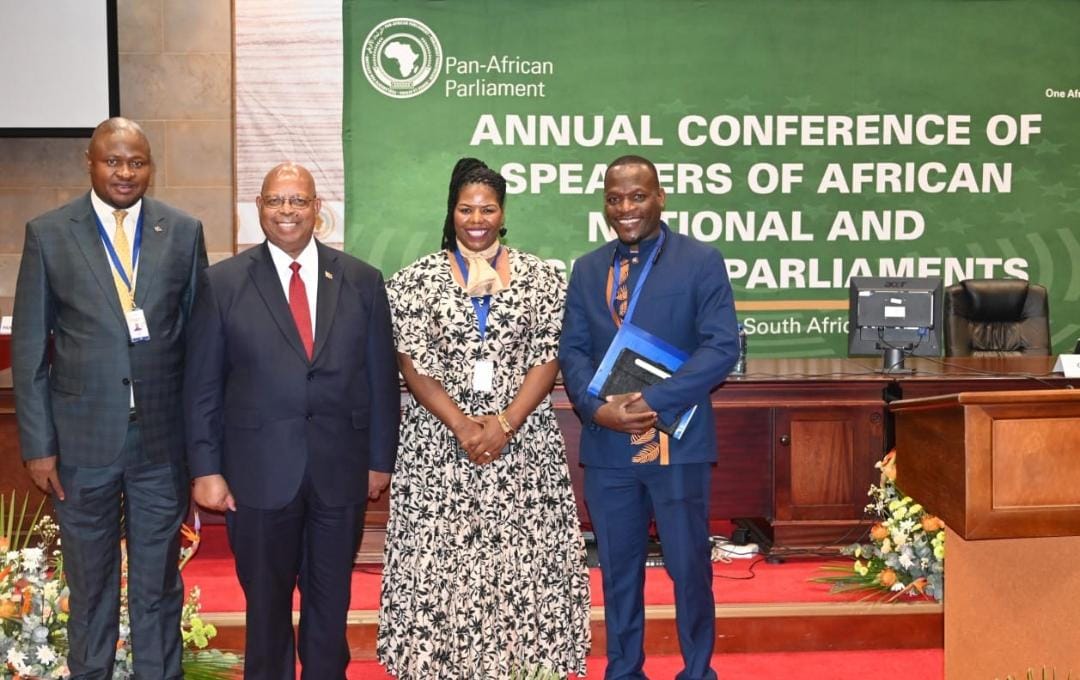
THE curtain has come down on the 2025 Annual Conference of Speakers of African National and Regional Parliaments, with delegates issuing a strong call for robust Artificial Intelligence (AI) interventions to accelerate Africa’s socio-economic transformation.
The high-level gathering, held at the Pan African Parliament (PAP) in Midrand, deliberated on the theme of Digital Transformation and Artificial Intelligence for Inclusive Development. Speakers, parliamentarians and AI experts underscored the need for Africa to harness emerging technologies to address challenges in governance, healthcare, education, agriculture and sustainable development.
In their interventions, participants highlighted that Africa must secure and control its own data resources in order to fully realise the potential of AI. Dr Anthony Francis Mveyange, Director of Programmes at the African Population and Health Research Center (APHRC), noted that only 16 out of 55 African countries have developed national AI strategies, with the majority lacking structured frameworks.
He called for urgent investment in research, capacity-building and the development of AI platforms in African languages to ensure inclusivity.
European Union legislator Hon. Brando Benifei echoed similar sentiments, cautioning that much of Africa’s data is controlled externally, particularly by Western nations, limiting the continent’s ability to develop tailored digital solutions.
The conference stressed that AI must not be seen merely as a technological advancement, but as a transformative tool capable of reshaping Africa’s future if supported by robust legal frameworks on governance and cyber security.
Zimbabwe’s Speaker of Parliament, Advocate Jacob Francis Mudenda, delivered a compelling intervention, urging PAP to convene a dedicated three-day conference on AI to explore its opportunities and challenges in depth, instead of discussing it on the margins of other issues.
He identified four foundational pillars for sustainable AI development, an enabling environment, digital infrastructure, human skills and capacity, and digital innovation.
Speaker Mudenda emphasised the importance of regional cooperation, calling for the establishment of AI hubs across Africa and the mobilisation of funding from financial institutions such as the African Development Bank to ensure no country is left behind.
He further called for Africa to leverage its rich endowment of critical minerals, such as lithium, cobalt and manganese, to negotiate for stronger positions in global digital and industrial value chains.
Speaker Mudenda also shared Zimbabwe’s best practice of collaborating with tertiary institutions such as Bindura University of Science Education to develop AI platforms in vernacular languages. His proposals were well received, with PAP President Chief Fortune Charumbira pledging to ensure that a stand-alone continental summit on AI is convened soon.
Meanwhile, Speaker Mudenda has since travelled to Cape Town, South Africa, where he will participate in the 11th G20 Parliamentary Speakers’ Summit (P20), which runs from October 1 to 3.
The historic summit, being hosted in Africa for the first time, is convening under the theme Harnessing Parliamentary Diplomacy for the Realisation of Global Solidarity, Equality and Sustainability. It brings together Speakers of G20 Parliaments, guest parliaments and leading international parliamentary organisations.
Speaker Mudenda’s participation is expected to amplify Zimbabwe and Africa’s perspectives on three key issues: the need for debt relief and financial architecture reform; equitable climate financing to drive a just energy transition, and transparent mineral governance to ensure Africa’s natural wealth benefits its people.
Over the years, Speaker Mudenda has championed Zimbabwe’s interests in international parliamentary fora, including the Inter-Parliamentary Union (IPU), the Pan African Parliament, the African Parliamentary Union and the SADC Parliamentary Forum, where he has played a leading role in promoting regional integration, accountability and governance reforms.
His presence at the P20 Summit is set to reaffirm Zimbabwe’s commitment to parliamentary diplomacy as a tool for advancing inclusive global governance while placing African priorities firmly on the international agenda.

