



Story by Patience Nyagato
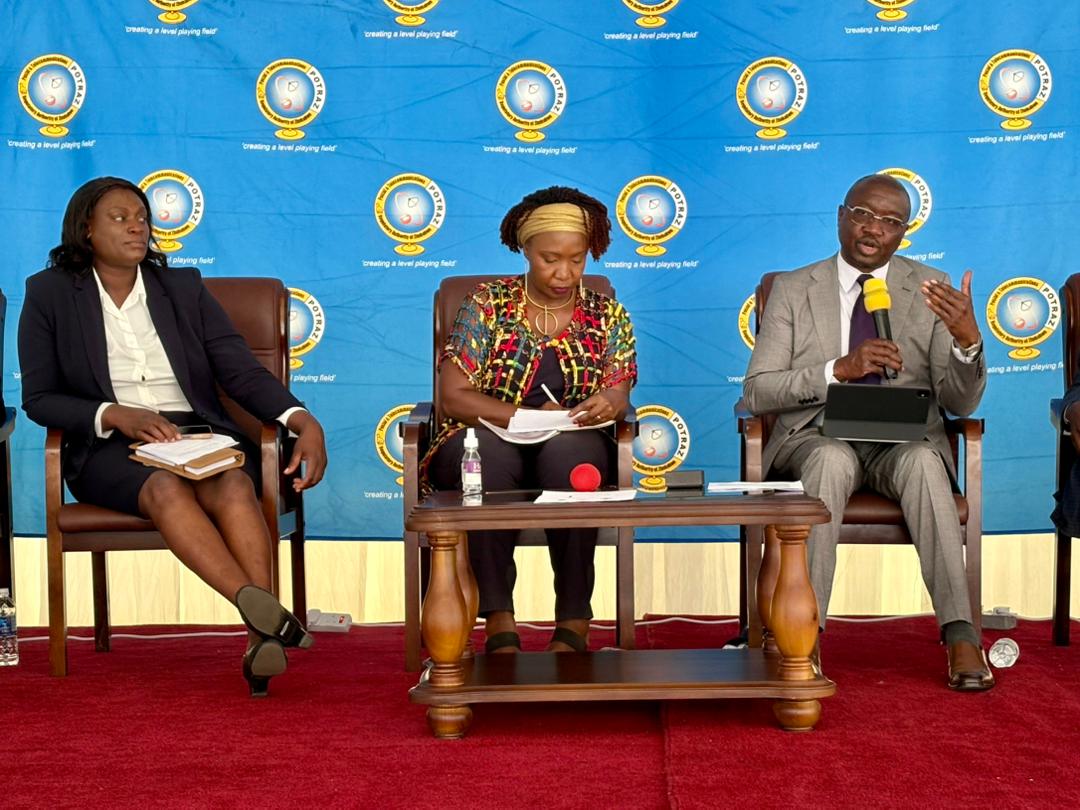
Opportunities in the global Artificial Intelligence (AI) market for local practitioners came under spotlight, at a conference to mark the African Telecommunications Union (ICT) DAY held in Harare this Wednesday.
The need for African countries to increase the development of digital infrastructure, address regulatory gaps and other challenges affecting the growth of Artificial intelligence systems , came to the fore amid revelations that the continent only attracts 2,5 percent of the US$16.5 billion Artificial Intelligence (AI)market.
POTRAZ Director General Dr Gift Machengete added there are opportunities for local practitioners to bridge the gap and tap more into the global AI market.
“As we celebrate the ICT Day, we are encouraged by ATU to tap into the global AI market, which is currently valued at US$16.5 billion. At the global level, ATU has been working with the European Commission on the development of a global ITC sector, and negotiated the retain of orbital resources that had been taken away from African countries. To increase this market share, African countries should address challenges on inactivated digital infrastructure, regulatory gaps, and safety concerns over artificial intelligence systems.
“More African countries are encouraged to adopt data protection laws from the current six countries who have adopted data protection laws in Africa and support ICT innovation aimed at developing African-centric solutions. With this mission to accelerate the development of telecommunications and ICTs in Africa towards the development of digital economies, ICTs across Africa are to adopt the African Technology Policy Tracker, which is intended to track digital progress adoption by member states to foster effective policy coordination within Africa. With the African Technology Policy Tracker, stakeholders in Africa’s ICT sector will have access to a comprehensive repository of the continent’s digital technologies, as well as to develop economic laws, policies, and regulations, thereby fostering continental ICT integration and harmonisation,” he said.
The country is making strides to creating a conducive environment for technological growth with a number of initiatives including the formulation of policies that promote innovation.
“Partnership with the African Telecommunications Union, like in this case, supports us, the Minister of ICT, in coming up with stages and checks and balances on how much we have moved in terms of embracing AI. It is a major highlight in this particular commemoration. As regards where we are as a country in terms of adopting AI, I think we’ve done very well. From awareness itself to policy generation and development. You may be aware that we have worked on an AI policy as a ministry, and that is meant to lay a benchmark of seriousness in terms of observing the role of official intelligence today.
“There are exhibitions here, and we’ve seen a lot of start-ups having moved to become very practicable. And with their strong bias in AI, it indicates that the industry and the general people and the academia, even from the state of elementary education, have embraced and understood really what AI is all about. I may share an experience of a brilliant student from Peterhouse, who is 15-years-old, who has done very well in terms of understanding how he should divert from the general attendance on AI to something very unique, where you can use and access connectivity without really being connected. That’s very creative, and AI has taken us this far,” explained the Deputy Minister of Information and Communication Technologies, Postal and Courier Services, Hon Dingumuzi Phuti.
The conference, attended by various ICT companies marked the African Telecommunications and ICT Day, celebrated on the 7th of December annually in a bid to champion the advancement of Africa’s ICT sector.

