



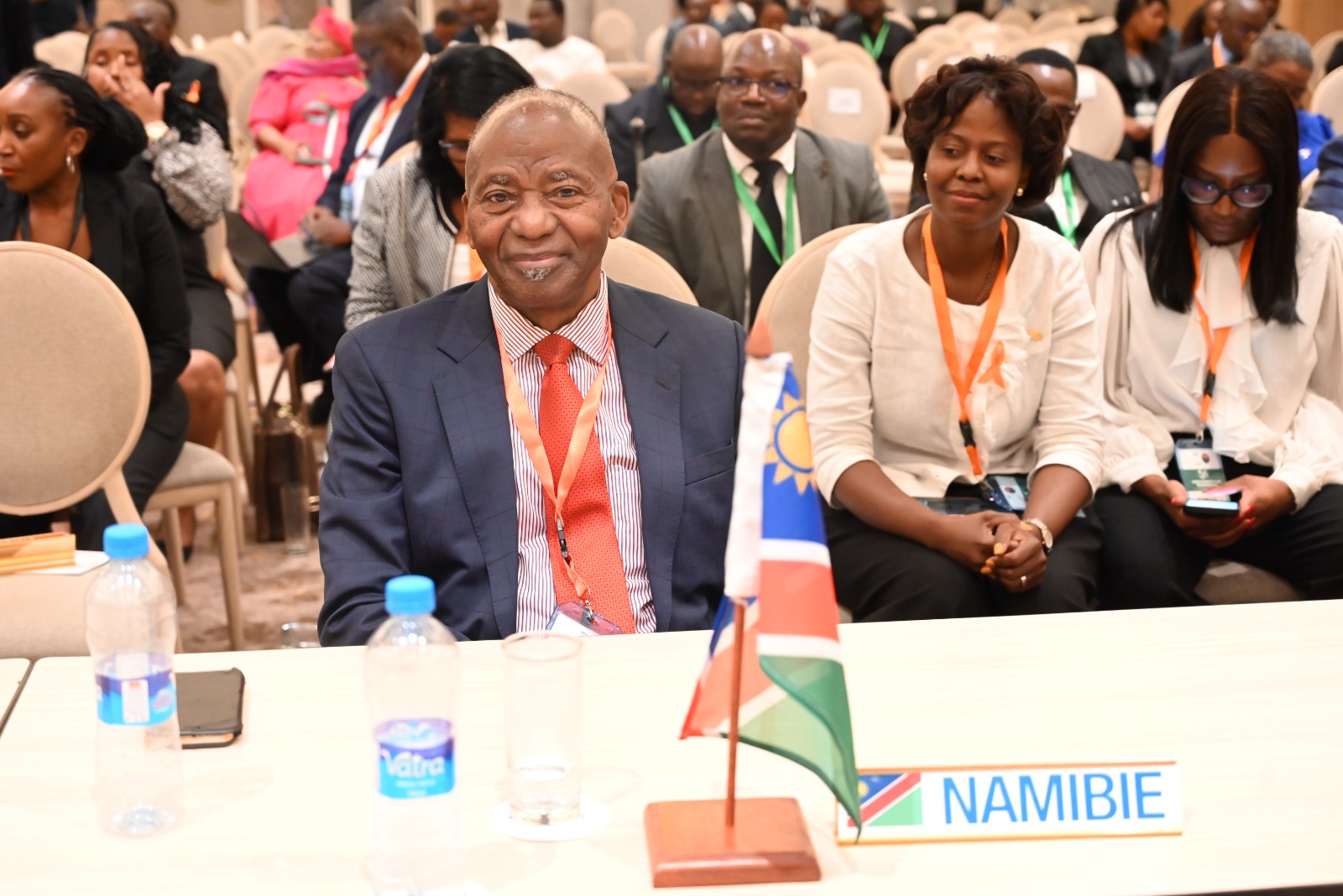
On 9th December 2024, the SADC PF hosted a Valedictory Cocktail Dinner in honour of Professor Peter Hitjitevi Katjavivi, the esteemed Speaker of the Parliament of Namibia and long-serving member of the SADC PF Executive Committee.
The event, held at the Radisson Blu, Mosi- oa-Tunya, brought together Presiding Officers, Parliamentarians and several stakeholders to celebrate Professor Katjavivi’s remarkable legacy of public service and unwavering commitment to regional integration, democracy and good governance in Southern Africa and beyond.
The Valedictory Dinner forms part of the SADC PF’s Legacy Project, which aims to commemorate Professor Katjavivi’s exemplary leadership and ensure his inspiring journey is remembered by future generations of Parliamentarians and leaders. As Professor Katjavivi prepares to retire in March 2025, this celebration serves as a befitting acknowledgment of his distinguished public service and enduring legacy in the service of the SADC citizenry through his sterling leadership in the SADC PF Executive Committee as well as being the Host Speaker of the institution whose Headquarters is in Namibia.
In a night marked by profound reflection and heartfelt tributes, the House was unanimous in exuding Professor Katjavivi’s unflinching dedication in advancing regional inter-parliamentary cooperation and unity. His pivotal role in advocating for the Transformation of the SADC PF into a fully-fledged SADC Parliament was highlighted as one of his many outstanding contributions to the region’s socio-political and economic development. Speaker Katjavivi steps down in March 2025, after an illustrious career marked by exceptional contributions to public service and governance, earning numerous accolades at regional and international levels. As a visionary leader par-excellence, he was one of the crafters of Namibia’s Independence Constitution as well as the founding Vice-Chancellor of the University of Namibia for eleven years.
Speaker Mudenda was invited to pay a special tribute to Professor Katjavivi as a friend and long standing colleague in the Parliamentary leadership.
He stated, “The formation of the Southern African Development Community Parliamentary Forum (SADC-PF) has its genesis in Namibia, which has played a pioneering role in the evolution of the regional SADC Parliamentarism. The historic 1992 Windhoek Declaration laid the foundation for the establishment of the SADC Parliamentary Forum, calling for a collective regional legislative body to support political stability, democracy and socio-economic cooperation in Southern Africa.
“Namibia’s contribution to the creation of the SADC Parliamentary Forum is historic. The country’s leaders, especially the late founding Speaker of the National Assembly (1990-2014), Hon. Dr. Moses Tjendero, were instrumental in fervently advocating for the establishment of this parliamentary institution which subsequently morphied into the SADC PF through the aegis of the SADC Summit hosted in Blantyre, Malawi, on 8th September 1997. Consequently, it is no wonder that Namibia became the privileged country to be the SADC PF host up to today,” he said.
He added, “Born in Okahandja District, 70 kilometres from Windhoek, Professor Katjavivi embodies the resilience, vision and determination that have characterized Namibia’s struggle for independence and the pursuit of democratic ideals. His life highlights the vital hankering human spirit for inaleable fundamental human rights, education and the relentless quest for the unadulterated independence and freedom of the Namibian people. That hankering found solace when Professor Katjavivi was for the first time elected Member of Parliament in 2010 and soon after appointed the Government Chief Whip in the House. Four years later, Professor Katjavivi had the distinctive honour of being conferred, on Heroes Day Commemoration in 2014, The Most Brilliant Order of the Sun:First Class, by the then President Hifikepunye Pohamba. Such an honour was conferred on individuals who had significantly contributed to the Liberation of Namibia through various avenues – such as political, military, education, health, media, reconstruction and development. The following year in February 2015, Speaker Dr. Theo-Ben Gurirab passed on and Professor Katjavivi took over the Speakership up to now.”
Advocate Mudenda also stated, “As we convene to reflect on this distinguished life of public service, I am reminded of the poignant exhortation by the late South African Anglican Archbishop Desmond Tutu that “There is nothing more important than the human spirit. We must celebrate the lives of those who inspire us to be better.” Indeed, we must celebrate and appreciate the contributions and influence of our heroes and heroines while they are still alive. Why do we wait until the sunset of life to honour our heroes and heroines? Quite often, we reserve our most eloquent commendations as funeral eulogies when those that we eulogise are mute and enjoying eternal peace! It is, therefore, imperative and humanistic to celebrate our icons while they walk among us as we smell their presence. Let them hear our applause, experience our gratitude and know their impact on our lives as we co-exist with them Today’s valedictory tribute is a testament to this commitment – honouring our hero in the present, not just in memory, as he prepares to retire in March 2025.”
Professor Katjavivi was appointed the founding Vice-Chancellor of the University of Namibia (UNAM) in 1992, and was at its helm for 11 years. In this capacity, he democratized access to education and enabled many Namibians to break free from the shackles of poverty and ignorance.
As a result of his academic visionary leadership, the University of Namibia has become a centre of academic distinction which is generating leaders for the public and private sectors in Namibia and beyond. This outstanding leadership in academia was consummated by the Professor’s appointment in 2016 to the first Vice Chancellorship of the Namibian University of Science and Technology. Relatedly, his scholarly contributions, including seminal publications such as A History of Resistance in Namibia and The Road to Namibian Independence, continue to provide a comprehensive understanding of Namibia’s historical and political landscape. Professor Katjavivi’s research pursuits and authorship will indeed immortalise his academic excellence.

