



Story by Bruce Chahwanda, Political Editor
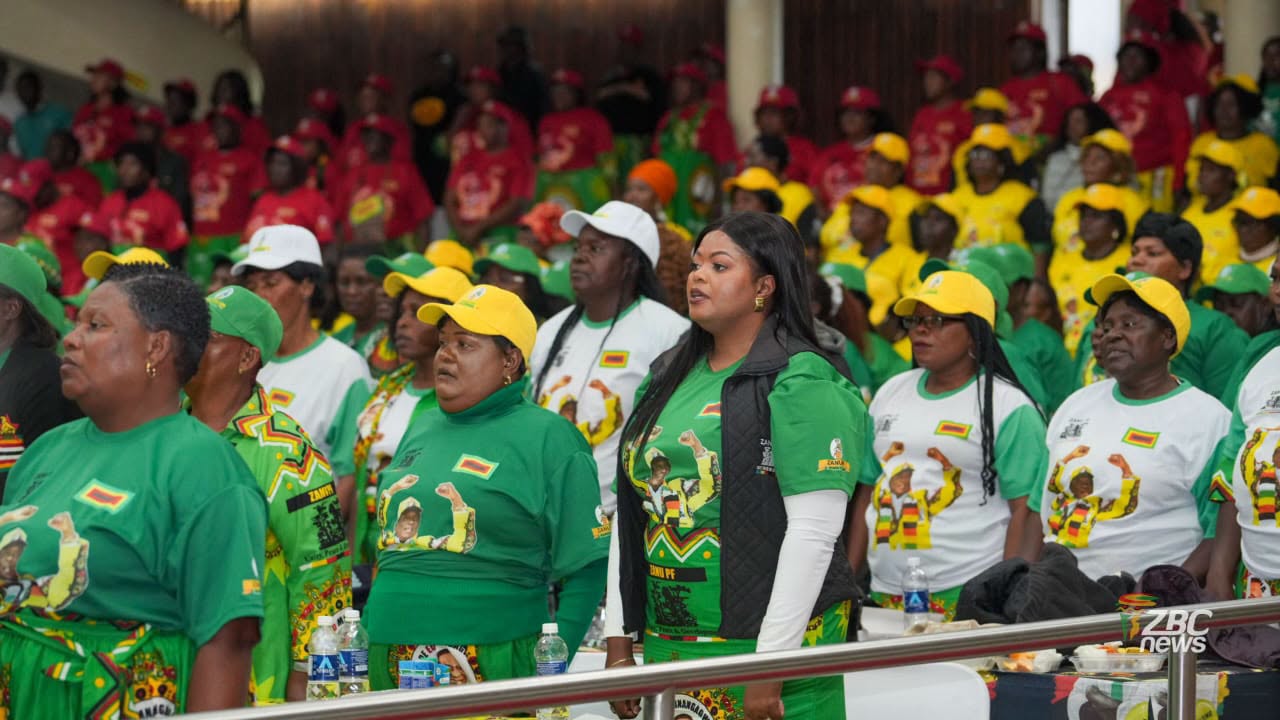
THE ZANU PF Women’s League has commended Government for spearheading inclusive development across the country as Zimbabwe pursues its Vision 2030 goal of becoming an upper middle-income economy.
The development drive includes the establishment of Village Business Units, road infrastructure rehabilitation, the rural industrialisation agenda, and the modernisation of key infrastructure, all aimed at accelerating economic growth and improving livelihoods.
The Second Republic has recorded significant milestones on both the economic and social fronts, with policies that have boosted local industry through infrastructure development while creating employment opportunities for thousands of Zimbabweans.
Members of the ZANU PF Women’s League highlighted several achievements, including road construction, the modernisation of border posts, Village Business Units, industrial expansion, improved electricity supply and currency stability.
“We thank your government for the expansion of Hwange Units 7 and 8, which has significantly reduced load-shedding. The construction of Gwayi-Shangani Lake is bringing hope to communities, while Binga District is now keeping pace with other areas in terms of development under the Second Republic,” said Cde Dorah Msimanga of the ZANU PF Women’s League.
“We also thank you for assenting to Constitutional Amendment Act No. 3. We have witnessed the modernisation of the Beitbridge Border Post, which has enhanced the ease of doing business, alongside other infrastructure projects that have transformed communities in Matabeleland South Province,” said another member of the ZANU PF Women’s League, Cde Sindisiwe Nleya .
President Dr Emmerson Mnangagwa has repeatedly pledged that his government will ensure development reaches every district, with empowerment initiatives transforming communities through the rural industrialisation agenda.
As part of this commitment, President Mnangagwa recently commissioned the Mutoko Bioeconomy Industrial Park, which manufactures detergents, cooking oil and biodiesel, creating employment opportunities for local communities.
Observers say the country’s continued infrastructure development and industrialisation efforts are strengthening prospects of achieving Vision 2030.

