



Story by Peter Chivhima
SOUTHERN African Development Community (SADC) member states are advancing plans to introduce a unified visa system that would allow international tourists to travel across multiple countries using a single visa, as the bloc seeks to boost tourism and deepen regional integration.
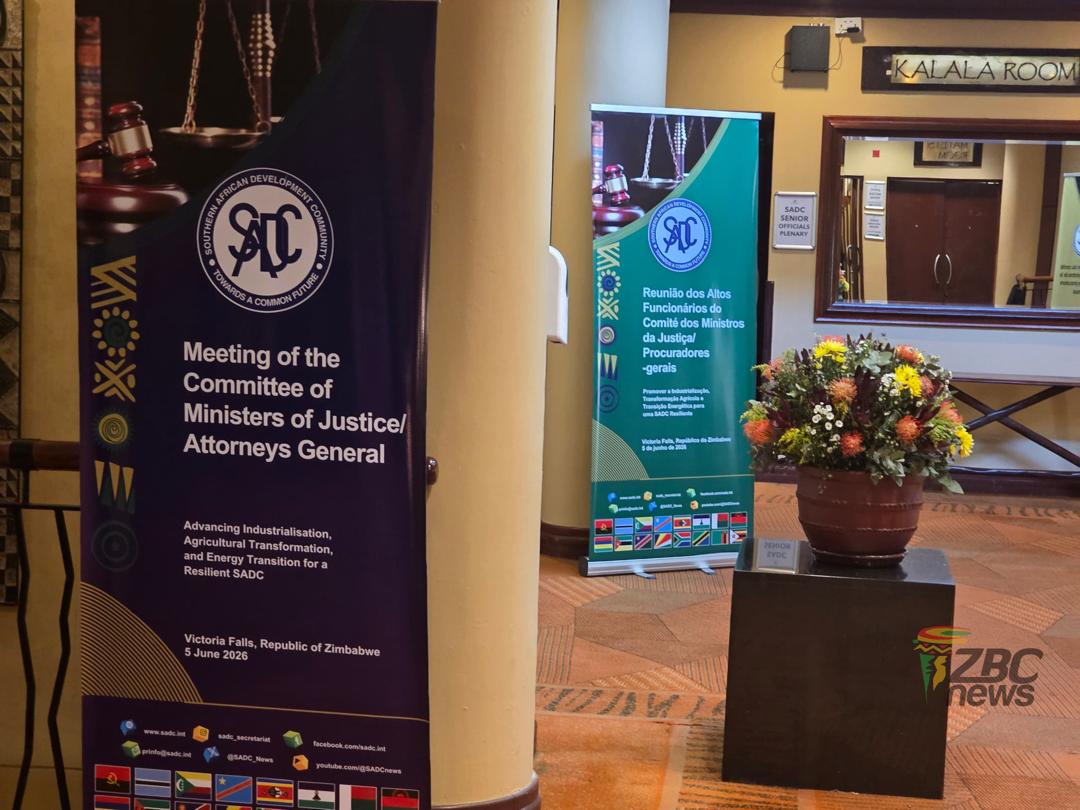
The proposal was among key issues discussed during the four-day SADC Senior Legal Officers Meeting, which concluded in Victoria Falls on Thursday ahead of the Meeting of Ministers of Justice and Attorneys General scheduled for Friday.
Delegates finalised draft recommendations and legal instruments aimed at strengthening regional integration, legal cooperation and governance within the bloc.
Among the key initiatives was the proposed UNIVISA programme, designed to facilitate seamless travel across participating SADC countries. Also under discussion was the SADC Protocol on Pharmaceutical Pooled Procurement Services, which seeks to reduce medicine costs and improve access to essential pharmaceutical products through joint procurement.
Permanent Secretary in the Ministry of Justice, Legal and Parliamentary Affairs, Mrs Vimbai Nyemba said the pooled procurement initiative would enable member states to leverage collective purchasing power.
“The initiative was promoted by Ministers of Health and ministers responsible for HIV and AIDS issues in 2023, and discussions have been ongoing since then. We now have a draft charter that will allow member states to pool resources when procuring pharmaceutical products.
“By conducting large-scale procurements, we can reduce administrative and bidding costs while obtaining better value for the region. This will improve access to medicines and pharmaceutical products across SADC. Tanzania will host the secretariat responsible for coordinating the programme,” she said.
Mrs Nyemba said the proposed unified visa system would strengthen tourism and encourage greater movement of visitors within the region.
“If an international tourist is travelling to Zimbabwe, for example, they would be able to apply for a universal visa before departure and then access participating countries within the SADC region using that single visa.
“This will strengthen the tourism sector and improve the region’s ability to attract and retain visitors. Such agreements and treaties also strengthen cooperation among SADC member states and promote economic integration,” she said.
If approved, the UNIVISA initiative will initially be implemented as a pilot project involving Botswana, Namibia, South Africa, Zambia and Zimbabwe.
Acting Director-General in South Africa’s Department of Justice and Constitutional Development, Ms Kalayvani Pillay said the pilot phase would determine the programme’s future expansion.
“The unified visa will allow visitors to use a single visa to travel to participating SADC member states for tourism purposes. At this stage, it will be limited to countries participating in the pilot programme, with future expansion dependent on the success of the initiative.
“We also discussed the pooled procurement of pharmaceuticals, proposals for appointments to the SADC Administrative Tribunal and the review of the SADC Legal Officials Protocol, which has been in operation since 2001. We believe it is important to assess its effectiveness and identify areas for improvement,” she said.
The recommendations from the Senior Legal Officers Meeting will now be submitted to the Meeting of Ministers of Justice and Attorneys General for consideration and possible adoption.
The proposed initiatives are expected to strengthen regional integration, support tourism and trade, and improve access to essential services across the SADC region.

