



Story by Lawrence Trusida, Sports Editor
ZIMBABWEAN football authorities have for years mooted the idea of aligning the domestic football calendar with the international season that runs from August to May, but the state of local stadium infrastructure continues to cast doubt on the feasibility of such a move.
Currently, the Castle Lager Premier Soccer League follows the traditional March to December calendar, largely designed to avoid the country’s heavy rainfall season which typically peaks between December and February.
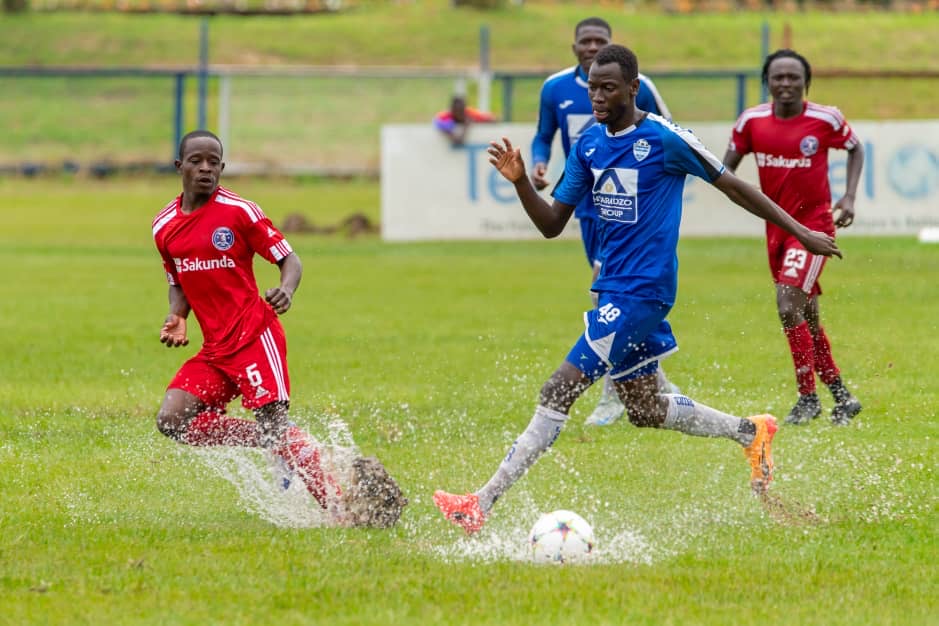
The debate resurfaced after a chaotic start to the 2026 PSL season, where several matches were disrupted by waterlogged pitches.
The clash between Dynamos and TelOne at Ascot Stadium had to be postponed to the following day after heavy rains left the pitch unplayable. However, conditions remained far from ideal when the match was eventually played.
A similar situation unfolded at Gibbo Stadium, where the match between Manica Diamonds and Simba Bhora was played under difficult conditions with visible pools of water on the field of play.
Concerns have also been raised over the condition of other venues across the country, with traditional stadiums such as Rufaro and Baobab Stadium having previously come under criticism for poor playing surfaces and ageing infrastructure.
Late last year, ZIFA wrote to clubs proposing the realignment of the country’s football season to the FIFA calendar.
However, this is not the first time such a proposal has been tabled.
In 1998, ZIFA approved a move initiated by the Premiership to switch to the August to May calendar. The change did not last long due to Zimbabwe’s well-documented challenges with stadium infrastructure, with most venues lacking proper drainage systems.
As a result, many matches were affected during the peak rainfall season.
“We are not ready. The infrastructure that we have was not made with that in mind. We should continue with the calendar as it is because the evidence is there on the ground and it has been tried before, so what has changed now with regards to the infrastructure,” said Nhlanhla Dube, a football administrator.
Former players say the current state of pitches also exposes players to unnecessary risk.
“Players risk injuries when playing on muddy surfaces. We saw what was happening at Ascot and it is not good for our football,” said Justice Majabvi, a former football player.
“We are not ready. We do not have a single stadium that can sustain it. Playing on those surfaces is a bad advertisement for the country and also an unnecessary risk to players who are the product that we go to the ground for,” said Philip Sithole, another former footballer.
Other stakeholders believe the discussion is premature and that regional experiences should serve as a lesson.
“Right now, Zambia is proposing to go back to the old calendar of March to December because they are struggling with poor drainage, and matches are being affected. This is a country which evidently has better facilities than us, so I believe we are not ready for it,” highlighted Richard Zimunya, a sports correspondent.
Interestingly, neighbouring Zambia, which had shifted to the August to May calendar in line with international football, is now reportedly considering a return to the March to December season after experiencing similar challenges with waterlogged pitches and inadequate drainage at several stadiums.

