



Bruce Chahwanda, Political Editor
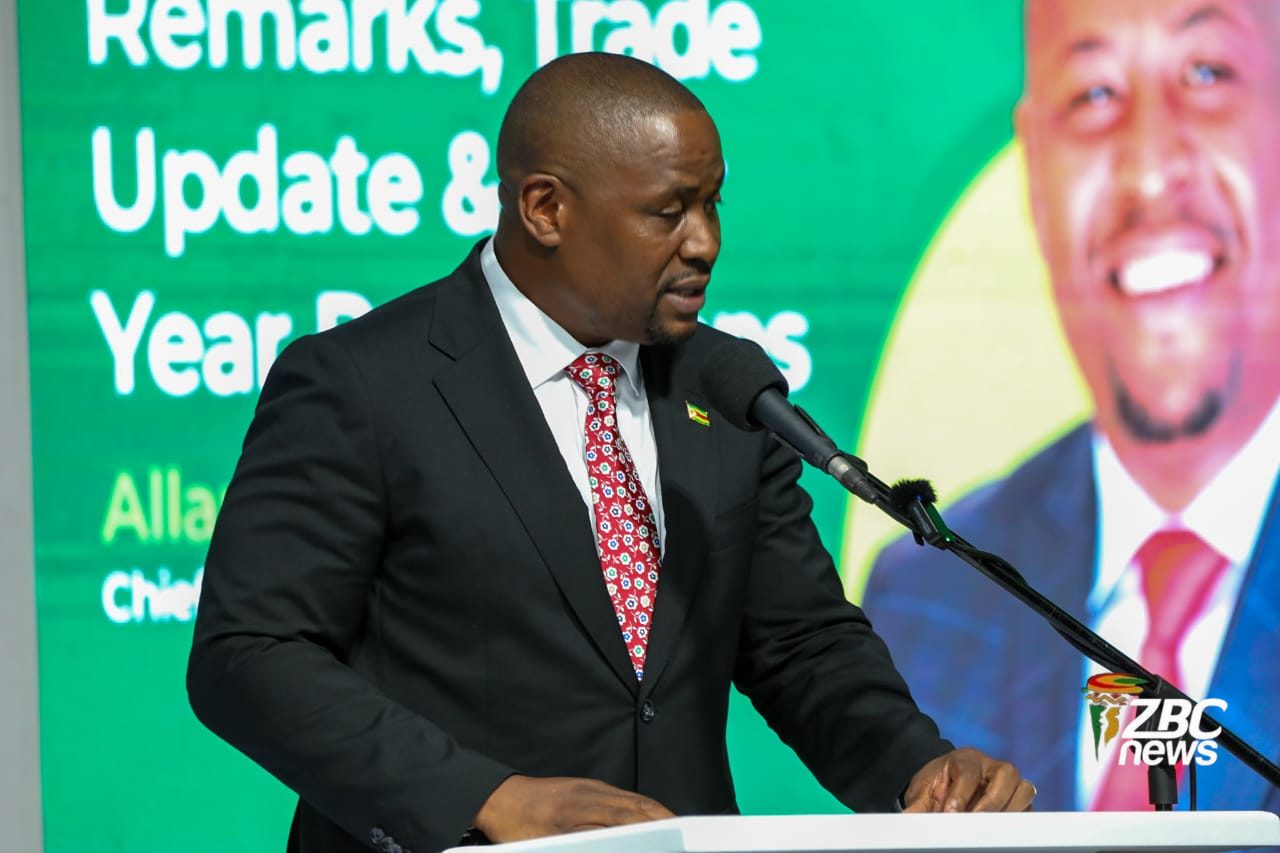
EXPORTS of value-added products rose by 30.6% to US$571 million between January and December 2025, up from US$437 million during the same period in 2024, ZimTrade Chief Executive Officer, Mr Allan Majuru said on Friday.
Addressing the 2025 ZimTrade Annual Exporters’ Conference in Bulawayo, Mr Majuru said the increase reflected Zimbabwe’s steady movement towards industrialisation through value addition and beneficiation.
Overall export performance also strengthened. “For the period January to December 2025, the country’s exports stood at US$9,71 billion, representing a 30% increase from the US$7,43 billion recorded over the same period in 2024,” he said.
Imports rose modestly by 3.7% to US$10,1 billion from US$9,74 billion in 2024, resulting in a significant narrowing of the trade deficit. “The deficit decreased by 82% to US$404 million compared to US$2,3 billion recorded during the same period in 2024,” Mr. Majuru noted, adding that the figures reflected “improved competitiveness and growing confidence in Zimbabwean products”.
He said the gains were driven by deliberate national policy, improved coordination, and sustained economic diplomacy under the Ministry of Foreign Affairs and International Trade’s engagement and re-engagement agenda, which had strengthened commercial relations and trust in Zimbabwe as a trading partner.
A key highlight of 2025 was Zimbabwe’s participation at Expo 2025 Osaka Kansai in Japan, held from 13 April to 13 October. Under the theme “Beyond the Limits,” Zimbabwe showcased its tourism, investment, trade, and cultural potential. The Expo, Majuru said, provided “a global platform for Zimbabwe to tell its story, demonstrate its heritage and innovation, and reposition itself as a resilient and forward-looking economy”.
Zimbabwe also secured several international accolades in 2025, including the Best Stand Feature at the Intra-African Trade Fair in Algeria, Best International Exhibit Award at the Zambia Agricultural and Commercial Show, and Best Country Pavilion at the Global Expo Botswana. Mr Majuru said the awards reflected growing confidence in the “quality, presentation, and competitiveness of Zimbabwean products”.
In October, ZimTrade hosted a Buyers’ Seminar in Bulawayo, attracting buyers from Zambia, South Africa, the Democratic Republic of Congo, Egypt, Angola, Ethiopia, Rwanda, Mozambique, and France. Delegates conducted factory visits across provinces to assess production processes and industrial capacity.
“These engagements enhanced buyer confidence, created direct business linkages, and reinforced Zimbabwe’s position as a reliable source of quality products,” he said.
The seminar culminated in a Memorandum of Understanding between ZimTrade and Afreximbank aimed at boosting exports by linking local businesses to wider African and international markets. The agreement will enable exporters to access new buyers and leverage Afreximbank’s Africa Trade Gateway digital platform, while tapping into opportunities under the African Continental Free Trade Area.
Mr Majuru said inclusive export growth remained a priority, with rural communities, women, and youth increasingly integrated into mainstream trade through the Export Clusters programme. Initiatives such as the Mudzi baobab cluster, Buhera basket weavers, Matabeleland North handicrafts, Midlands sweet potato growers, and oil producers in Mwenezi and Chivi were already demonstrating progress.
“Clusters consolidate producers, enabling them to achieve the scale, consistency, and quality needed to compete internationally,” he said, adding that support was being provided to secure certifications required for high-value markets.
To strengthen competitiveness, ZimTrade is establishing in-market infrastructure, beginning with a warehouse in Zambia to serve as a distribution base for Zimbabwean products. The facility is expected to reduce logistical costs, improve product availability, and enhance buyer confidence.
Similar hubs are planned for Iran, Namibia, Tanzania, Mozambique, and the United Kingdom to deepen market access and increase brand visibility.
Mr Majuru said the initiatives were anchored in resolutions adopted at last year’s Exporters’ Conference, with efforts focused on translating commitments into action through stronger market access, improved exporter support systems, and expanded trade intelligence.

