



Bruce Chahwanda, Political Editor
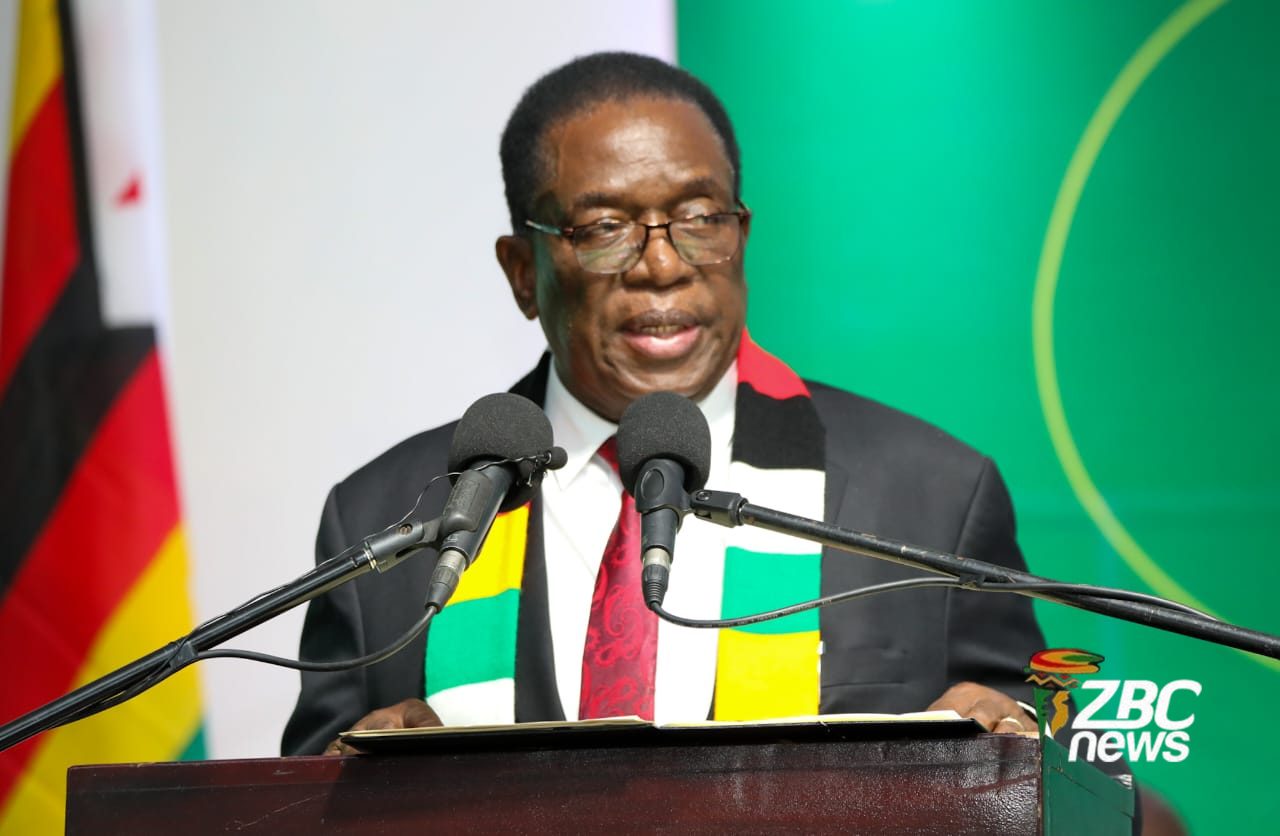
PRESIDENT Emmerson Mnangagwa on Friday declared that Zimbabwe must end its dependence on raw exports, warning that the continued shipment of unprocessed commodities is no longer sustainable nor desirable.
Addressing delegates at the 2025 ZimTrade Annual Exporters’ Conference in Bulawayo, the President said: “Dependence on raw exports is no longer sustainable nor desirable. We must earn more from every tonne, every kilogramme, and every product we export. The situation where jobs, value, and industrial opportunities are lost is untenable.”
He said value creation must take place locally. “The value must be created locally and domesticated here in our factories, processing plants, innovation hubs, and within communities,” he added.
The conference, held under the theme “Rooted Locally, Growing Globally,” aligns with the Government’s National Development Strategy 2 (NDS2), which seeks to anchor economic competitiveness on domestic production, beneficiation, and industrial growth.
“It is no longer enough to boast that our country is endowed with a broad array of resources,” President Mnangagwa told delegates. “The current times demand innovative approaches,” he said, urging stakeholders to confront structural challenges while seizing emerging opportunities in an increasingly competitive global environment.
He stressed that export-oriented production must now be treated as a national priority. “Export-oriented production and productivity cannot merely be a commercial or business strategy, but must now be a national economic imperative,” he said.
The President called for closer collaboration between the Government, regulators, industry, and consumers to diversify the industrial base and secure entry into global value chains.
In the mining sector, he said, policy direction was clear. “Zimbabwe is no longer satisfied with being a supplier of raw minerals. Under my Administration, focus is on local processing, diversifying downstream industries, technology transfer, and stronger linkages across the economy.”
On agriculture, he said the country was moving to expand value addition across key commodities. “Our tobacco remains a strategic crop, and we are now progressively moving from raw leaf exports to a wide range of quality cigarettes and tobacco products,” he said.
He highlighted the revitalisation of the cotton-to-clothing value chain, strengthening horticulture exports to meet premium market standards, and growing livestock production to increase leather beneficiation as priority areas.
“I challenge the relevant players to be more deliberate towards the value addition of our rich forestry resources into high-value furniture, paper, and wood-based products,” he added.
The President said Zimbabwean-manufactured goods should carry a strong national identity in global markets. “Our country’s processed foods, beverages, engineering products, pharmaceuticals, steel, and manufactured goods should carry the ‘Made in Zimbabwe’ insignia into all markets.”
On regional trade, President Mnangagwa reaffirmed Zimbabwe’s commitment to the African Continental Free Trade Area, urging businesses, particularly small and medium enterprises, to take advantage of preferential access and regional value chains.
Government, he said, was continuing to simplify trade processes and reduce the cost of doing business. He cited the Zimbabwe Electronic Single Window platform as a key reform, noting that it had enabled exporters to “spend less time on paperwork and more on productivity and trade.”
The President said the annual conference remained a focal event on the national business and trade calendar and a platform to accelerate export-led growth through productivity, manufacturing, and industrial expansion.

